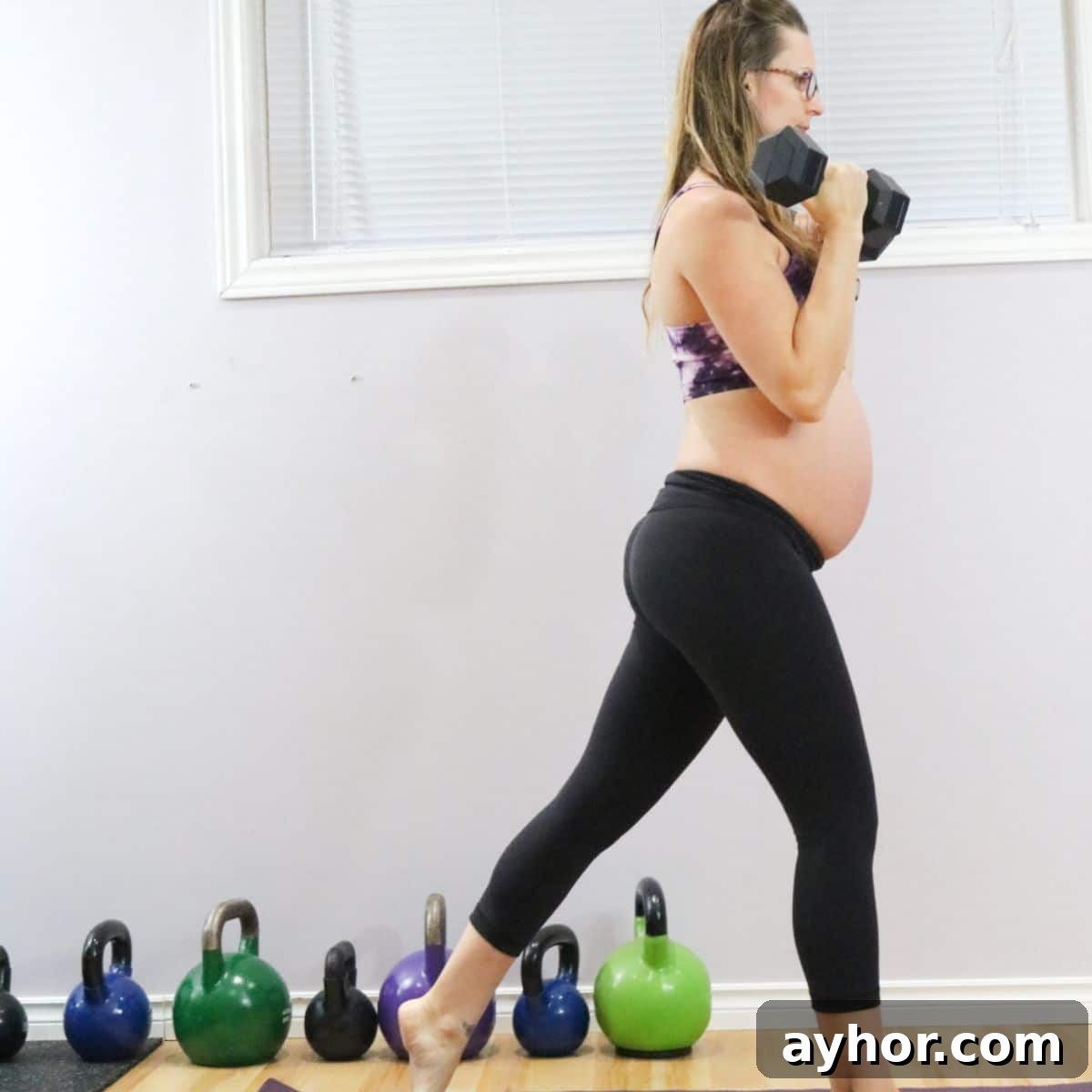
Stay strong and reduce pregnancy discomfort with this prenatal strength workout. Safe for all trimesters, this 20-minute routine needs only a pair of dumbbells and a little space.
There are many benefits to staying active during pregnancy, so it makes sense to keep moving—without pushing yourself into extremes.
As a mother of three, I’ve found that the best prenatal exercise habits are those you enjoy and can sustain. Gentle, consistent strength work helps you feel better during pregnancy and prepares you for life after baby.
Prenatal Fitness Goals
When strength training during pregnancy, aim for these outcomes:
- Reduce pregnancy-related discomfort
- Relieve stress and improve mood
- Prepare your body for the demands of postpartum life
- Maintain overall well-being and energy
Why This Full-Body Strength Workout Works
This prenatal routine uses dumbbells (or resistance bands) and takes about twenty minutes. It emphasizes the posterior chain—glutes, hamstrings, and upper back—to help support posture, reduce back pain, and maintain functional strength during pregnancy.
The circuit is designed to preserve or improve strength, support postural muscles, and elevate the heart rate enough to provide cardiovascular benefit. The exercises are low-impact and straightforward, so they’re suitable for many fitness levels.
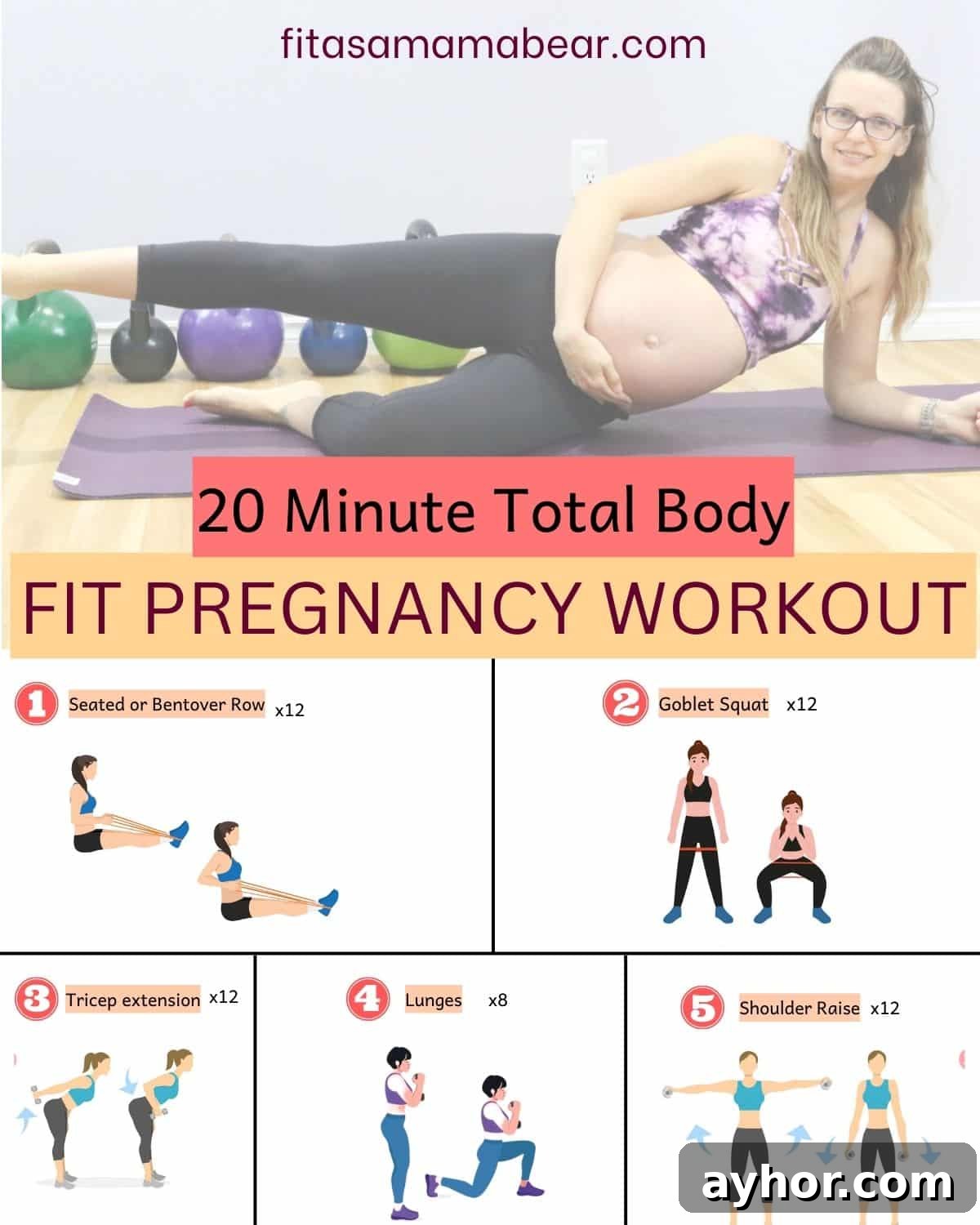
The Full Body Pregnancy Workout
| One Arm Dumbbell Row | 10 reps |
| Goblet Squat | 12 reps |
| Overhead Tricep Extension | 15 reps |
| Dumbbell Lunge | 8 reps (each side) |
| Rear Delt Fly | 12 reps |
| Rest | 60–90 seconds. Repeat circuit 2–3 times. |
How to perform the workout: Do each exercise in sequence for the listed repetitions, then rest fully at the end of the circuit. Repeat the circuit two or three times depending on energy and comfort. As you approach the third trimester you may need longer rests between movements—listen to your body and breathe.
What Size Dumbbells Should You Use?
Choose weight based on how you feel that day. For larger movements like rows and squats, 15-pound dumbbells may work well for many people. Use lighter weights for smaller-muscle exercises like rear delt flies and tricep extensions. Adjust as needed to maintain good form without straining.
How to Adapt This Pregnancy-Safe Workout for Each Trimester
This circuit can be used across all trimesters, but each pregnancy and each day can feel different. Be ready to modify intensity, range of motion, and rest periods.
- First trimester: focus on gentle, consistent movement—walking, light strength work, and mobility.
- Second trimester: energy often returns; maintain strength and include slightly heavier but controlled lifts.
- Third trimester: prioritize comfort and balance—shorter sets, wider stances, and longer rests as needed.
Always hydrate, avoid overheating, and use a broader stance for lunges and squats as your belly grows. If balance feels off, skip weights and use a stable surface for support.
How to Perform the Exercises
Below are clear, safe instructions for each movement. Focus on controlled motion and proper breathing.
One Arm Dumbbell Row
- Place one knee and the same-side hand on a bench for support, with the opposite foot planted for stability and your back flat.
- Let the working arm hang straight, holding a dumbbell.
- Pull the dumbbell up toward your hip using the back muscles, pause, then lower slowly.
Widen your base as your belly grows and engage your core for extra stability.
Goblet Squat
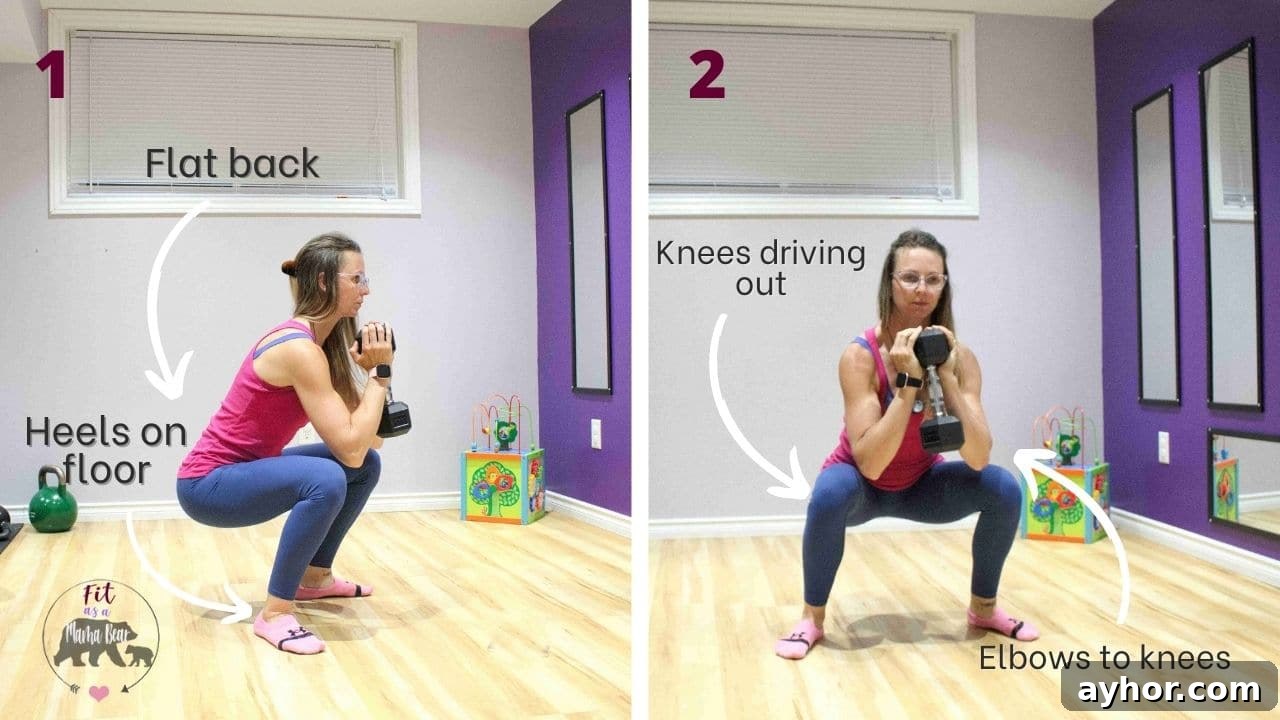
- Stand with feet hip-width or wider, holding a dumbbell at chest height.
- Sink back and down, keeping heels on the floor and chest lifted.
- Aim to bring your elbows toward your knees, then press through your feet to stand.
Widen the stance as needed for comfort and balance.
Tricep Extensions
- Stand with feet under the shoulders or in a staggered stance. Hold a dumbbell with both hands behind your head, elbows bent.
- Extend the elbows to raise the weight overhead, pause, then lower back to the start.
This can also be done seated or with a resistance band if standing is uncomfortable.
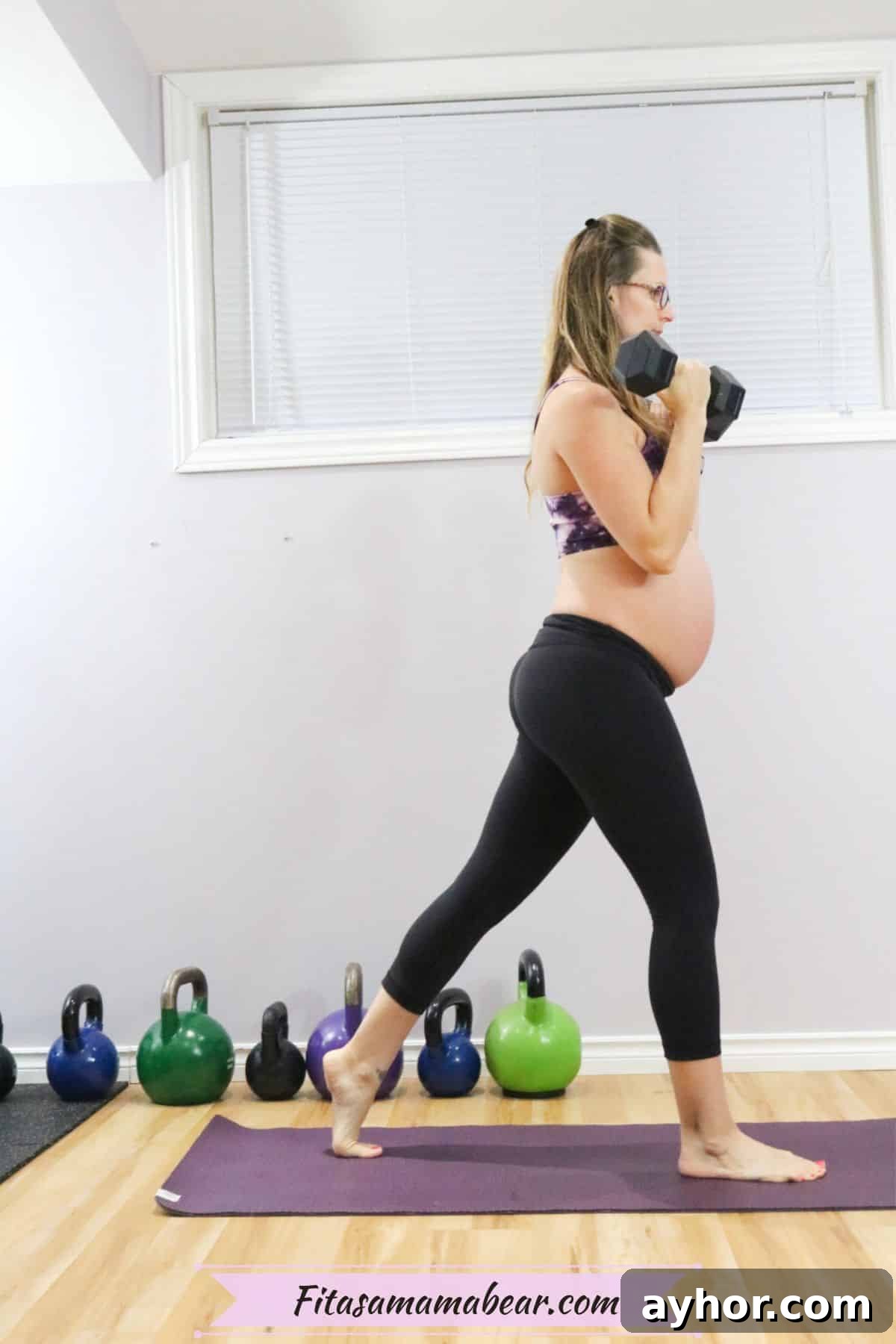
Dumbbell Lunge
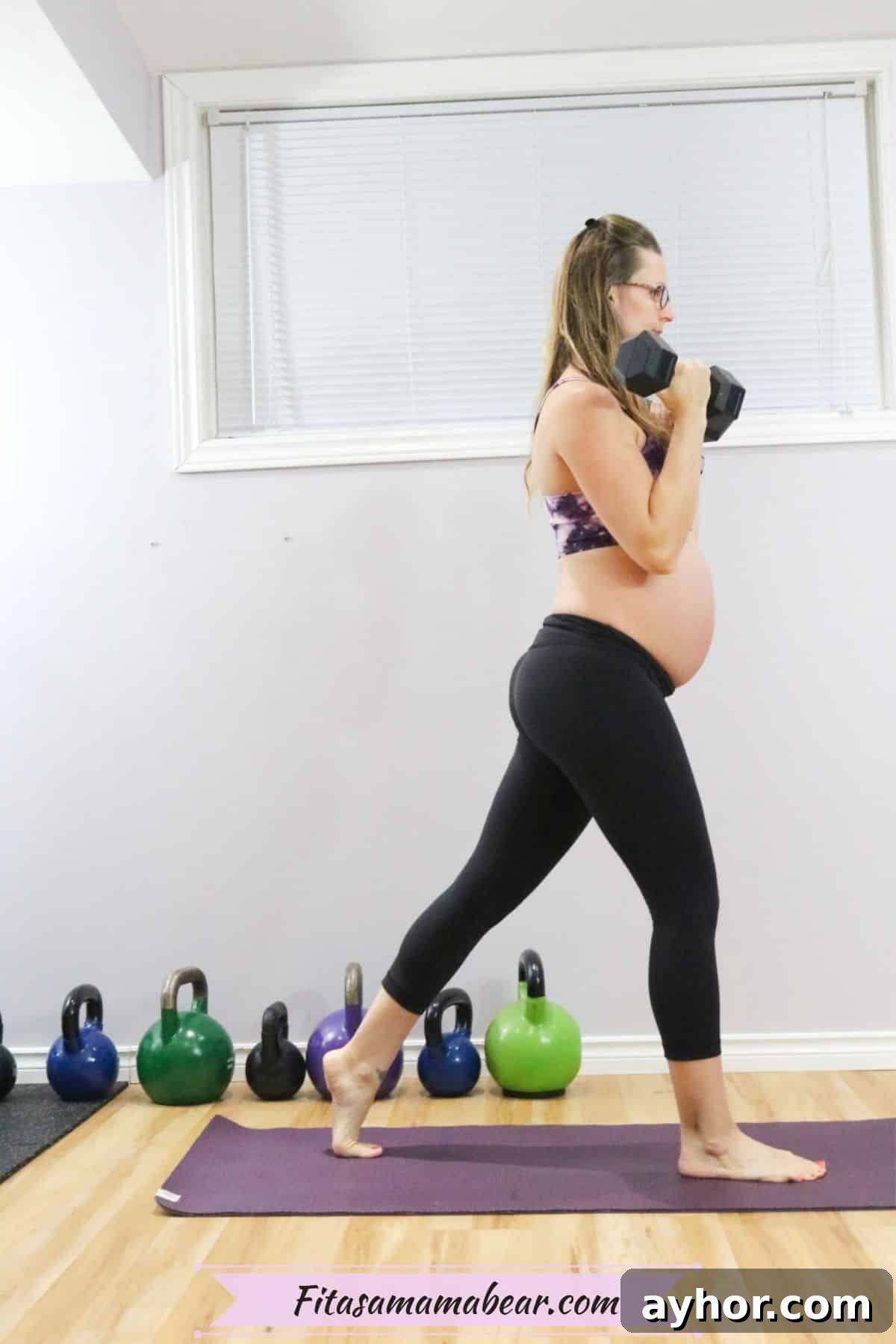
- Stagger the legs for stability while holding dumbbells by your sides.
- Lower the back knee toward the floor while keeping the front heel grounded.
- Pause and push back to standing; you can step the feet together between reps if preferred.
If balance is a concern, perform lunges without weight or use a chair for support.
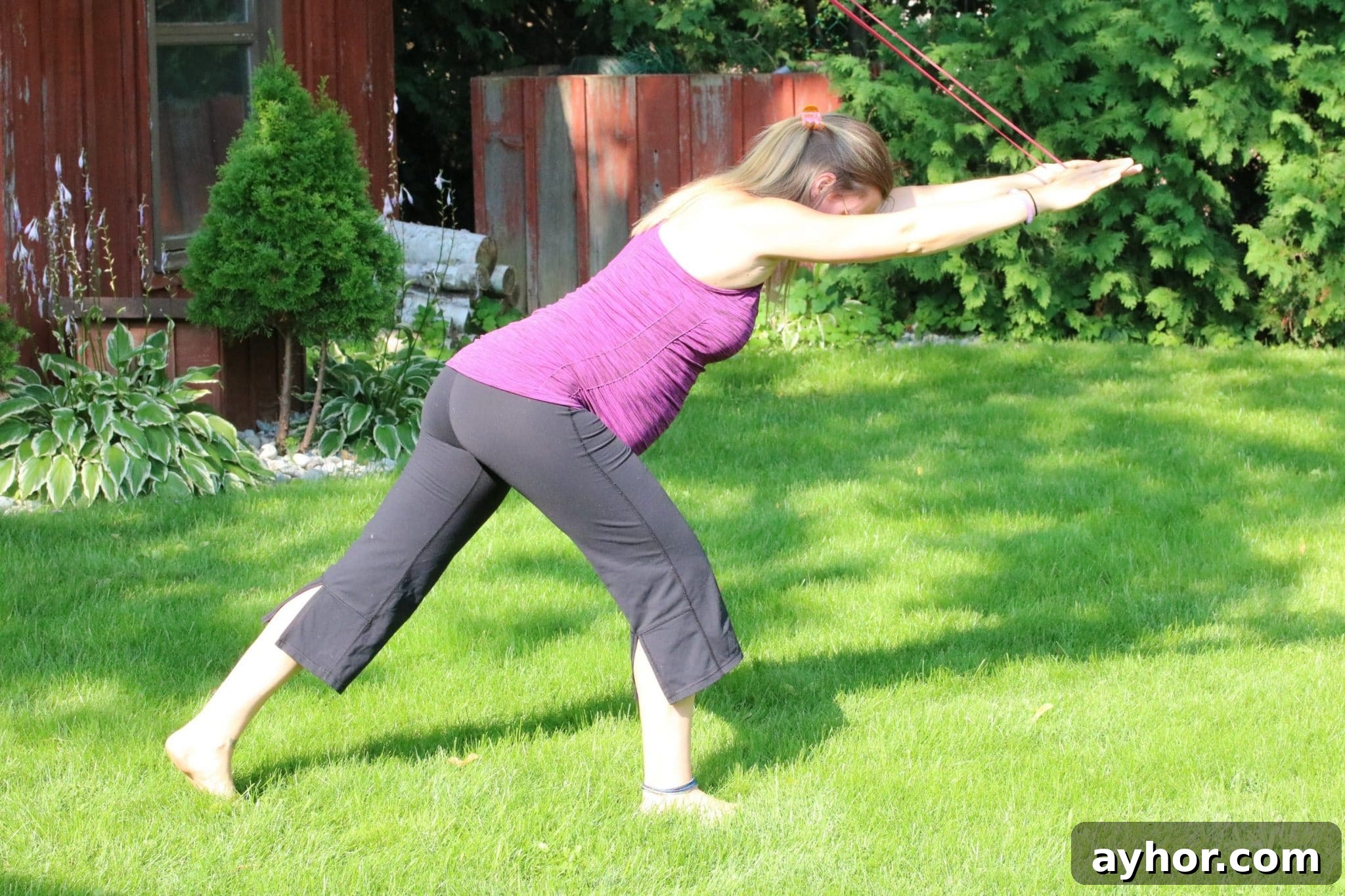
Rear Delt Fly
- Hold light dumbbells with knees slightly bent and hinge at the hips, keeping the spine neutral.
- With palms facing each other, open the arms out to the sides as if hugging a tree, keeping neck neutral.
- Pause briefly, then return to the starting position.
Body Changes in Pregnancy & How to Train for Them
Common pregnancy changes include shifted posture, rounded shoulders, and increased lumbar curve. These adaptations are normal but can lead to discomfort. Strengthening the glutes, hips, upper back, and shoulders helps support the pelvis and spine, reduce back pain, and ease daily movement.
Strong, mobile hips and a stable upper back make walking and daily tasks more comfortable and support postpartum recovery.
Frequently Asked Questions About Prenatal Strength Training
That depends on your pre-pregnancy activity level, how you feel, and where you are in pregnancy. You can begin exercising at any stage, but if you were inactive before conception, start with gentle activities like walking and basic stretches in the first trimester.
Many activities are safe: strength training, walking, swimming, and low-impact cardio are good options. Prioritize low-impact movements, avoid prolonged time on your back after the first trimester, and choose exercises that feel comfortable and controlled.
Other Helpful Pregnancy Tips
Be mindful that pregnancy can increase heat sensitivity—avoid overheating by exercising in a cool environment, wearing breathable clothing, and drinking water. Modify intensity as needed and prioritize rest when necessary.
- Include gentle core work appropriate for pregnancy.
- Learn how to assess diastasis recti if concerned about abdominal separation.
- Keep healthy snacks on hand to support energy for workouts and daily life.
Save this pregnancy strength workout for later
Although using dumbbells may make this routine feel more advanced, the movements are simple and approachable. Stay consistent with an active routine that suits your needs—there’s no single right way to exercise during pregnancy.
If you’d like guided, low-impact follow-along workouts, consider following along with pregnancy-focused video routines designed for minimal equipment and clear modifications.