“Regarde ce que fait maman,” (Look at what mummy does) I told Lulu. She stared at me, giggling as her feet kicked the yellow frame of the play mat above her head.
Time flies. Lulu is already twelve weeks old — playful, smiling, and discovering how to reach for toys and use her legs and feet to move things. I like having her close while I set up photo shoots; she watches with wide blue eyes, intent on understanding what I’m doing. It’s precious.
After her Sunday morning bath, I told her about our plans for the day: a walk in the park, a few stories with P., some playtime and conversation, and a nourishing lunch to brighten the afternoon.
“Maman va faire des tartelettes aux légumes pour le déjeuner. Tu aimes cela ?” (Mummy is going to make vegetable tartlets for lunch. Do you like those?)
She smiled again, probably thinking of something else, but I liked to imagine she was excited about lunch.
“Tu verras comme elles sont bonnes,” (you’ll see how nice they are) I whispered into her ear and kissed it.
Truth is, we’d eaten several tartlets over the past week because I’ve been testing recipes for the book. It’s a convenient way to prepare our meals while working through ideas.
“Mmm, I’m trying to figure out the taste,” P. said after his first bite. I had improvised with what I had in the fridge but made a point of keeping the tartlets wholesome and nutritious.
“Leeks? Cheese?” he ventured after a second taste.
“Right. What else?” I asked, curious if he could guess more.
He paused, smiling. “They taste better than they look,” he said, content.
I had to agree.
“Can you guess the type of cheese?” I asked.
“Comté?”
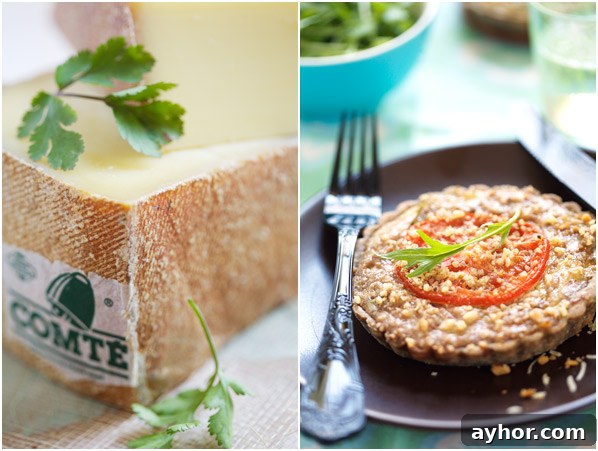
That might have been an easy guess. Lately I’ve been craving cheese while breastfeeding, and we’d been eating a lot of Comté. I’d also received some generous pieces from the Franche-Comté region, where this cheese is made, and it’s long been a family favorite.
Comté is fruity and nutty with a dense, rich texture. It works beautifully as a snack and brings depth to cooked dishes such as gratins and tarts. Aged for months, it develops a full, rounded flavor.
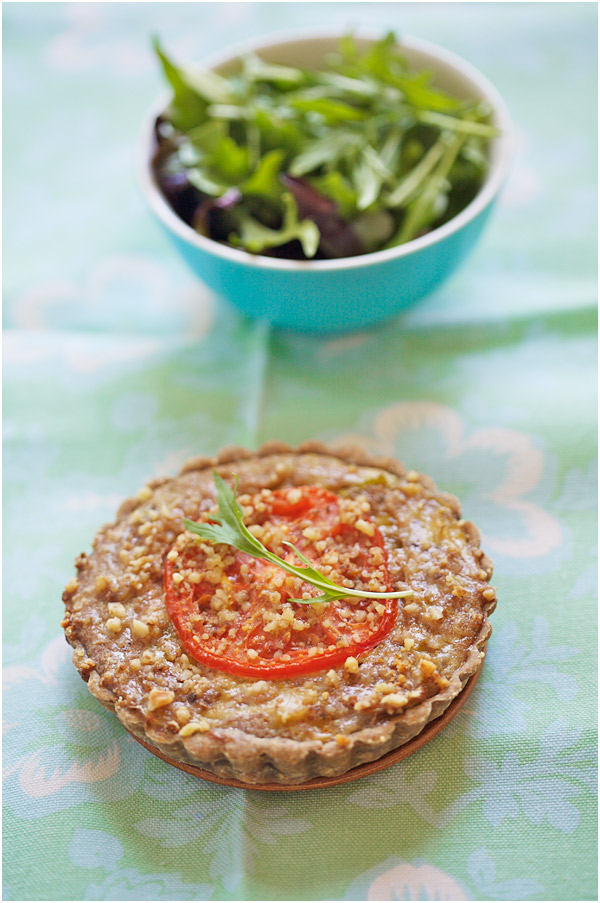
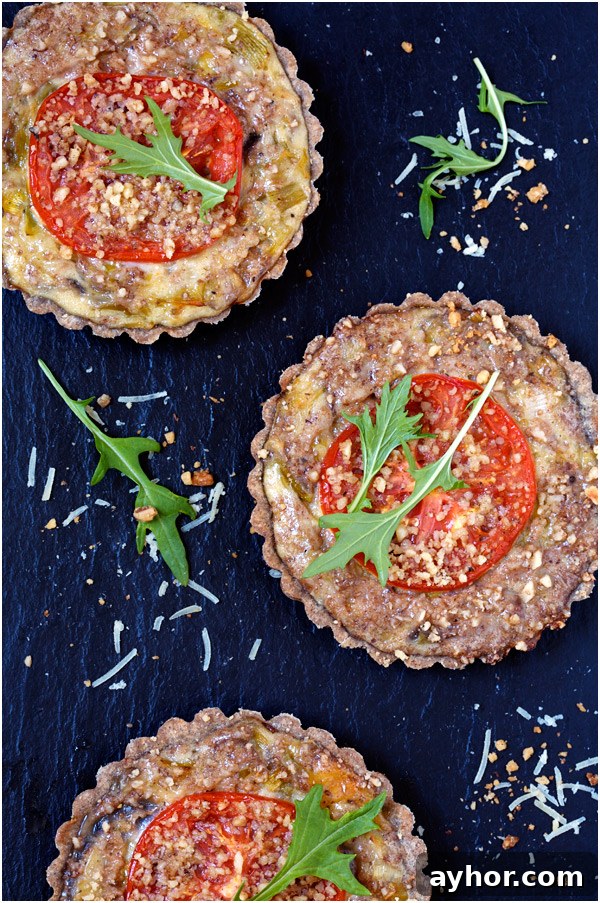
For these tartlets, I gently cooked finely sliced red onion with leeks, thyme and a bay leaf in olive oil, then added a splash of Vermouth to lift the flavors. I whisked eggs with crème fraîche and milk, stirred in grated Comté, and finished with a pinch of nutmeg and finely chopped walnuts to give a slightly coarse, nutty texture.
“Are there any more?” P. asked after finishing his plate.
“I thought they looked too plain,” I teased, but there were none left.
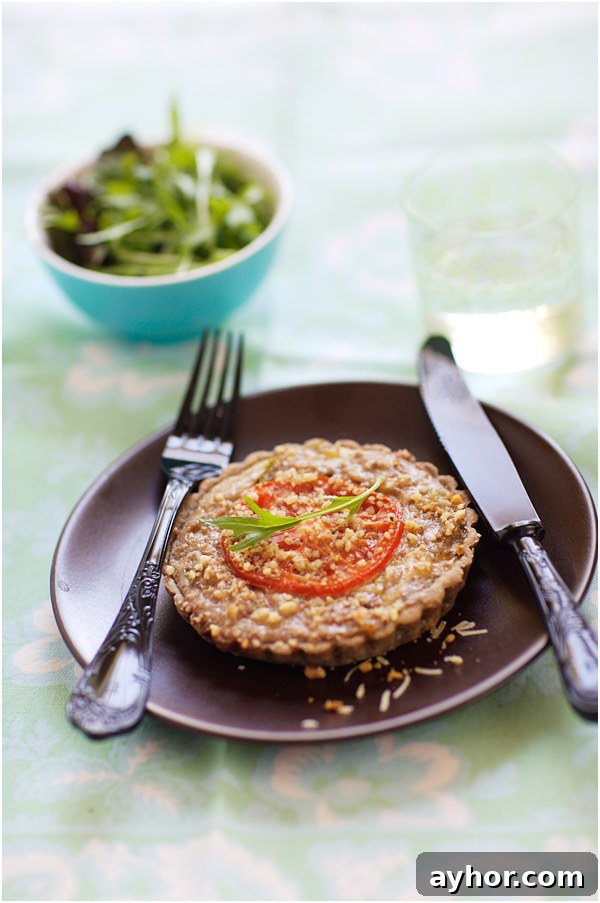
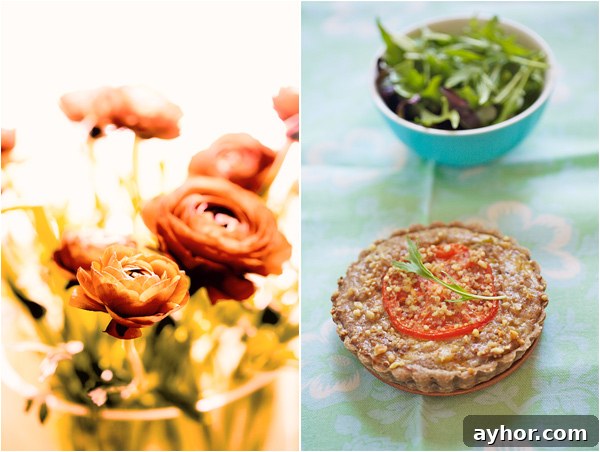
This recipe is simple and excellent the day it’s made and holds up well the next day. Serve the tartlets with a fresh green salad for a light, satisfying lunch.
Even Lulu seemed to say yes to more tartlets — much like her papa.
And by the way, thanks so much for your patience. Lulu is almost sleeping through the night now, hurray — so soon I should get more rest and be more present here again. On verra!
You need:
- Your favorite wholemeal crust — mine uses buckwheat, quinoa and brown rice flours
- 6 oz (170 g) cleaned and diced leeks (white part)
- 1/2 red onion, sliced finely
- 2 tablespoons olive oil
- 1 twig thyme
- 1 bay leaf
- 2 garlic cloves, chopped finely
- 1 tablespoon crème fraîche
- 1 tablespoon Vermouth or dry white wine
- 2 eggs, lightly beaten
- 2 tablespoons whole milk
- 1 vine tomato, sliced
- 2 oz (60 g) grated Comté cheese
- Dash of nutmeg
- 2 tablespoons finely chopped walnuts
Steps:
- Preheat the oven to 350°F (180°C). Roll the dough and line four tartlet molds. Precook the crusts for 10 minutes, weighing the parchment with beans or rice, then set aside.
- Heat the olive oil in a frying pan. Add the red onion with thyme and bay leaf and cook covered over low–medium heat for about 10 minutes until soft. Add the leeks and garlic and cook another 10 minutes. Remove the thyme and bay leaf, add the Vermouth, increase the heat briefly to evaporate the alcohol, then transfer the vegetables to a bowl.
- In a separate bowl, whisk the eggs with the crème fraîche and milk, season with pepper, then stir in the grated Comté. Combine this mixture with the cooked leeks.
- Fill the precooked crusts with the mixture, top each with a slice of tomato, sprinkle a little nutmeg, and scatter the chopped walnuts. Bake for about 25 minutes until set and golden. Serve warm with a tossed green salad.
Ingrédients :
- Votre pâte préférée, à la farine complète (mienne : sarrasin, quinoa et riz complet)
- 170 g de blancs de poireaux émincés
- 1/2 oignon rouge, émincé finement
- 2 c. à s. d’huile d’olive
- 1 brin de thym
- 1 feuille de laurier
- 2 gousses d’ail, hachées finement
- 1 c. à s. de crème fraîche
- 1 c. à s. de Vermouth ou de vin blanc sec
- 2 œufs, légèrement battus
- 2 c. à s. de lait entier
- 1 tomate, coupée en rondelles fines
- 60 g de Comté râpé
- Pointe de muscade râpée
- 2 c. à s. de noix finement hachées
Étapes :
- Préchauffez le four à 180 °C. Garnissez quatre moules de pâte et précuisez les fonds pendant 10 minutes avec du papier sulfurisé et des grains (riz). Réservez.
- Faites chauffer l’huile dans une poêle. Ajoutez l’oignon, le thym et la feuille de laurier et faites revenir à couvert pendant 10 minutes. Ajoutez ensuite les poireaux et l’ail et poursuivez la cuisson 10 minutes. Retirez le thym et la feuille de laurier, ajoutez le Vermouth, augmentez la chaleur brièvement pour évaporer l’alcool, puis transférez les légumes dans un saladier.
- Dans un autre saladier, mélangez les œufs avec la crème fraîche et le lait. Assaisonnez de sel et de poivre, incorporez le fromage, puis versez sur la préparation aux poireaux et mélangez.
- Répartissez dans les fonds de pâte, ajoutez une rondelle de tomate, une pincée de muscade et parsemez de noix hachées. Faites cuire 25 minutes. Dégustez chaud avec une salade verte.