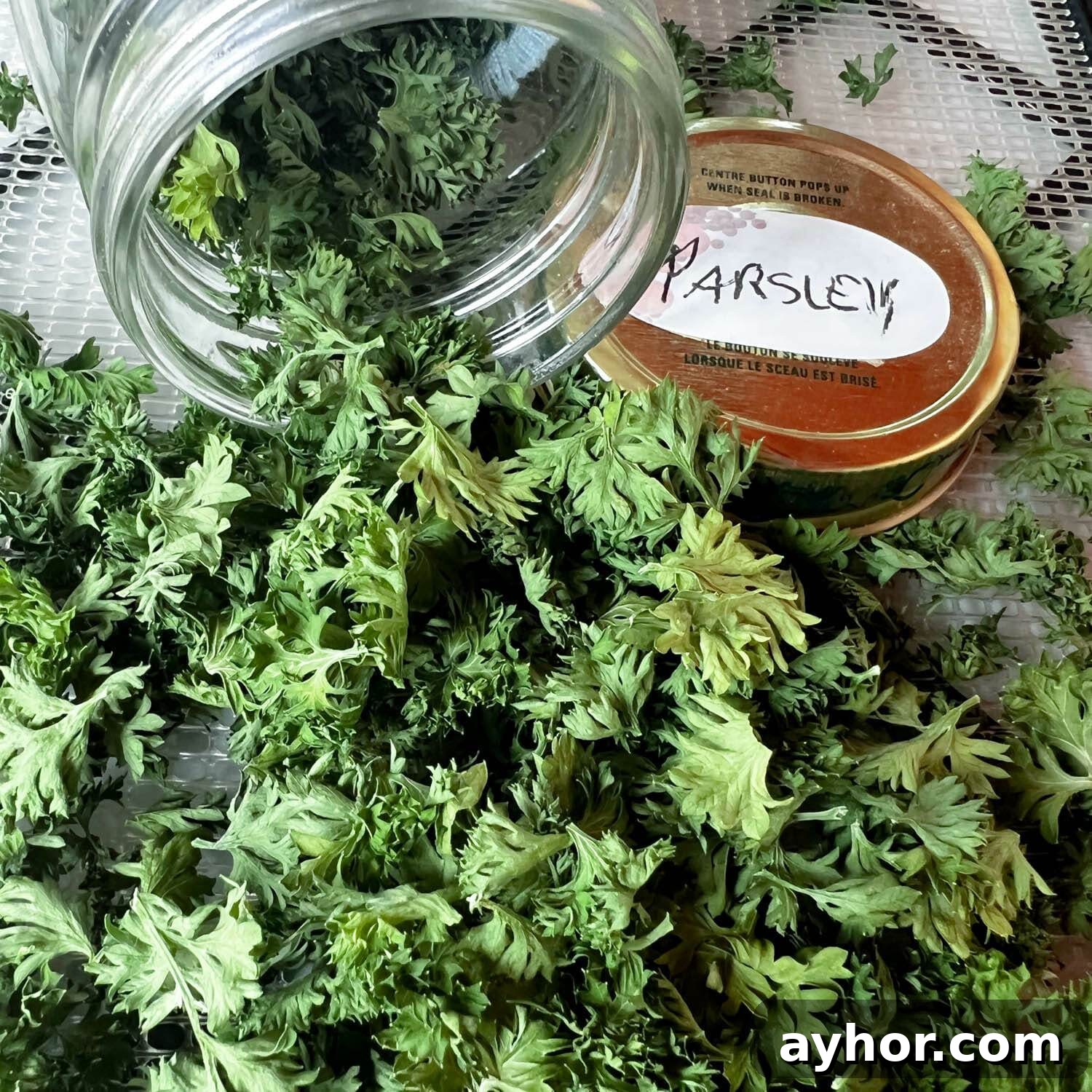
Learn how to dry parsley so you can enjoy fresh herb flavor year-round. Whether you grow parsley in your garden or find a bargain at the market, drying it is straightforward and a smart way to preserve this versatile herb. These methods work for both curly and flat-leaf parsley.
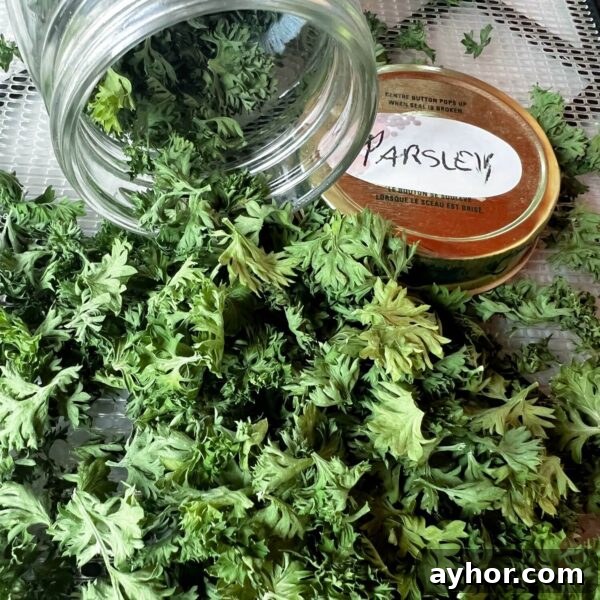
I prefer using a dehydrator because it is the easiest way to get even, consistent results, but you can also dry parsley in an oven (set to a low temperature), in the microwave for small batches, or air dry it if you live in a warm, dry climate. I usually freeze some parsley for the best long-term flavor, but drying is ideal for making seasoning blends, soup mixes, and lightweight backcountry meals.
How to Dehydrate Parsley Using a Dehydrator
Dried parsley is easy to use and rehydrates quickly when added to soups, stews, sauces, and casseroles. To get the most flavor, keep the leaves whole during drying and crush or crumble them just before adding to dishes so the essential oils are released when needed.
Dry Parsley Using a Dehydrator
Summary: Drying parsley in a dehydrator preserves color and flavor effectively. Use whole leaves, remove thick stems, and dry at a low temperature for several hours until leaves crumble easily.
Equipment: dehydrator
Ingredients
- 1 or more bunches parsley (flat-leaf or curly)
Instructions
-
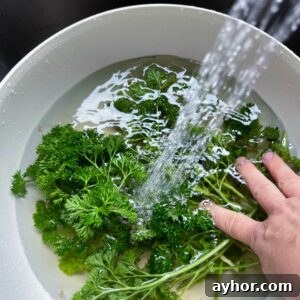
Wash: Swish parsley in a bowl of water to remove dirt and insects. Repeat until the water is clear and no debris remains.

-
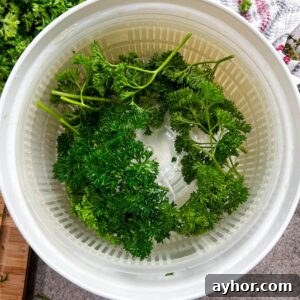
Dry: Remove excess water using a salad spinner or pat dry with kitchen towels. Surface moisture can cause dark spots or mold during drying.
-
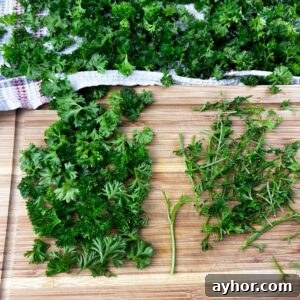
Trim stems: Remove thick stems with scissors or a knife. Thin, tender stems can stay attached, but large woody stems dry more slowly and are better removed.
-
Keep leaves whole: Avoid chopping the leaves before drying. Larger pieces retain more essential oils during drying; chopping releases flavor into the air and weakens the preserved herb.
-
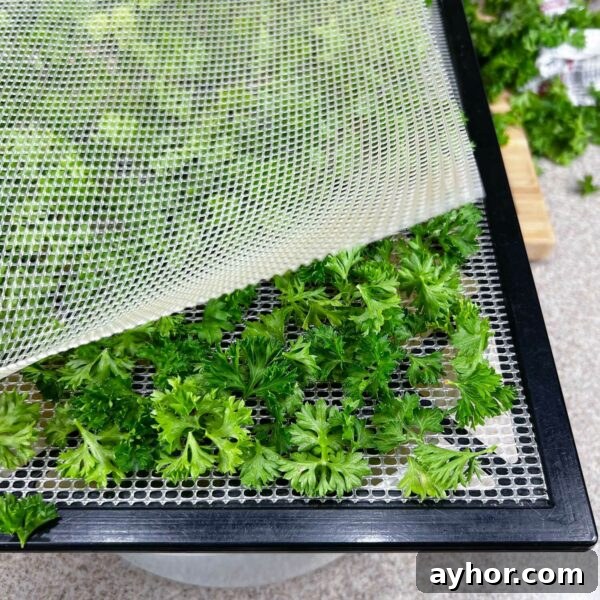
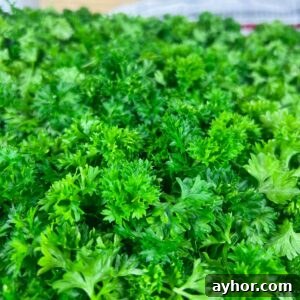
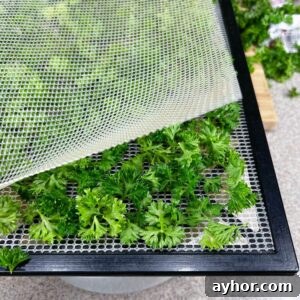
Arrange on trays: Lay parsley leaves in a single layer on mesh dehydrator trays. Use additional trays if needed and cover with a mesh liner so lightweight leaves don’t blow around as they dry.
- Set temperature: Set the dehydrator to around 95°F (35°C). Drying time depends on humidity and leaf thickness but typically ranges from 3 to 5 hours.
-
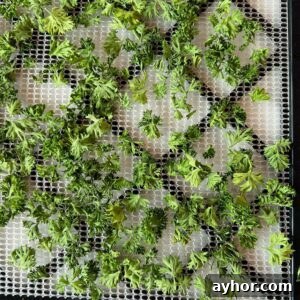
Check for dryness: Parsley is ready when leaves crinkle and crumble easily. If leaves bend without crumbling, return them to dry a little longer.
-
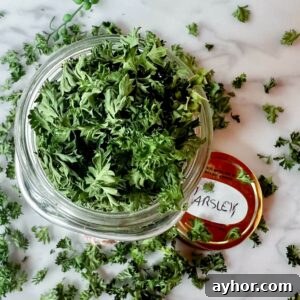
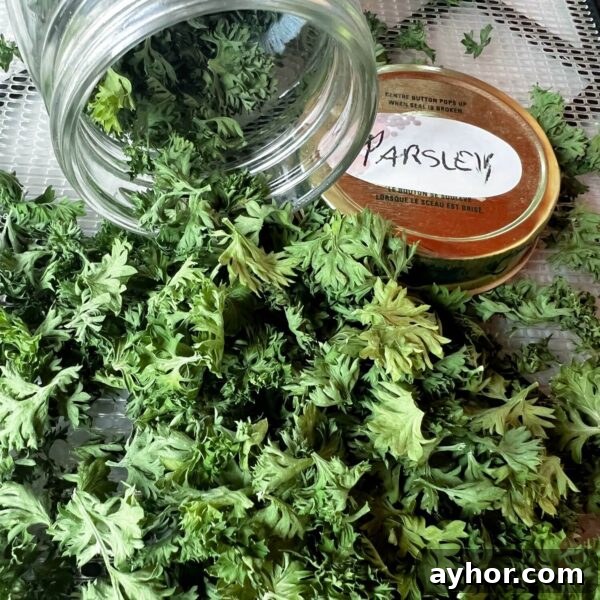
Store: Cool the dried parsley completely, then transfer to an airtight container just large enough to hold it. Excess air accelerates flavor and color loss. Keep containers in a cool, dark place and avoid crushing the leaves until you are ready to use them.
- Use within months: Dried parsley remains safe to eat for years, but peak flavor and color are best within 3–6 months.
Notes
Parsley loses flavor faster than some other dried herbs. After about three months it will already be noticeably milder; by six months it often becomes mostly a colorful garnish rather than a strong flavoring. Store it well and plan to use it within a few months for the best results.
Video
A video demonstration can be helpful for visual learners — consider watching a short demonstration of the steps if you prefer seeing the process.
How to Dry Parsley in the Microwave
Microwave drying works well for small quantities and is fast. Be conservative with time and power to avoid burning your herbs.
- Wash, dry, and remove large stems as in the dehydrator method.
- Place parsley in a single layer between two sheets of paper towel.
- Microwave at medium to medium-high power for about 30 seconds. Microwaves vary, so test with a small batch first. If leaves are not brittle, microwave in additional 20–30 second bursts, checking between bursts.
- Allow the leaves to cool completely, then store in an airtight container.
Can I Dry Parsley in the Oven?
Oven drying is possible but riskier because of higher minimum temperatures on many ovens. If your oven can be set low (near 95°F / 35°C), it can work. Otherwise, higher heat can damage the herb’s essential oils and reduce flavor.
- Set the oven to its lowest temperature.
- Arrange parsley in a single layer on a parchment-lined baking sheet.
- Heat until the leaves are brittle, checking often — expect 2–4 hours depending on the temperature and humidity.
- Cool and store in an airtight container as described above.
How to Hang Parsley to Air Dry
Air drying is effective only in warm, dry, well-ventilated climates. In humid or rainy conditions, air-drying risks mold.
- Wash and dry the parsley but leave stems intact.
- Bundle 5–6 stems together, leaving plenty of space for airflow around each bundle.
- Hang the bundles in a warm, dry, ventilated spot out of direct sunlight.
- Allow up to two weeks for the parsley to fully dry; it should feel crumbly when done.
- Remove stems and store the leaves in airtight containers.
How to Store Dried Parsley
Proper storage protects flavor and color. Use an airtight container that fits the amount of parsley you have—too much headspace traps air and speeds flavor loss. Store containers in a cool, dark location away from heat and light for the longest shelf life.

How to Use Dried Parsley
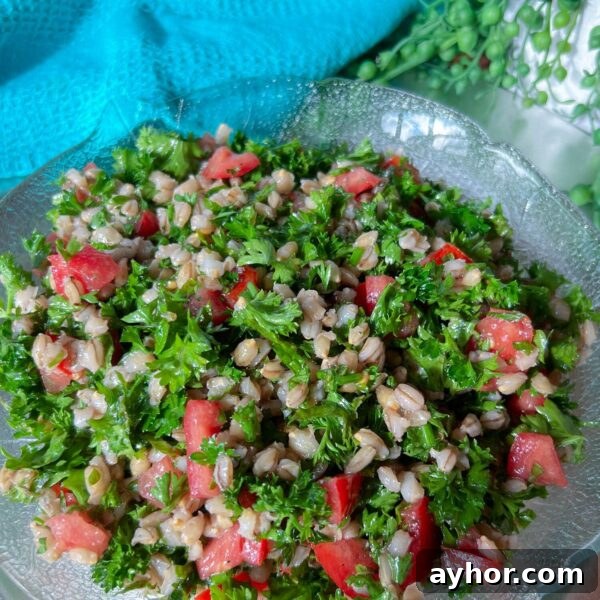
Dried parsley rehydrates quickly, so there’s no need to soak it before using. Add it directly to soups, stews, sauces, casseroles, egg dishes, and potato dishes. Start with about 1 tablespoon and adjust to taste. For a fresh burst of aroma, crumble the leaves just before adding to the dish.
Use dried parsley as a garnish to add color to pasta, rice, or roasted vegetables. It also combines well into seasoning blends, finishing salts, or dried mixes like soup mixes and dehydrated meal kits.
How Long Will Dried Parsley Last?
Parsley loses flavor faster than many other dried herbs. Expect a noticeable drop in flavor by three months and much of the flavor gone by six months. It will still look green and be useful as a garnish, but for the best flavor, plan to use dried parsley within a few months. If you want longer-lasting flavor, freezing fresh parsley is a good alternative.
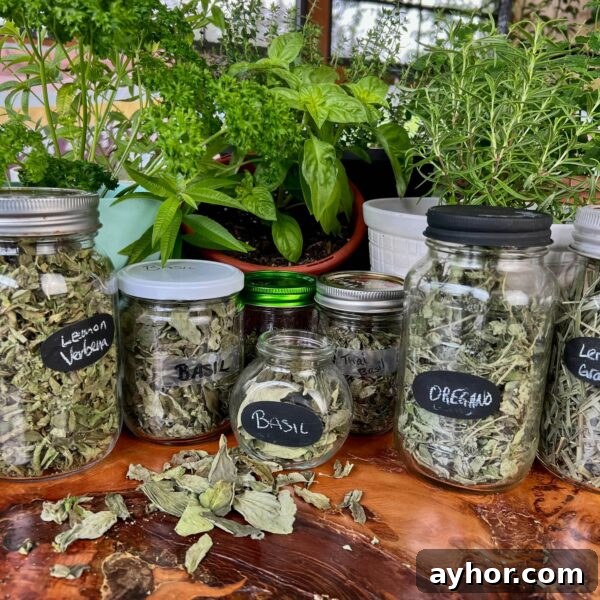
Harvesting and Preserving Other Herbs
Try drying and preserving other herbs as you expand your herb garden. Popular choices include basil, green onions, lavender, rosemary, dill, chamomile, lemon balm, and more. Each herb responds slightly differently to drying, so experiment to find the method that best preserves flavor and color.
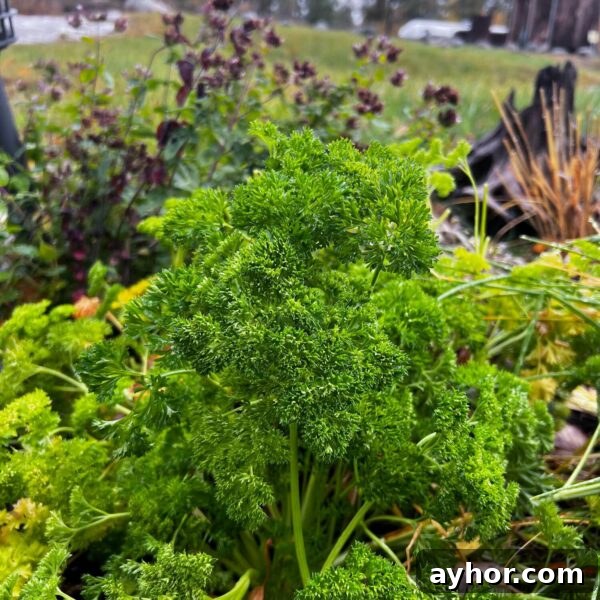
Will you dry parsley this season? What’s your favorite way to use it? Share your experience in the comments or tag photos on social media — it’s a lovely way to celebrate fresh herbs and preserved flavors.

Be confident growing and using herbs.
Find practical tips, recipes, and preserving methods to help you take herbs from garden to table with confidence.
I’m Getty, a food educator and professional home economist. I share simple, practical ways to select, store, and serve seasonal ingredients. Enjoy cooking with herbs and preserving their flavor for use all year.