Recently I discovered a mother lode of wild grapes growing near my home in Katy, TX. The vines produced Mustang grapes (Vitis mustangensis), which are too acidic to eat raw but make excellent homemade grape jam. In a previous post I described making jam from seeded grapes; here I provide a more detailed, step-by-step account with additional photographs of the process.
Picked Wild Mustang Grapes in Plastic Bags
Whether gathered from your yard or foraged in the wild, grapes need careful inspection and cleaning. I washed and soaked the fruit thoroughly, removing any damaged or shriveled berries as I worked.
Wild Mustang Grapes Soaking in Water
I soaked the grapes multiple times to dislodge dirt and any tiny debris. During each rinse I sorted out imperfect berries so only healthy fruit went forward to cooking.
Triple Washed Wild Mustang Grapes
After cleaning, I plucked the grapes from the stems and inspected them once more. The yield was nearly enough to fill two large colanders.
Wild Mustang Grapes Triple Washed, Plucked and in a Colander
Next, I gave the fruit another rinse and transferred it to a large pot with about two cups of water. The water prevents scorching as the grapes begin to break down.
Mustang Grapes in a Pot to be Boiled
I heated the pot over medium-high and simmered the grapes, stirring occasionally until the skins burst and the fruit broke down completely. A clear sign they’re ready is when there are no intact grapes left—only juice, pulp, skins and seeds remain.
Mustang Grapes Boiled Down
After the cooked mixture cooled slightly, I poured it through a colander to separate the juice and pulp from the seeds and skins. To extract as much liquid as possible, I pressed down on the solids with the back of a spoon.
Mustang Grapes Boiled and with the Juice Being Separated through a Colander
The process yielded about 15 cups of juice and pulp. I tasted a small sample to check acidity; these grapes had mellowed considerably with cooking and did not require any neutralizing agent. The cooked juice tasted much less tart than the fresh fruit.
15 Cups of Juice and Pulp of Mustang Grapes in a Pot
Following the pectin package directions, I combined 5 cups of grape juice with one box of pectin and brought it to a full boil. Then I stirred in 7 cups of sugar and continued mixing until the mixture reached a rolling boil for one minute, which is the required time to activate the pectin and set the jam.
Mustang Grape Jam Being Boiled
When canning, I follow the pectin instructions and standard canning guidelines—sterilizing jars and processing them according to reliable sources. I also consult the manufacturer’s directions and traditional canning resources to ensure a safe seal and long shelf life.
Wild Mustang Grape Jam in Jars
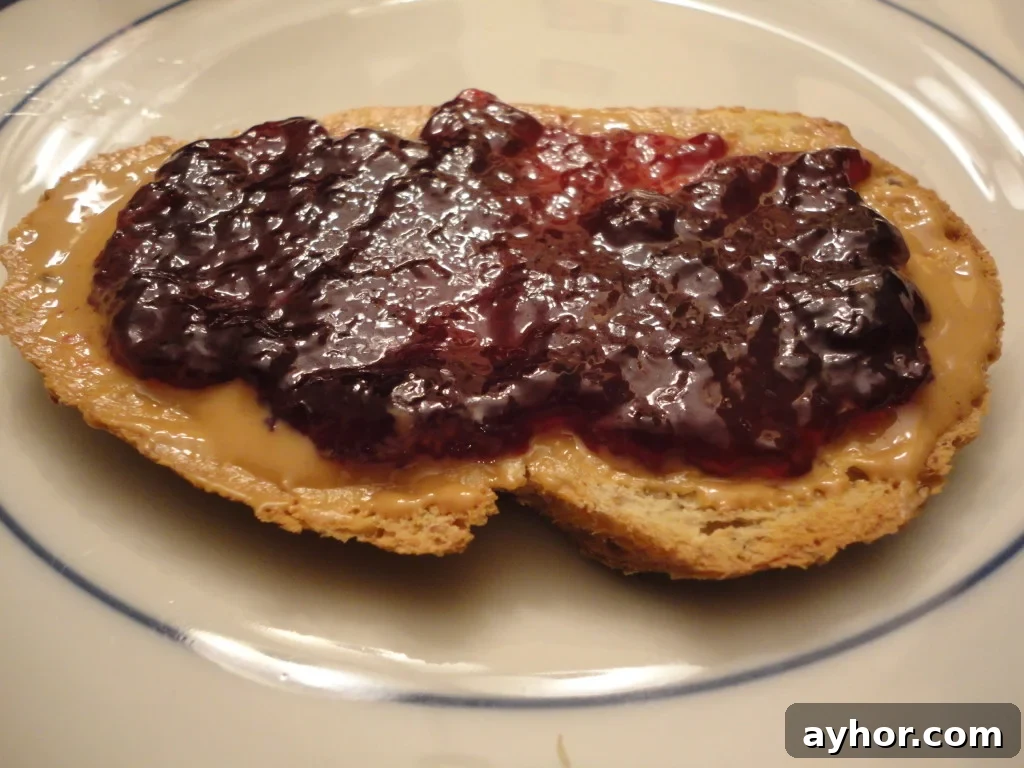
The finished jam has a deep, almost black-purple color and an intense flavor reminiscent of Concord grapes. The texture is smooth and spreads beautifully. My first official taste test was peanut butter and toast—the jam’s bold grape character paired perfectly with the sandwich.
Homemade Mustang Grape Jam with Peanut Butter & Toast
Making jam from wild Mustang grapes takes a little work—cleaning, cooking, and careful canning—but the result is a richly flavored, visually striking preserve that captures the unique character of these wild grapes.