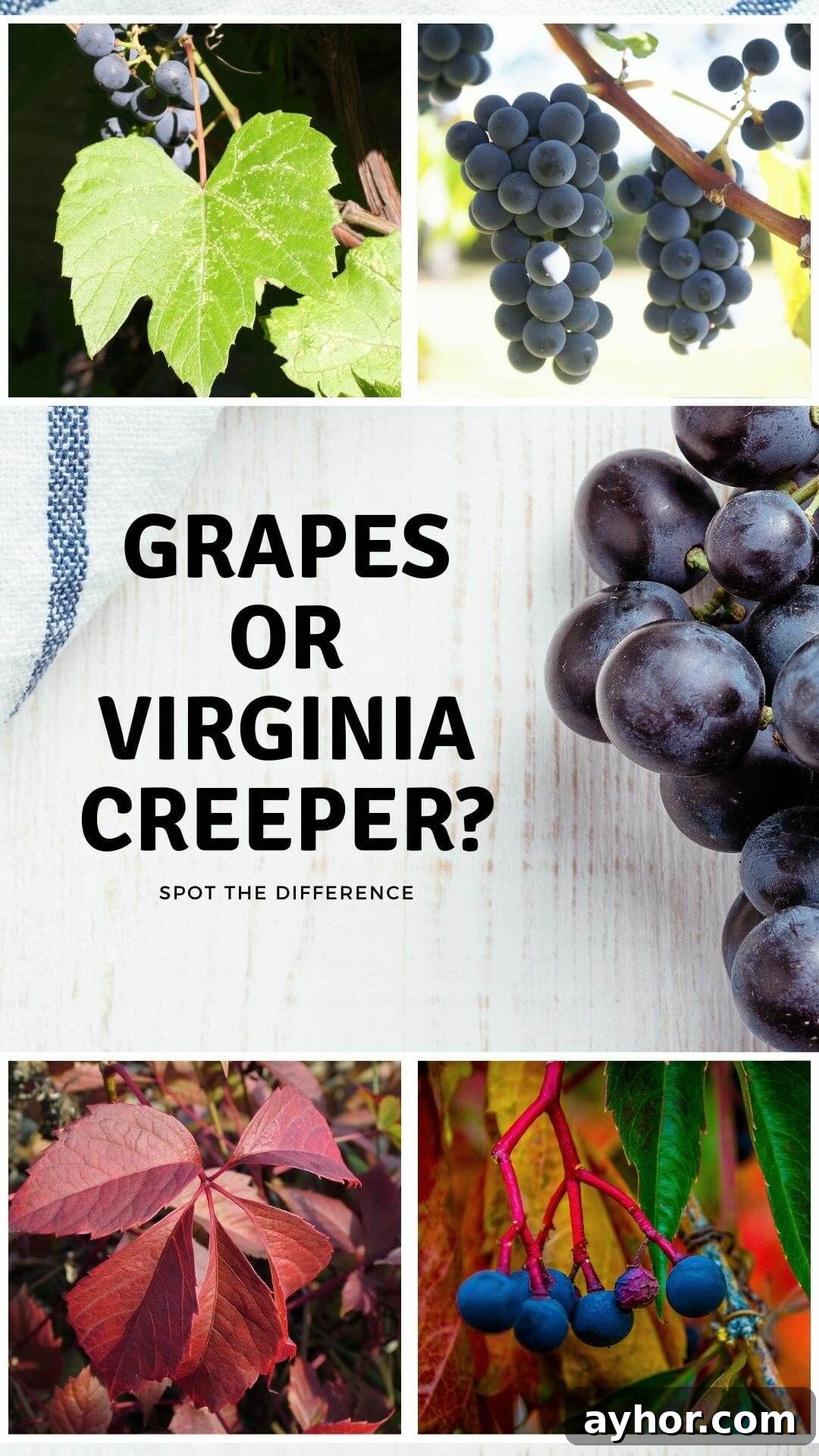
Do you have grapes or Virginia creepers growing nearby? Here are clear, practical tips to help you tell them apart so you don’t mistake toxic berries for edible fruit.
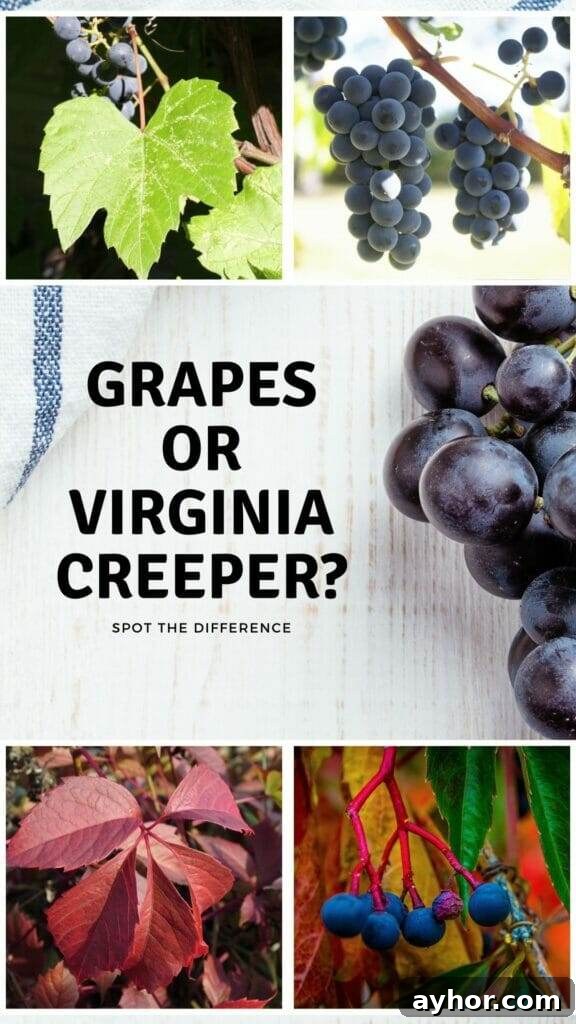
Spot the Difference – Grapes or Virginia Creepers
Virginia creeper (Parthenocissus quinquefolia) produces berries and leaves that are toxic to humans, so it’s important to distinguish it from true grape vines. Another wild look-alike to watch for is Canada moonseed, which can resemble grapes but is poisonous.
Virginia Creepers
Also called woodbine, woodbind, false grape, five-leaf ivy or thicket creeper, Virginia creeper is a vigorous, perennial woody vine commonly used as groundcover or for climbing walls and fences.
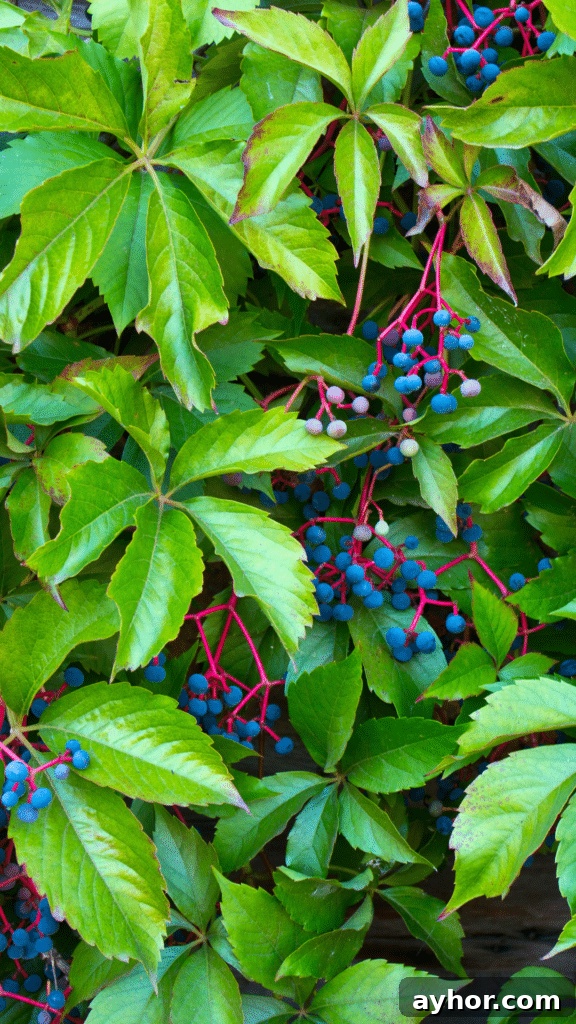
Key features:
– Leaves are compound with five separate leaflets, each typically 2–6 inches long with toothed edges.
– Leaf color changes through the seasons: new growth can be red, then green through summer, and shades of red to dark purple in fall.
– Berries are dark blue to deep purple on reddish, spreading stems. They grow on several small branches rather than in a single, compact cluster like grapes.
Grapes
True grapes (Vitis species) are deciduous woody vines cultivated for fruit. They produce characteristic clusters of berries and have different leaf and stem characteristics than Virginia creeper.
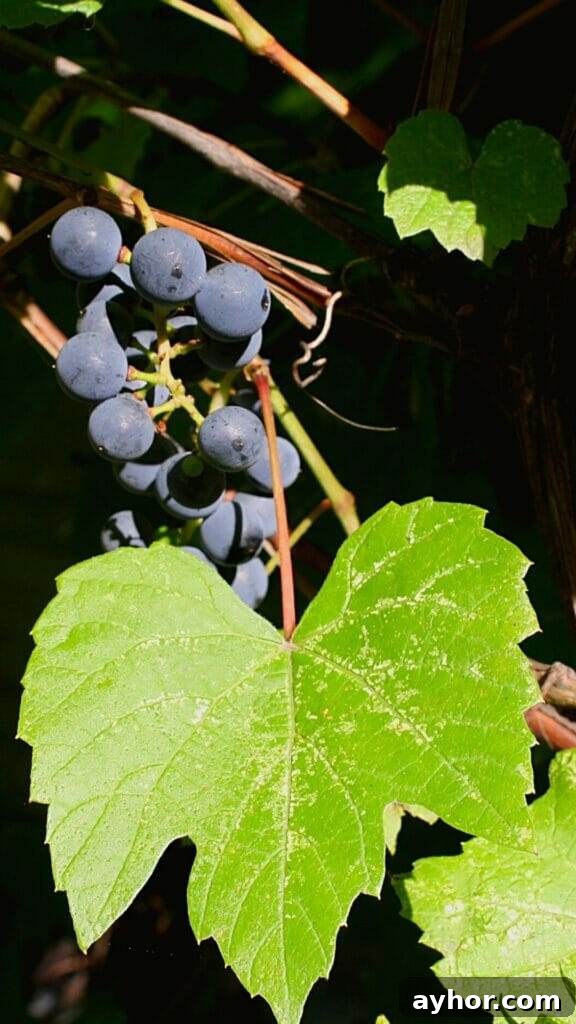
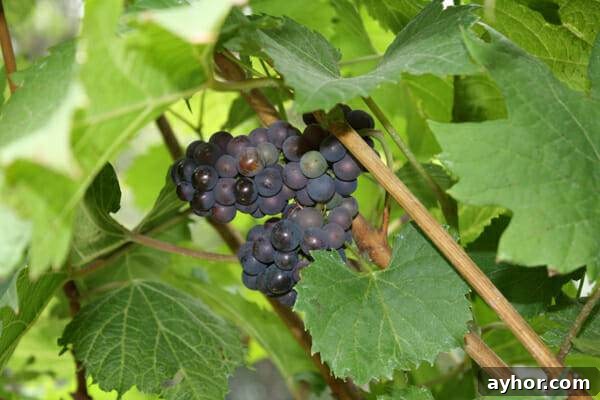
Key features:
– Leaves are simple (single, not divided into separate leaflets) and often broad with lobes and rounded teeth.
– Grapes form tight, elongated clusters of berries that range in color from green to red-purple to deep blue.
– The vines can grow long—up to about 50 feet (15 m) if unchecked—but are usually pruned to encourage fruiting. Older stems develop gray-brown, slightly shredded bark.
In short: count the leaflets and look at the fruit arrangement. Five separate leaflets and loose, spread-out berries indicate Virginia creeper. A single, lobed leaf with berries in tight clusters indicates a grape vine. Enjoy your grapes and leave Virginia creeper berries to the birds.
Prairie Grape Varieties
We recently joined family for an annual grape harvest on a farm in southern Manitoba. Together we picked roughly half an acre of grapes—about 700–800 vines—so it was a sizeable and satisfying harvest. Below are some varieties commonly grown in prairie regions.
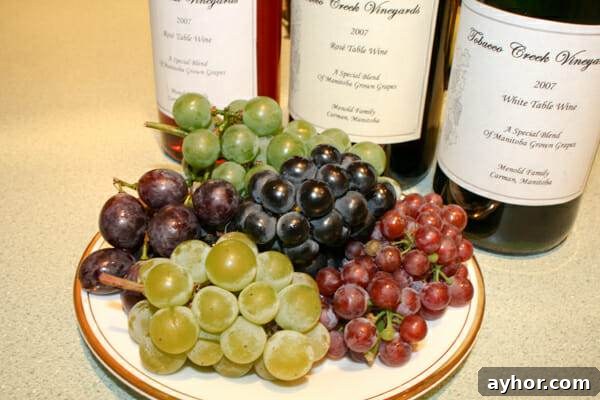
The photo shows tender varieties such as Ontario Green, Valiant, Himrod, Kay Grape and Red Candice. Growing these in Manitoba requires careful attention and protection. There are also hardier types that grow more easily in northern climates—Valiant, Beta and some Morden varieties—which produce dark bluish or purple fruit.
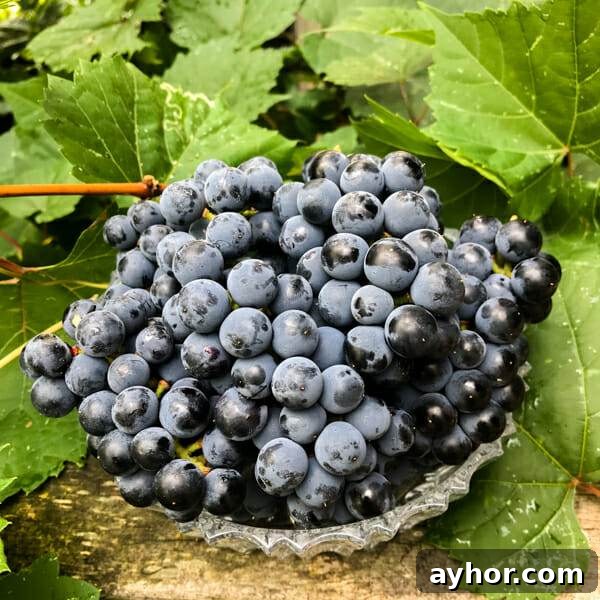
These prairie grape varieties are typically ready to harvest from September into early October. Harvest timing depends on variety and local conditions, so look for full color and a sweet taste. If you grow grapes yourself, pruning and site selection will help maximize fruit quality and yield.
I hope this guide helps you confidently distinguish grapes from Virginia creeper and enjoy a safe, successful harvest of prairie grapes when the season arrives.
Enjoy your grapes and leave the Virginia Creeper berries for the birds!