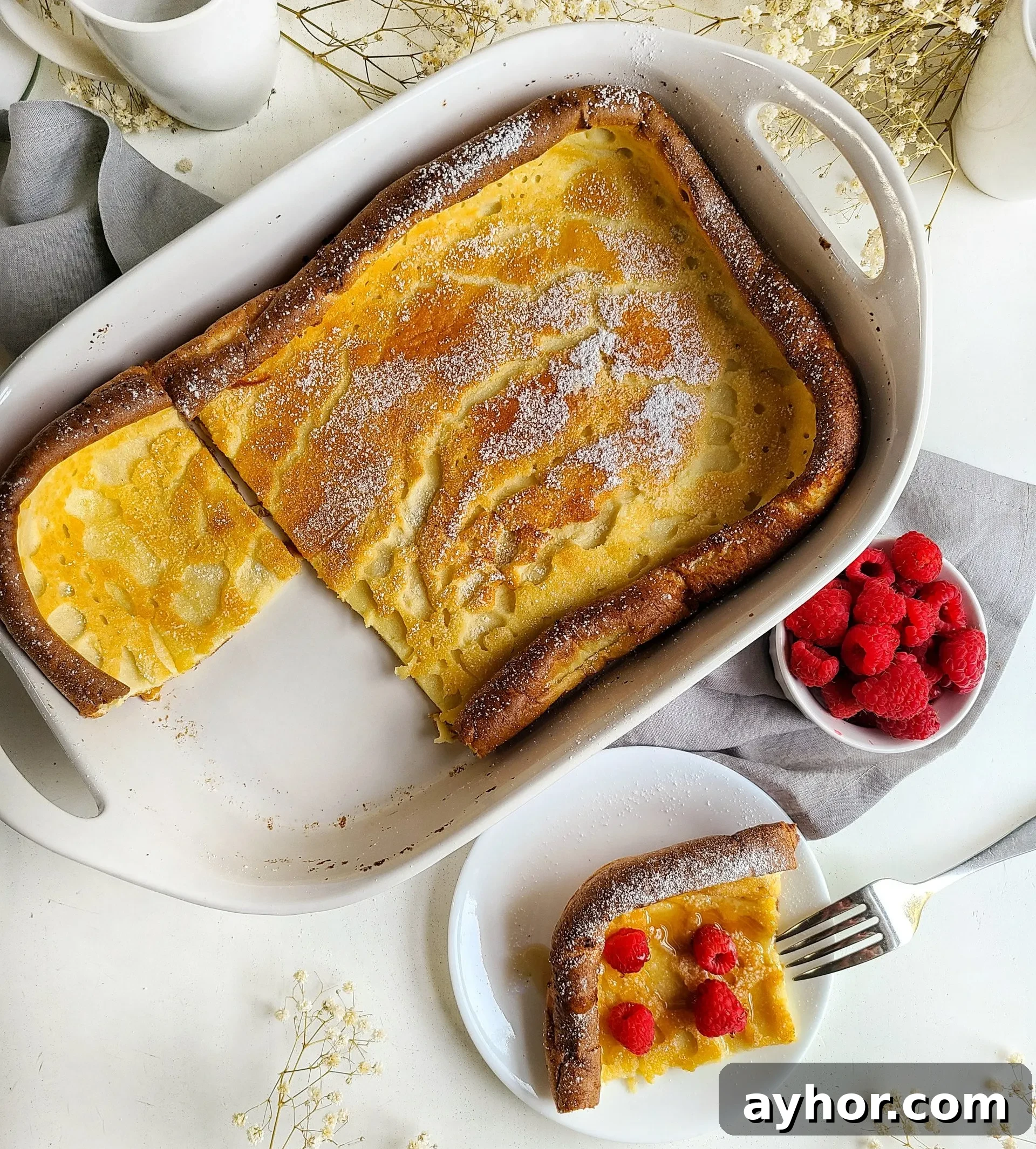
German pancake, also known as a Dutch baby, is a puffy baked pancake that delivers big flavor with minimal effort. It’s one of the simplest pancakes to make—only about five minutes of prep—and it bakes into a dramatic, golden puff that collapses slightly as it cools, creating tender edges and a custardy center.
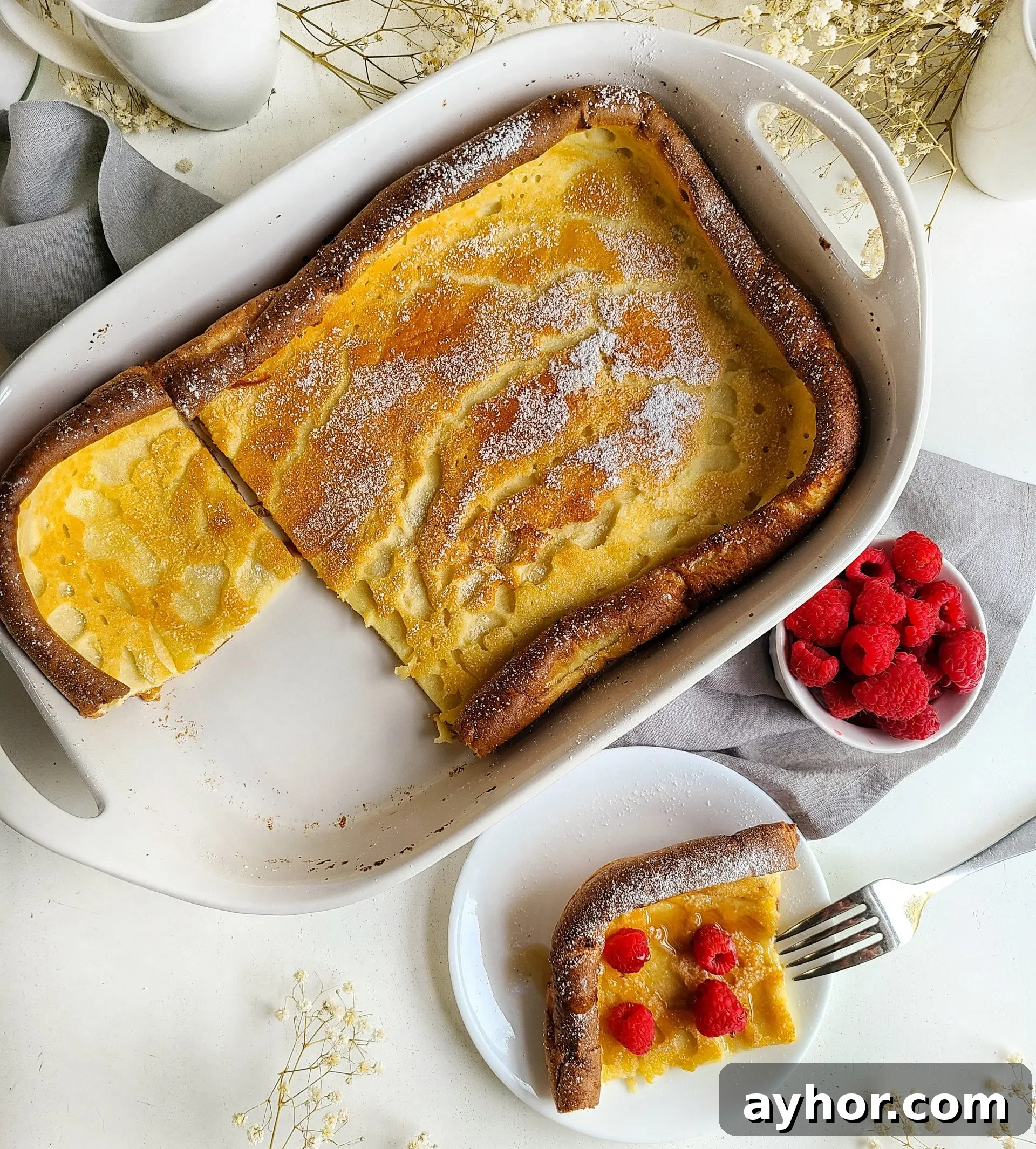
Where a traditional skillet pancake is flipped on the stovetop, a German pancake is blended and baked. The batter is simple and smooth, and the oven does the work for you, producing a tall, souffle-like rise thanks to the eggs rather than chemical leaveners. For busy mornings, this is a perfect option: the hands-on time is short and the payoff is impressive.
With young kids at home, quick breakfasts that still feel special are a lifesaver. I often make this for breakfast or even a fast weeknight dinner—versatile, comforting, and easily dressed up with whatever toppings you have on hand.
What is a German Pancake?
A German pancake (or Dutch baby) is a baked pancake that relies on eggs for lift instead of baking powder or baking soda. Its texture sits somewhere between a popover and a Yorkshire pudding: crisp, browned edges and a soft, slightly custardy center. It’s mildly sweet and acts as a great canvas for both sweet and savory toppings.
Why You’ll Love It
Easy: Prep takes about five minutes. Combine the ingredients in a blender or whisk them by hand, pour into a hot buttered pan, and bake.
Delicious: The pancake has delicate flavor—lightly sweet and rich from the eggs and butter—so you can keep it simple or dress it up.
Simple ingredients: The recipe uses pantry staples you likely already have: eggs, flour, milk, a little sugar and vanilla, and butter.
Endless topping options: Fresh fruit, jam, chocolate, maple syrup, powdered sugar, lemon and sugar, or even savory toppings like smoked salmon and crème fraîche—this pancake pairs well with many flavors.
Ingredients
A few notes about the ingredients are below. Full measurements and step-by-step instructions are included in the recipe card further down.
- Eggs – Provide structure and the lift that creates the puffed edges.
- Milk – I use 2% but lower-fat milk works fine; the batter should be smooth and pourable.
- Flour – All-purpose flour is best for texture and structure.
- Vanilla – Adds a gentle, pleasant aroma and flavor.
- Sugar – A small amount of white sugar lightly sweetens the pancake.
- Butter – Melted in the pan before adding the batter; it browns and crisps the edges while adding flavor.
How to Make a German Pancake
Preheat your oven to 425°F (220°C).
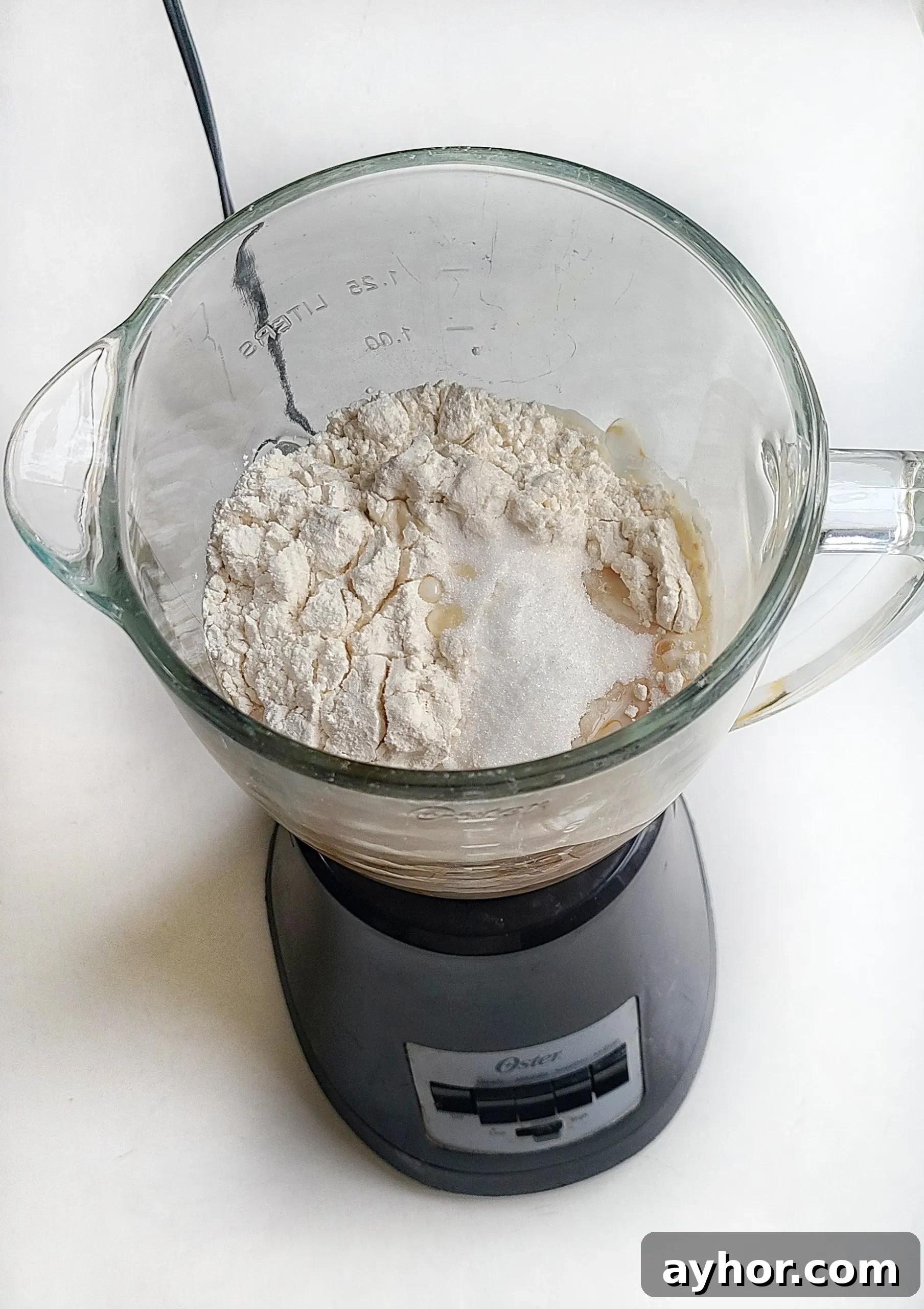
In a blender, combine the eggs, milk, sugar, vanilla extract, salt, and flour. Blend until the batter is completely smooth. If needed, stop once to scrape down the sides and blend again so there are no lumps.
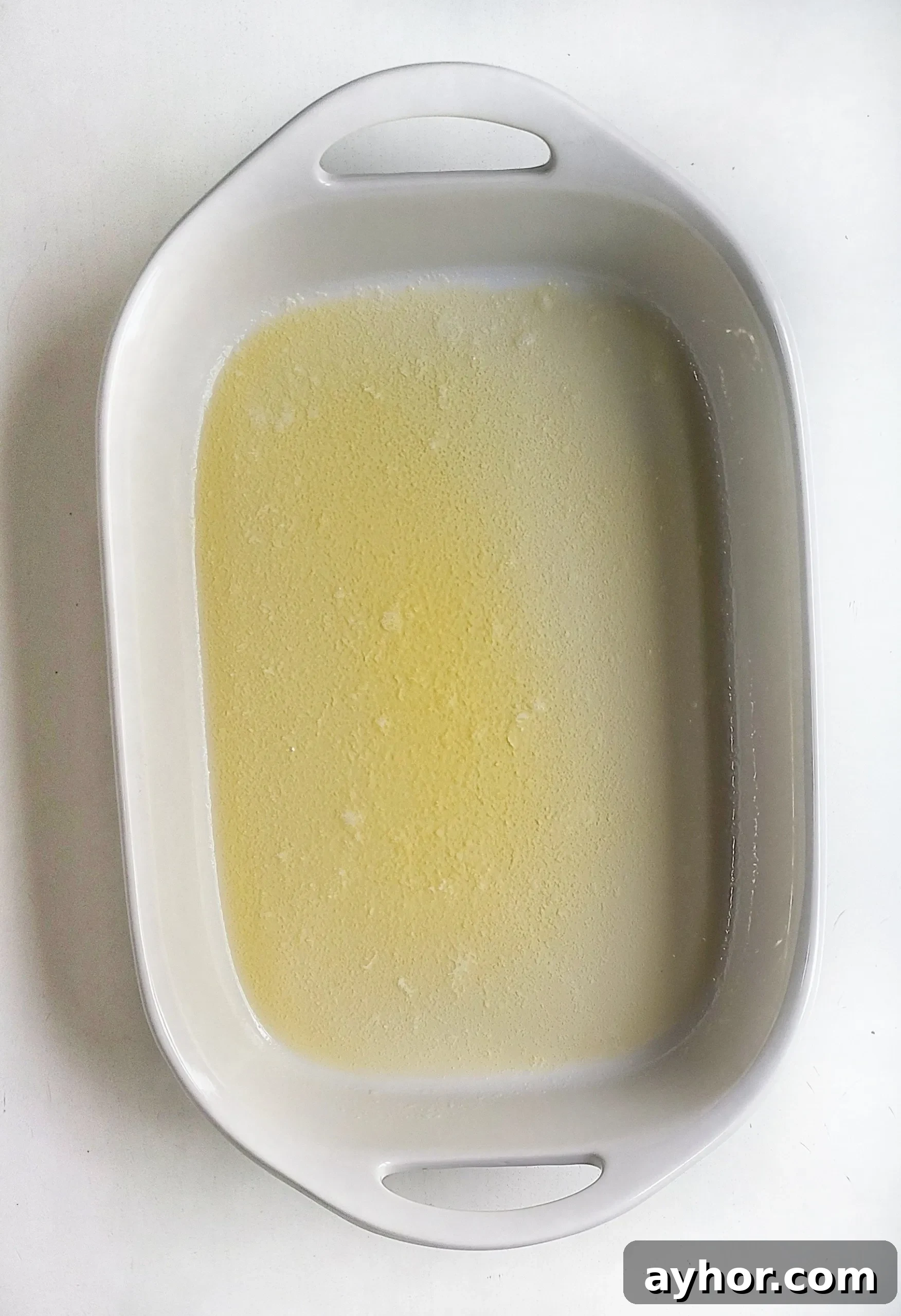
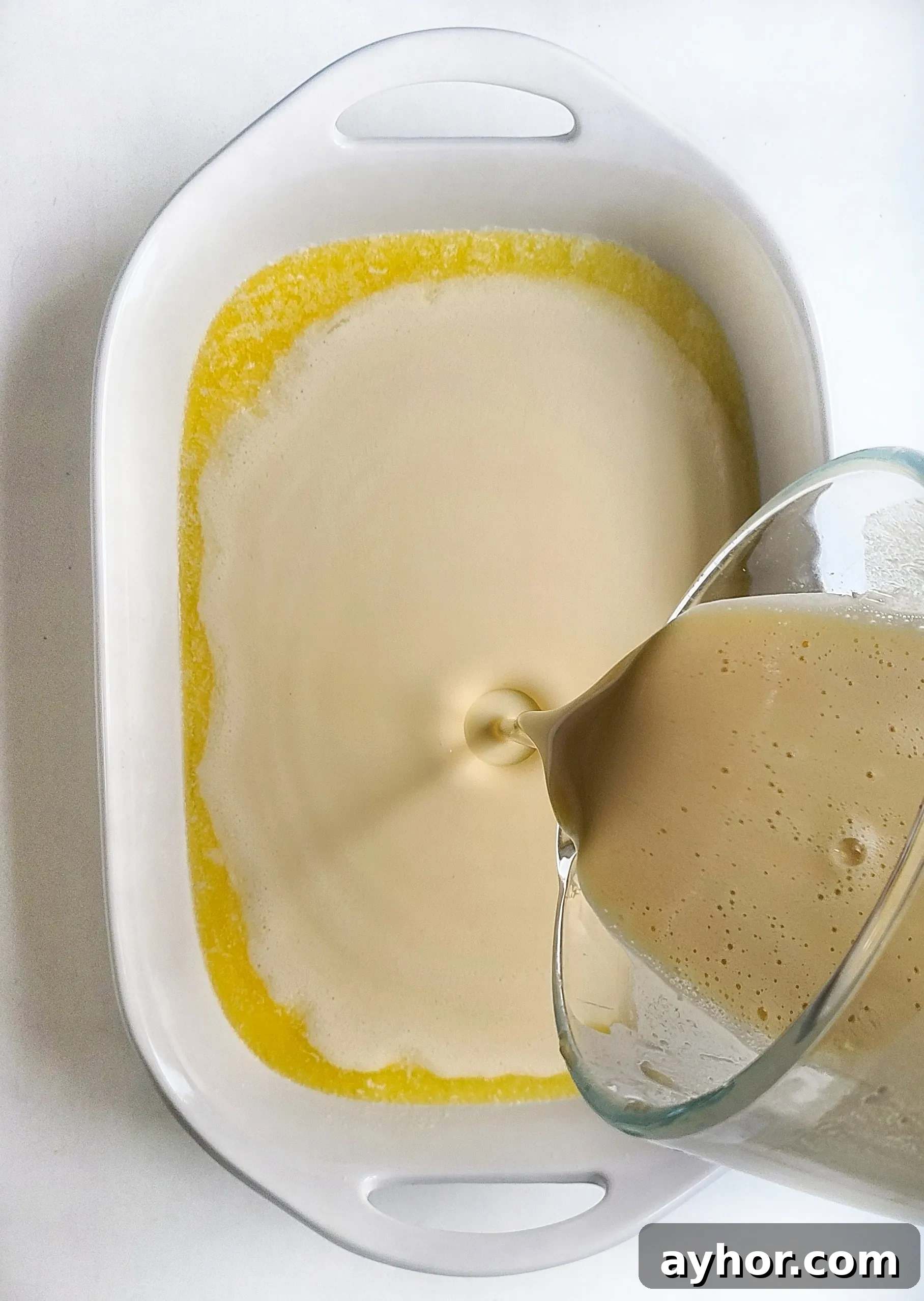
When the oven reaches temperature, place the butter in your 9×13-inch pan and put the pan in the oven just long enough for the butter to melt and become hot but not burned. Remove the pan carefully—use oven mitts—then immediately pour the blended batter into the hot buttered pan.
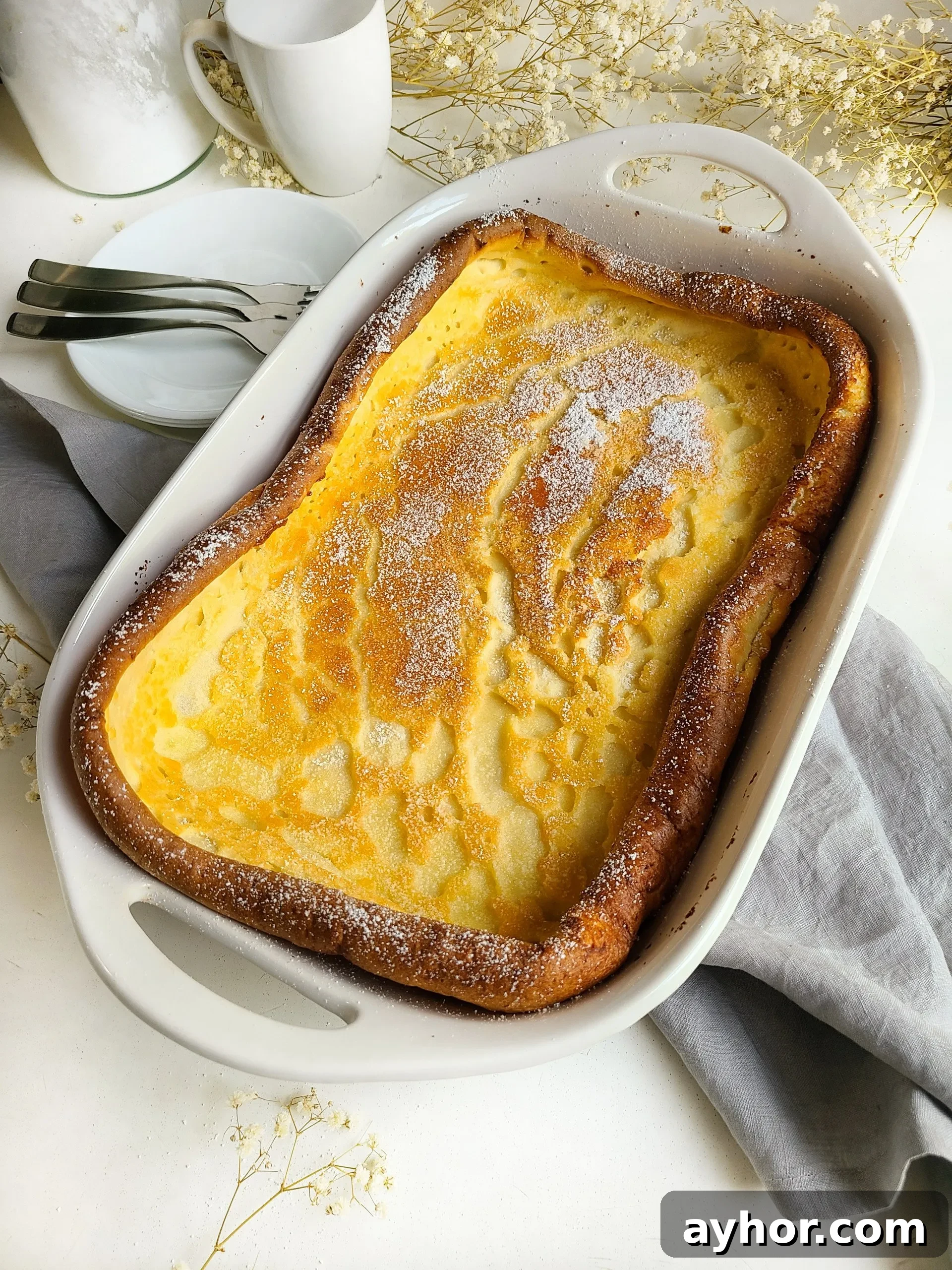
Return the pan to the oven and bake for 20–24 minutes, or until the pancake is puffed and the edges are golden brown. It will rise dramatically in the oven; once removed, it will deflate slightly as it cools—that’s normal and expected.
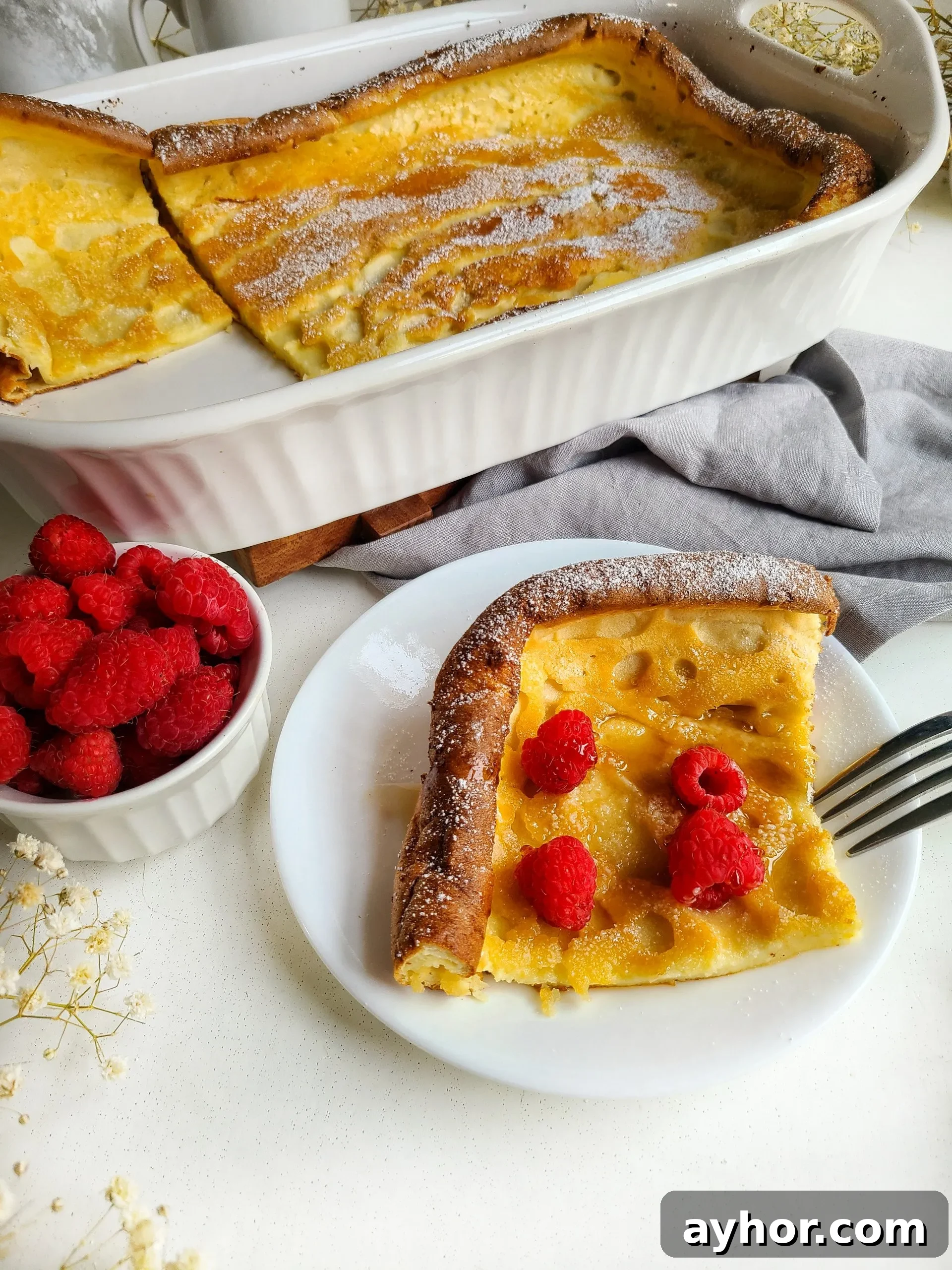
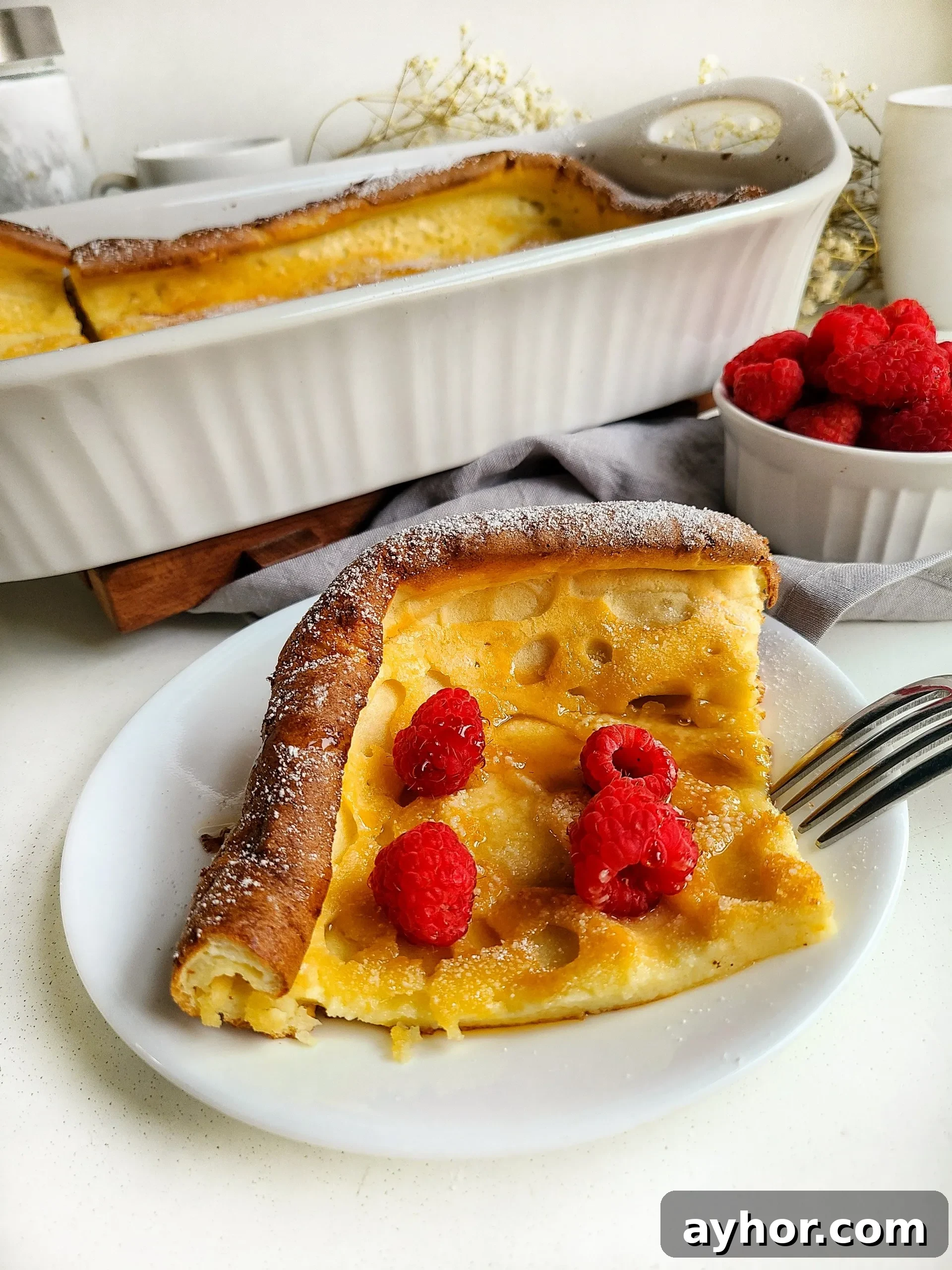
After a few minutes out of the oven, sift icing sugar over the top and serve with your favorite toppings—fresh berries and maple syrup are classic choices, or try lemon juice and powdered sugar for a bright, simple finish.
Frequently Asked Questions
What type of pan should I use?
Use a 9×13-inch pan for a generous pancake that serves multiple people. Both metal and ceramic pans work; metal heats and browns faster, so watch your baking time and adjust slightly if needed.
How should I store leftovers?
This pancake is best eaten right after baking. It does not keep its puff and texture well when stored—if you do refrigerate leftovers, expect a denser texture and reheat gently.
What does “spooned and leveled” flour mean?
Spooned and leveled flour means you spoon flour into the measuring cup and level it with a knife instead of scooping the cup directly into the flour bag. Scooping compresses the flour and results in too much flour, which can make baked goods dense.
What toppings work best?
Treat it like any pancake—maple syrup, powdered sugar, lemon and sugar, fresh fruit, fruit compote, chocolate, or savory toppings if you prefer. My favorites are powdered sugar and a drizzle of maple syrup.
Do ingredients need to be room temperature?
No—cold eggs and milk straight from the fridge work fine. The blender will combine everything smoothly.
If you try this German pancake, consider leaving a rating and a comment sharing your favorite toppings and any tweaks you made.
Recipe Card
German Pancake
A puffy baked pancake that’s quick to prepare and impressive to serve. Perfect for breakfast, brunch, or an easy dinner.
Prep Time: 5 mins
Cook Time: 25 mins
Servings: 4 large servings
Equipment
- Blender (or whisk and bowl)
- 9×13-inch pan
Ingredients
- 6 large eggs
- 1 cup all-purpose flour, spooned and leveled*
- 1 cup milk
- 1 1/2 tsp vanilla extract
- 1/8 tsp salt
- 2 tbsp sugar
- 1/4 cup salted butter
- Icing sugar for topping
Instructions
- Preheat oven to 425°F (220°C).
- In a blender, add eggs, milk, sugar, vanilla extract, salt, and flour. Blend until smooth, scraping down sides if necessary.
- Place butter in the 9×13-inch pan and put the pan in the oven until the butter melts and the pan is hot.
- Remove the pan carefully from the oven and pour the blended batter into the hot buttered pan.
- Bake for 20–24 minutes, until puffed and browned around the edges. It will deflate slightly after being removed from the oven.
- Sift icing sugar on top and serve with desired toppings.
Notes
*Spooned and leveled flour ensures accurate measurement—spoon flour into the measuring cup and level off with a knife rather than scooping the cup into the flour container.
You can whisk the batter by hand instead of using a blender if you prefer. Baking time may vary by pan type; metal pans usually bake a little faster than ceramic.