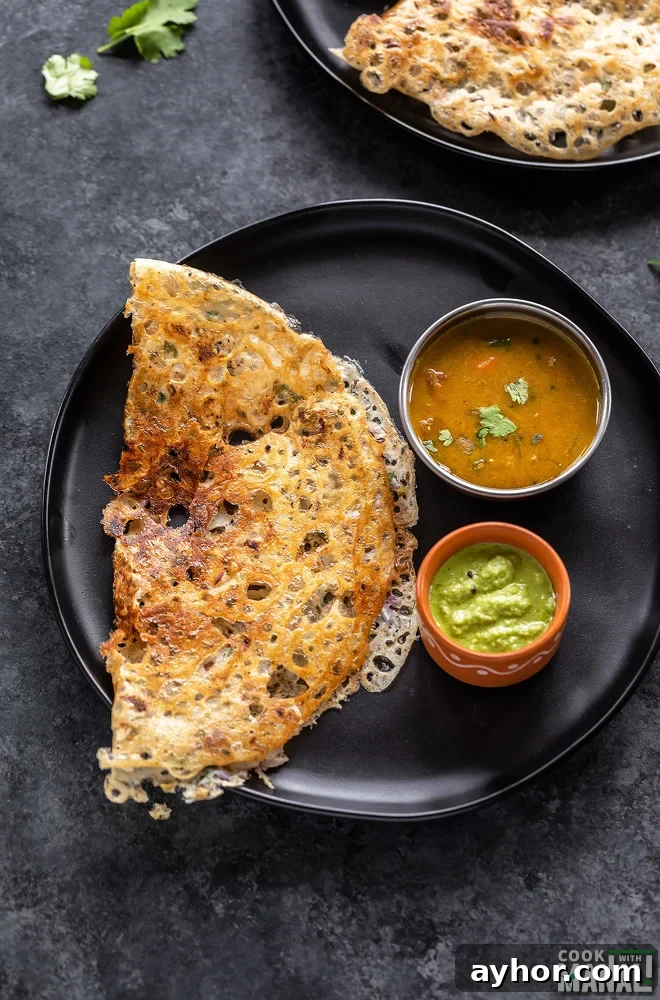
Make restaurant-style crispy Rava Dosa at home with this clear, step-by-step recipe. These crepes are light, lacy and wonderfully crisp. Serve them with sambar and coconut-cilantro chutney for a satisfying meal.
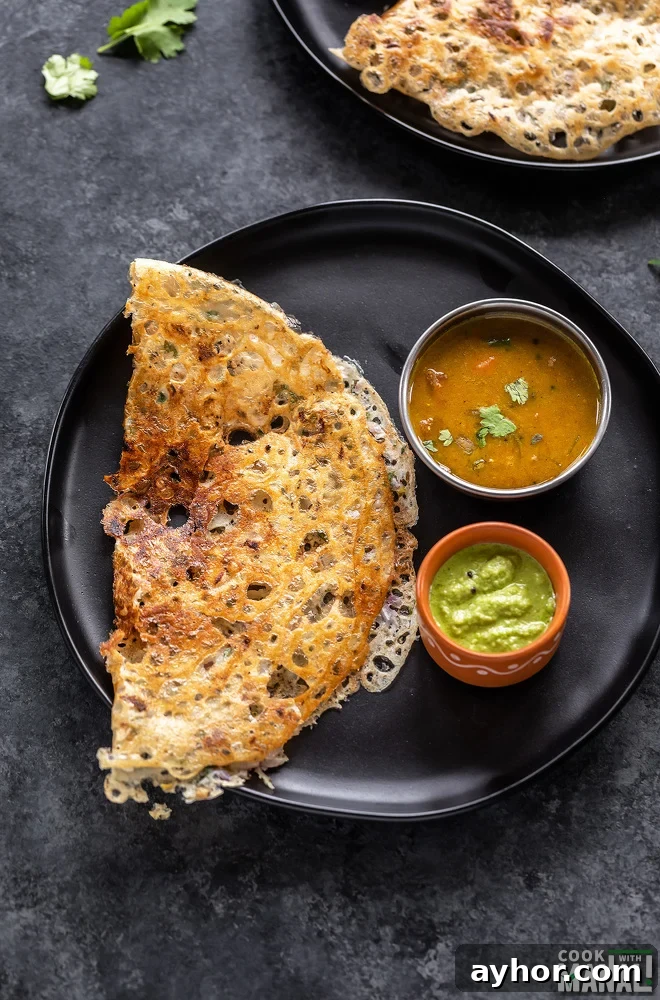
I enjoy all kinds of dosa—plain, masala dosa, pesarattu and adai—yet Rava Dosa has a special place in my heart. It’s an instant dosa made from semolina (rava/sooji) and rice flour, flavored with aromatic seasonings. Unlike traditional fermented dosa batters, this version comes together quickly and does not require fermentation, making it a convenient option for busy days or when you want dosa on short notice.
What is Rava Dosa?
Rava Dosa is a thin, savory crepe prepared primarily from semolina mixed with rice flour and a few seasonings. The batter is very thin—close to buttermilk consistency—so when poured onto a hot pan it spreads into a signature lacy or net-like pattern. This porous texture is part of what makes Rava Dosa so crisp and appealing. Because the batter is not fermented, the dosa can be made instantly after a short resting period.
Tips to Make Crispy Rava Dosa
To achieve restaurant-style crispiness, follow these essential tips:
- Use an iron tawa or heavy skillet: An iron pan conducts heat evenly and helps create the best crisp texture. Non-stick pans will cook the dosa and it will taste fine, but the crispiness will be noticeably different.
- Cook on low heat: After warming the pan, reduce the flame and cook the dosa slowly. Low, steady heat allows the dosa to dry and brown evenly. Expect the dosa to take 10–15 minutes to become golden and crisp; patience is important.
- Keep the batter very thin: The batter should be watery enough to pour easily—stir frequently because semolina settles at the bottom. Add more water as needed while you make multiple dosas.
- Pour from a height in a thin layer: Pour the batter starting from the edges and move toward the center, lifting the ladle to let the batter fall in thin streams. This technique creates the characteristic lace pattern. Don’t try to make a solid pancake; leave most of the gaps intact and fill only the larger holes if needed.
Method
Follow these steps to prepare the batter and make the dosas:
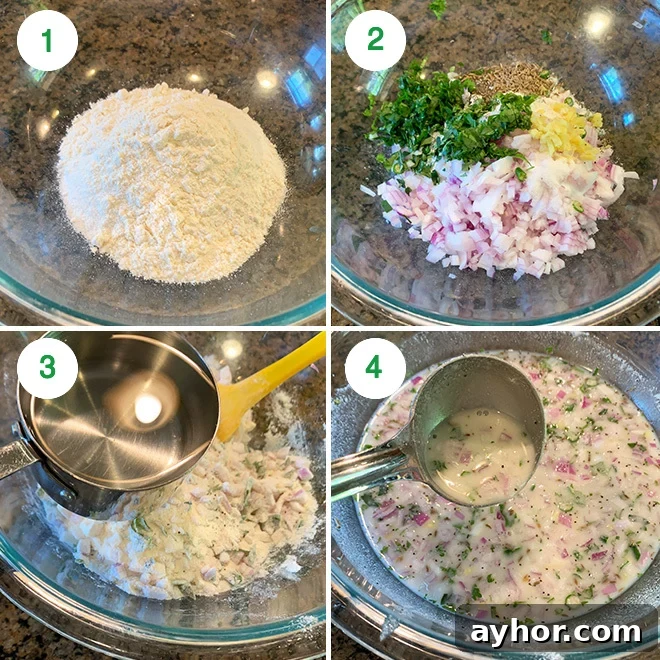
- In a large bowl, combine 1/2 cup rava (sooji/semolina), 1/2 cup rice flour and 1/4 cup all-purpose flour.
- Add one medium finely chopped onion, one chopped green chili, 1 teaspoon chopped ginger, 6–7 finely chopped curry leaves and 1 tablespoon chopped cilantro. Sprinkle in 1/2 teaspoon cumin seeds, 1/4 teaspoon black pepper and 3/4 teaspoon salt, or to taste. Mix the dry ingredients and aromatics together.
- Gradually add water while stirring. Start with about 2.5 cups (around 20 oz) and mix until the batter is very thin and lump-free. The consistency should resemble buttermilk. Cover and let the batter rest for 20 minutes so the semolina softens.
- After resting, stir the batter well because the rava will settle to the bottom. If the batter has thickened, add an additional 1/4 cup water (or as needed) to reach the proper thin consistency.
- Heat an iron tawa over medium heat until warm, then wipe it lightly with oil. Reduce the heat to low-medium before pouring the batter.
- Using a ladle, pour the batter around the edges of the pan and then toward the center, moving the ladle continuously. Avoid pouring at a single point repeatedly. The batter should land in thin streams to form the lace pattern. Do not try to fill every gap; fill only the largest holes if necessary.
- Once the dosa is poured, drizzle about 1 teaspoon of oil around the edges and a little on top. Keep the heat low-medium and allow the dosa to cook slowly until it turns golden brown and crisp. Do not flip or disturb it while cooking.
- Cooking time for a 10-inch pan is typically 12–14 minutes. Larger dosas will take longer. When the dosa is evenly golden and crisp, gently lift and fold it. Because the batter is very thin, it usually does not require cooking on the second side.
- Repeat the process, stirring the batter before pouring each dosa since the rava settles. Add water as needed if the batter thickens while you cook.
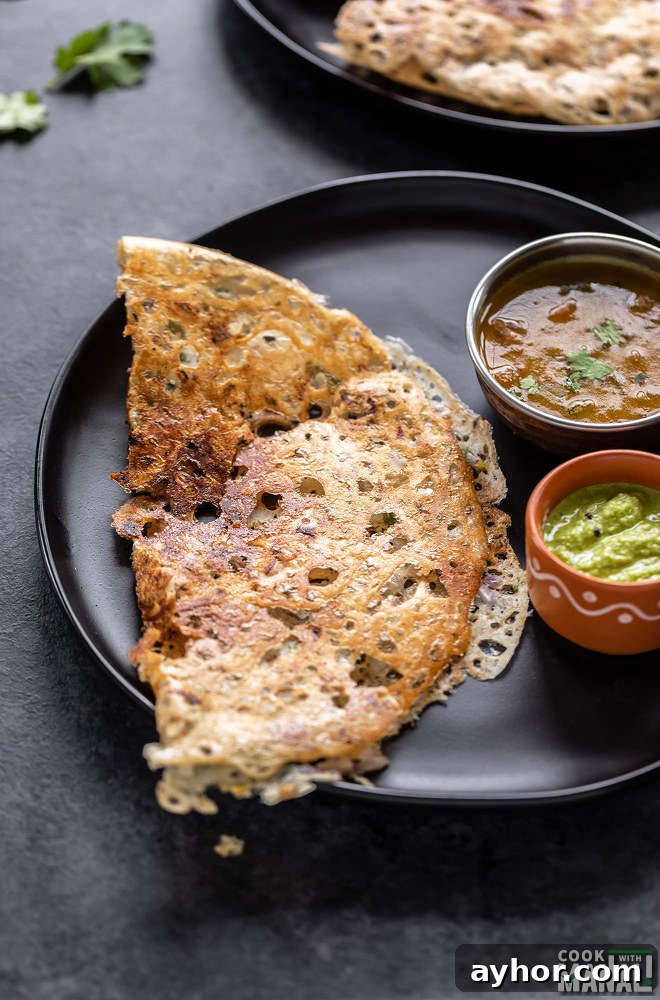
Serve the crispy Rava Dosa hot with sambar and coconut-cilantro chutney for the best experience. These dosas make a delightful breakfast, brunch or light dinner and pair perfectly with the tangy, spicy flavors of traditional South Indian accompaniments.
Notes
- Stir the batter before pouring each dosa to redistribute the semolina. This prevents uneven consistency.
- If you prefer a heartier meal, fill the dosa with a spicy potato masala and fold to serve as a masala-filled Rava Dosa.