
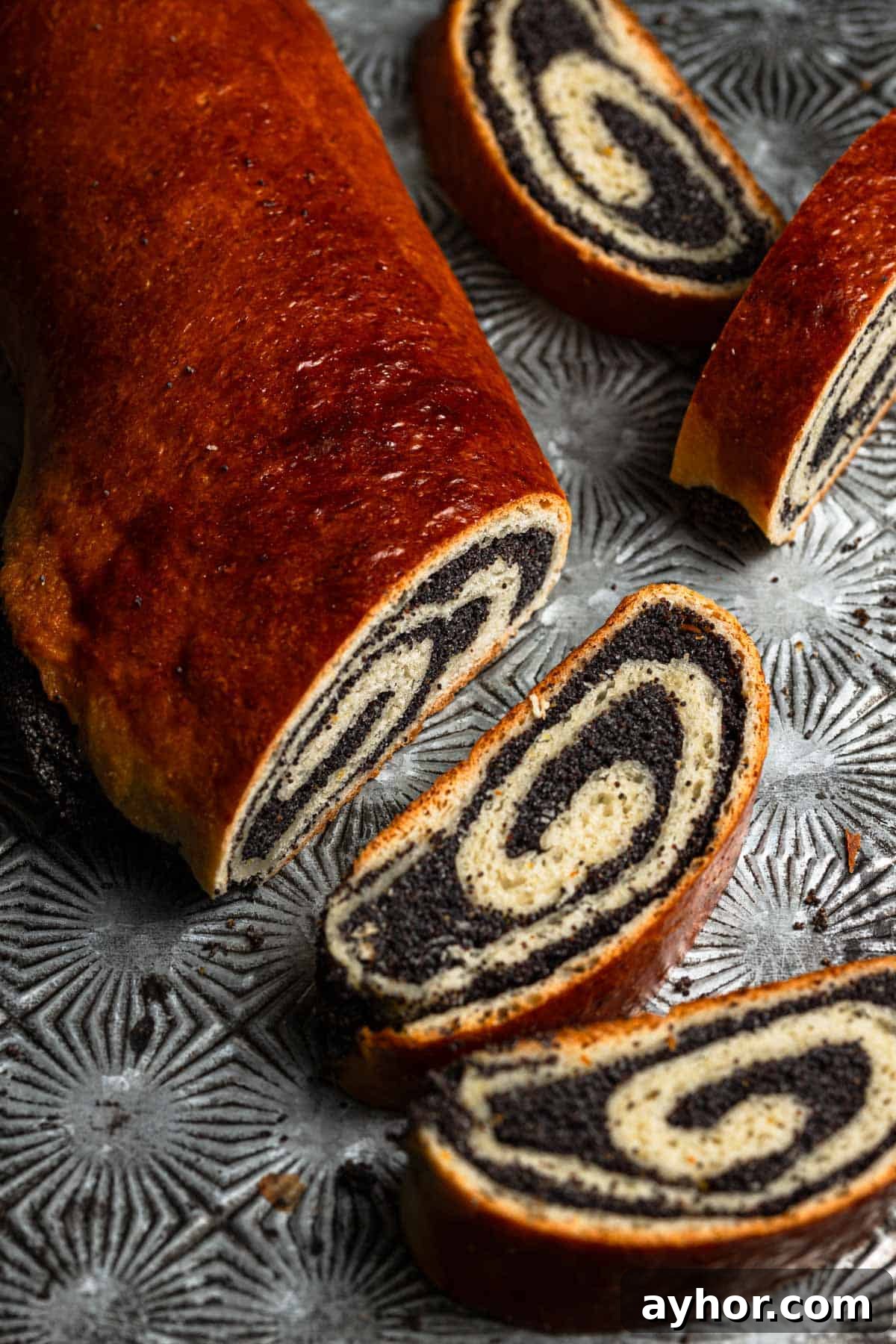
Beigli is a traditional Hungarian pastry made from a sweet yeasted dough rolled around rich fillings like poppy seeds or walnuts. The result is a golden, glossy crust with a tender, buttery interior wrapped around a smooth, sliceable filling.

Authentic Hungarian beigli is a holiday classic, often served at Christmas. For me, the recipe is connected to my best friend’s Libyan grandmother: Jewish families who migrated from Hungary and Eastern Europe to North Africa brought these pastries with them, then carried the recipes again when they immigrated to Israel. Today, beigli is part of many Jewish holiday tables, especially for Rosh Hashanah and Yom Kippur.
The dough for beigli sits somewhere between a sweet bread and a cookie. It’s elastic and light like bread but tender and slightly dense like a cookie. To get that texture, this version uses only egg yolks and a touch more sugar than you’d use for typical sweet bread, creating a rich, tender crumb similar to certain rugelach and babka doughs.
This write-up presents a Jewish-adapted beigli with both poppy seed and walnut fillings. If you enjoy exploring Jewish bakes from around the world, try other recipes inspired by family traditions and migrations.
Key Ingredients
The full recipe appears in the recipe card below. Here’s a quick overview of the main ingredients, their roles, and possible substitutions.
For the dough
- Unbleached all-purpose flour (or bread flour). These provide enough gluten to hold the structure; bleached or cake flours are not suitable.
- Instant yeast. Convenient because it can be mixed directly with flour and liquids. You can substitute active dry yeast (proofed) or fresh yeast—see recipe notes for adjustments.
- Sugar and salt. Sugar adds moisture and sweetness; salt strengthens the dough’s structure. Both are essential.
- Egg yolks. Add fat for tenderness and contribute structure without making the dough tough.
- Lukewarm milk. Use lukewarm (not hot) so you don’t harm the yeast; cold milk slows the rise.
- Unsalted butter at room temperature. The butter enriches the dough, giving it a smooth, buttery bite.
- Orange or lemon zest. Orange zest isn’t traditional but brightens the flavor of both poppy seed and walnut fillings; lemon works too.
- Egg for egg wash. Don’t skip this — it yields the classic glossy, golden finish.
Vegan option: use plant-based butter and water or a non-dairy milk instead of dairy milk.
For the poppy seed and walnut fillings
The two fillings are prepared the same way with the same basic components, adjusted for the main ingredient.
- Poppy seed filling: Use whole poppy seeds. Ground poppy seeds can taste bitter when overprocessed; if you prefer a finer texture, pulse them briefly in a coffee grinder before making the filling.
- Walnut filling: Use ground walnuts. Other nuts can substitute if you want a different flavor.
- Optional: a couple of tablespoons of raisins to add chew and sweetness.
How to Make
The dough requires two rests, so plan ahead. The fillings can be made while the dough rests or prepared up to three days in advance.
Make the dough
Step one: In a large bowl or standing mixer, combine the flour, yeast, sugar, salt, orange zest, and egg yolks. Drizzle in the lukewarm milk and vanilla while mixing on low.
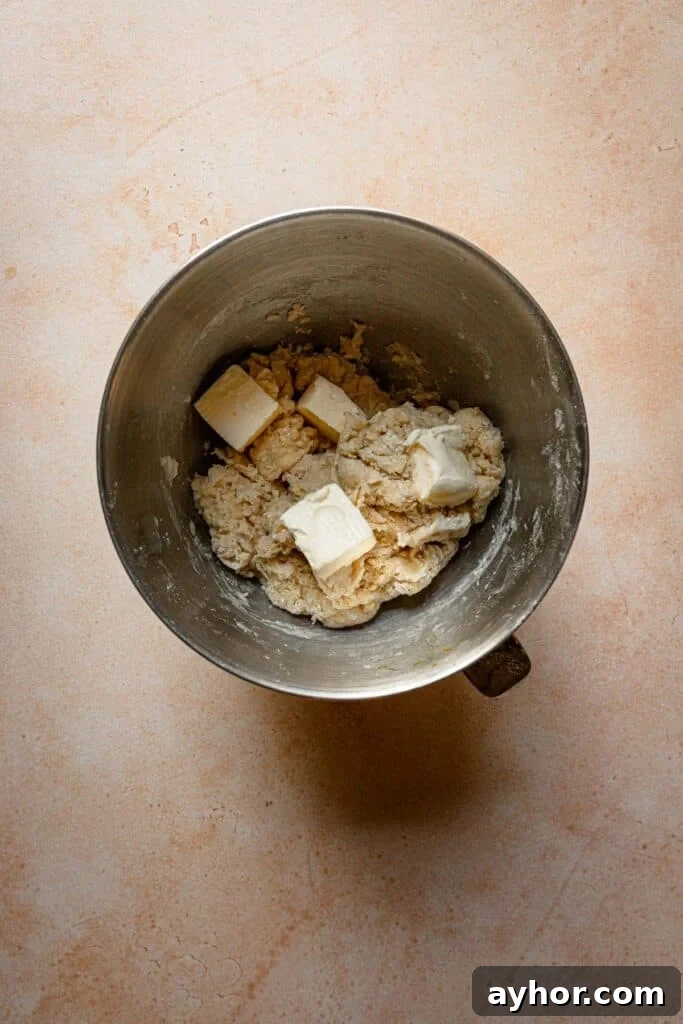
Step two: Mix until the flour is hydrated and you have a shaggy mass, then add the butter.
Step three: Increase to medium speed and knead with a dough hook until the dough is smooth, about 3–4 minutes.
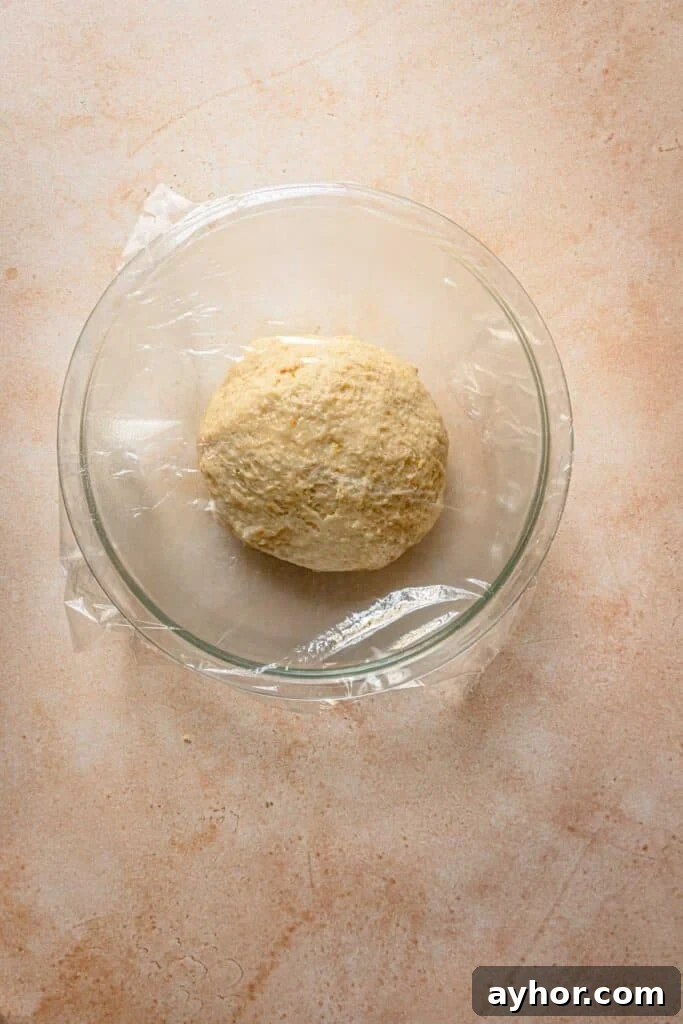
Step four: Place the dough in a bowl, cover with plastic wrap, and rest for about 90–120 minutes for the first rise. The dough will become smoother but not extremely puffy.

Make the fillings
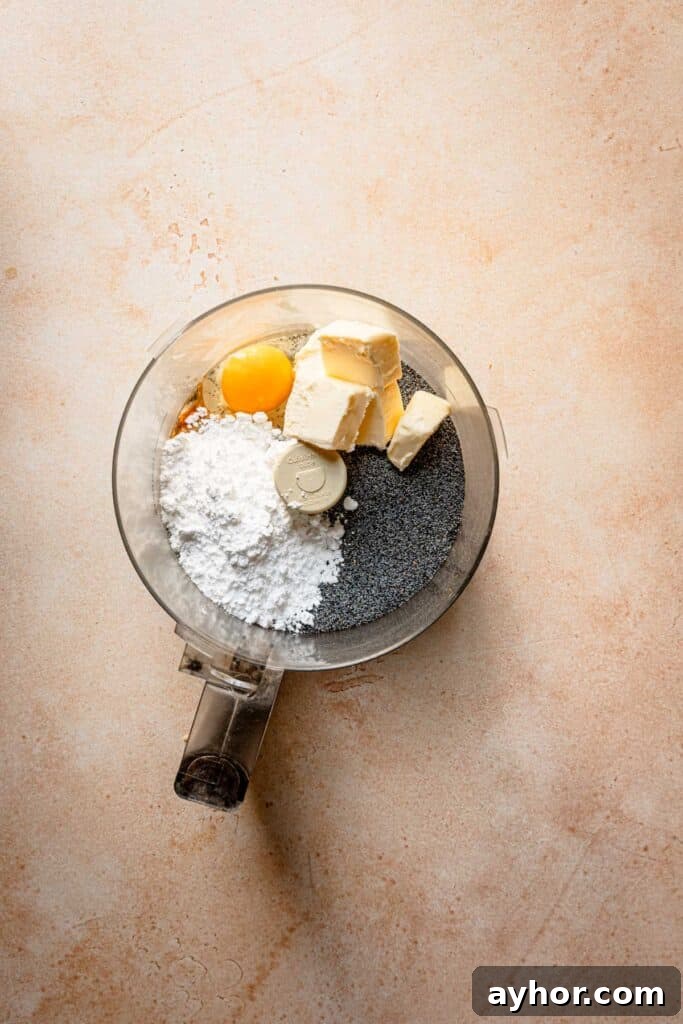
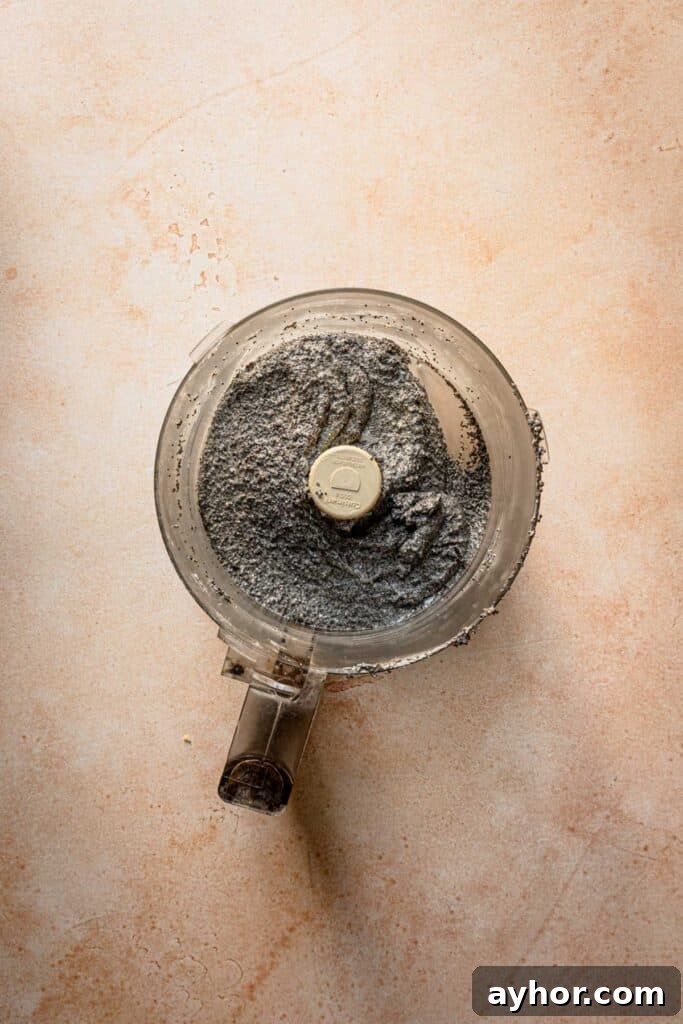
Poppy seed filling: In a food processor combine whole poppy seeds, powdered sugar, flour, egg, and butter. Process until smooth and pasty. Transfer to a bowl and stir in raisins if using.
Walnut filling: In the food processor combine ground walnuts, powdered sugar, flour, egg, and butter. Process to a smooth paste, then transfer to a separate bowl and fold in raisins if desired.


Assemble and bake
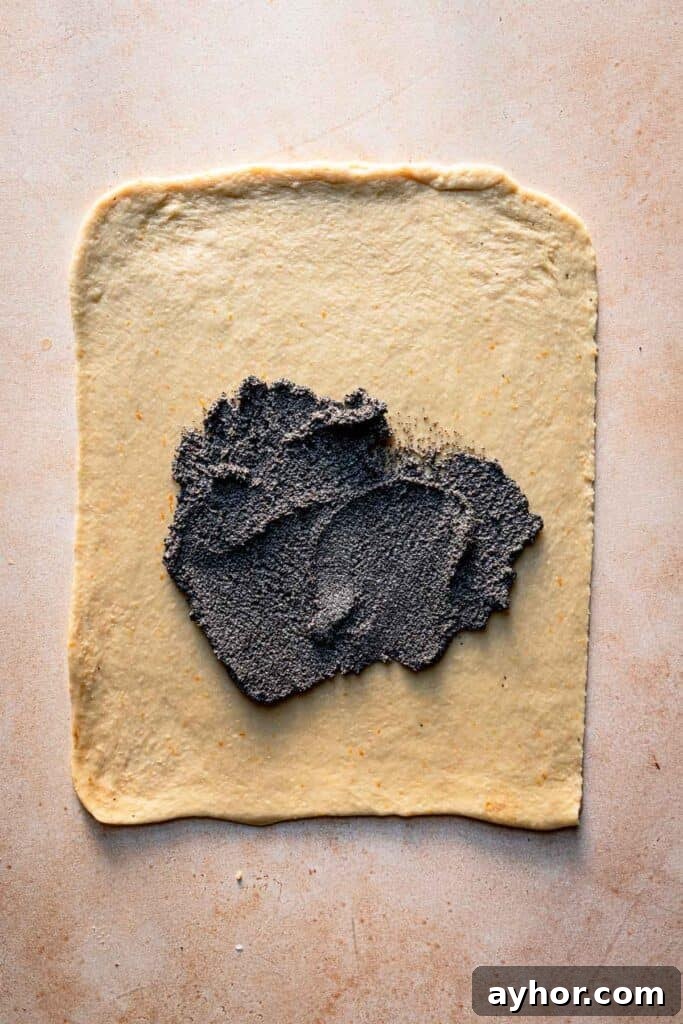
Step one: Divide the rested dough into two equal pieces. Roll one piece into a 12×16-inch (30×40 cm) rectangle; keep the second piece covered while you work.
Step two: Spread the poppy seed filling evenly over the rolled dough.
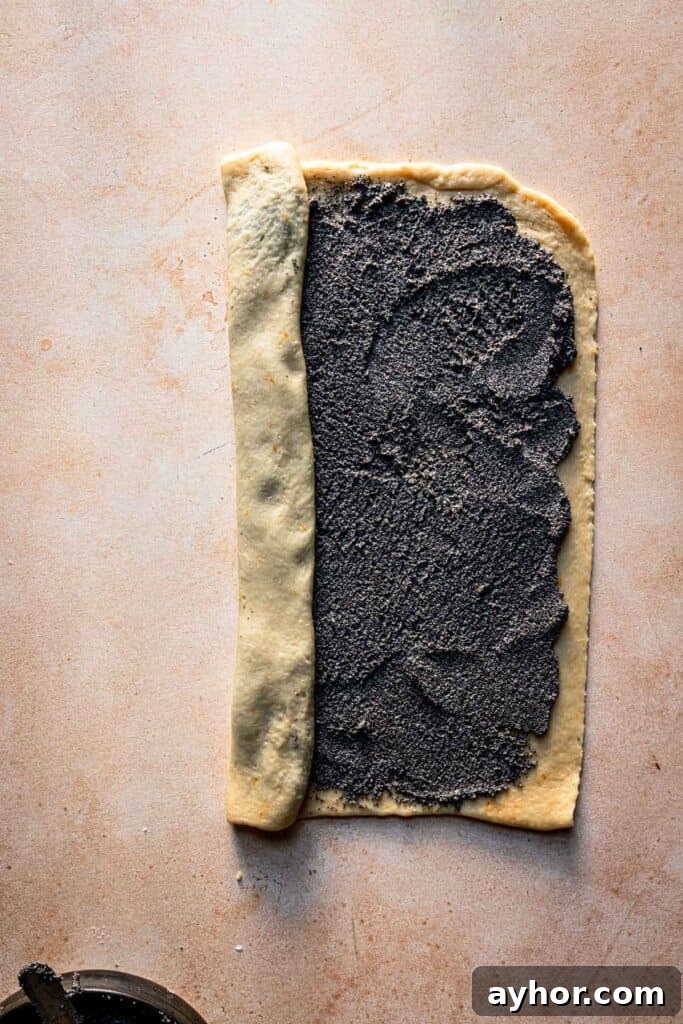
Step three: Starting with the long side, roll the dough into a tight spiral log and seal the ends.
Step four: Repeat with the second dough piece and the walnut filling.
Step five: Place both logs on a parchment-lined baking tray, brush them with egg wash, and let them rise for the second time about 90–120 minutes.
Step six: Bake at 350°F (180°C) on the middle oven rack for about 25–28 minutes, turning the pan after about 20 minutes to ensure even color. Remove from the oven and let cool 30–60 minutes before slicing.

Tips for perfect beigli
- The dough becomes smooth but won’t be highly elastic or fluffy. Expect a denser, tender crumb: it will double in size but won’t feel pillowy.
- For a finer poppy seed texture, pulse whole poppy seeds briefly in a grinder, but avoid overprocessing to prevent bitterness.
- Make the fillings ahead: they keep well refrigerated for up to two days.
Yields
This recipe makes two large beigli—one poppy and one walnut—each slicing into roughly 12–15 pieces depending on slice thickness. For smaller rolls, divide the dough into four pieces and roll each into an 8×10-inch rectangle.
Store, make ahead, and freeze
- Store: Keep beigli in an airtight container at room temperature for up to five days. Refrigeration will extend freshness.
- Make ahead: Fillings can be prepared up to two days in advance and refrigerated.
- Freeze: Freeze before baking by wrapping the rolled logs tightly in plastic wrap and foil and storing in a freezer bag for up to two months; thaw overnight in the fridge and bake as directed. After baking, wrap cooled beigli well and freeze up to three months; thaw at room temperature before serving.

Beigli Poppy Seed & Walnut Pastry
Ingredients
For the dough
- 3 1/2 cups all-purpose flour (420g)
- 2 1/4 tsp instant yeast
- 1/2 tsp salt
- 1/2 cup sugar (100g)
- 2 large egg yolks, room temperature
- Zest of one orange
- 3/4 cup lukewarm milk (180ml)
- 1 tsp vanilla extract
- 5 tbsp unsalted butter, room temperature (70g)
- 1 large egg (for egg wash)
Poppy seed filling
- 1 cup whole poppy seeds (150g)
- 1/2 cup powdered sugar (60g)
- 1 tbsp flour
- 4 tbsp unsalted butter, room temperature (55g)
- 1 large egg
Walnut filling
- 1 1/2 cups ground walnuts (150g)
- 1/2 cup powdered sugar (60g)
- 1 tbsp flour
- 1 large egg
- 4 tbsp unsalted butter, room temperature (55g)
- 2 tbsp raisins (optional)
Instructions
Make the dough
- In a mixer bowl, combine flour, yeast, sugar, salt, orange zest, and egg yolks. Drizzle in milk and vanilla while mixing on low.
- Mix until a shaggy mass forms and the flour is hydrated, 1–2 minutes.
- Add butter and increase speed to medium. Knead with the dough hook until smooth, about 3–4 minutes.
- Cover and let rest 90–120 minutes for the first rise. Make fillings while the dough rests.
Make the poppy seed filling
- Combine poppy seeds, powdered sugar, flour, egg, and butter in a food processor. Process until smooth and paste-like. Transfer to a bowl.
Make the walnut filling
- Process ground walnuts, powdered sugar, flour, egg, and butter to a smooth paste. Transfer to a separate bowl and stir in raisins if desired.
Assemble and bake
- Divide dough into two equal pieces. Roll one piece into a 12×16-inch rectangle.
- Spread poppy seed filling evenly, then roll from the long side into a spiral log and seal the ends.
- Place on a parchment-lined tray. Repeat with the second piece using the walnut filling.
- Brush both logs with egg wash and let rise a second time for about 90–120 minutes.
- Bake at 350°F (180°C) for 25–28 minutes on the middle rack, turning the pan after 20 minutes for even browning. Cool 30–60 minutes before slicing.
Notes
- Store at room temperature in an airtight container up to five days, or refrigerate to extend freshness.
- To freeze before baking: wrap unbaked logs tightly and freeze up to two months; thaw overnight in the fridge and bake as directed.
- To freeze after baking: wrap cooled beigli well and freeze up to three months; thaw at room temperature before serving.
- To reheat: warm in a 300°F (150–166°C) oven for 15–20 minutes until soft and warm.
- The dough will double but remain denser and less airy than typical bread—this is normal for beigli.
- Recipe yields two 16-inch logs; each log slices into about 12–15 pieces depending on thickness.