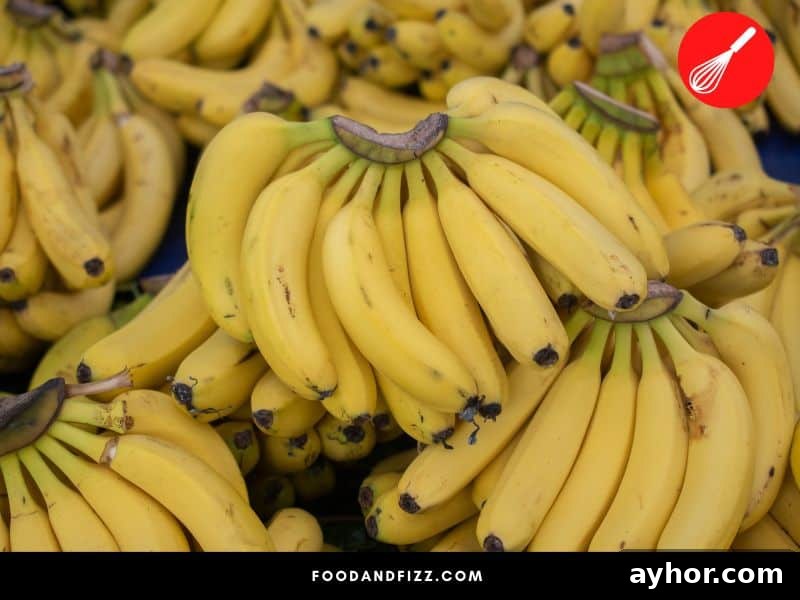
We commonly call the small groups of bananas sold at grocery stores “bunches,” but the true botanical and agricultural meaning of a “bunch” is very different—and much larger—than most people realize.
Table of Contents
How Much Does A Bunch Of Bananas Weigh?
In agricultural terms, a “bunch” or cluster of bananas can weigh between 17 and 110 pounds. A bunch consists of multiple tiers, each tier being called a “hand.” Each hand typically contains around 20 individual fruits, often referred to as “fingers,” so a full bunch can hold many dozens or even hundreds of bananas depending on how many hands it contains.
What A Bunch of Bananas Really Means
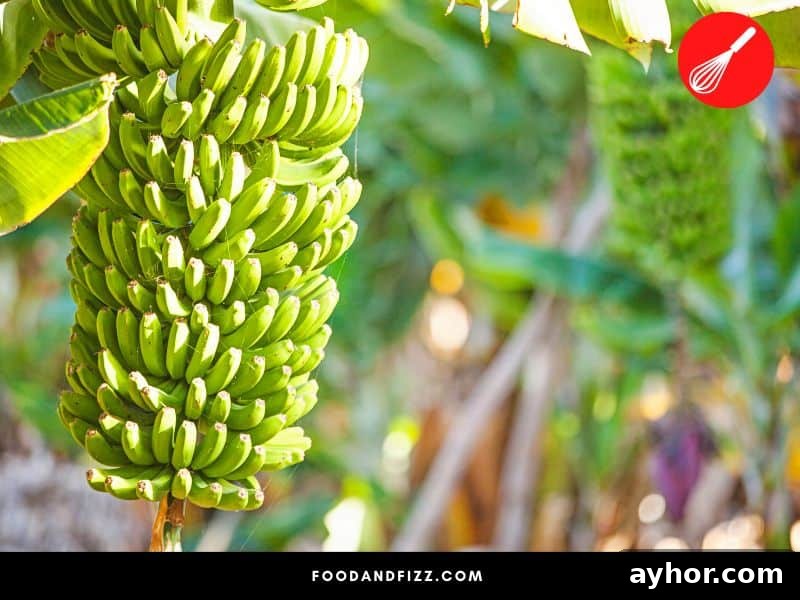
A true “bunch” of bananas is the entire cluster that grows on a single stem. That cluster is made up of multiple hands—usually between three and twenty—so what shoppers buy as a single grocery-store “bunch” is usually only one hand from a much larger agricultural bunch. In other words, a botanical bunch is far larger than the household portion most people encounter.
You’re Likely Buying A Hand of Bananas
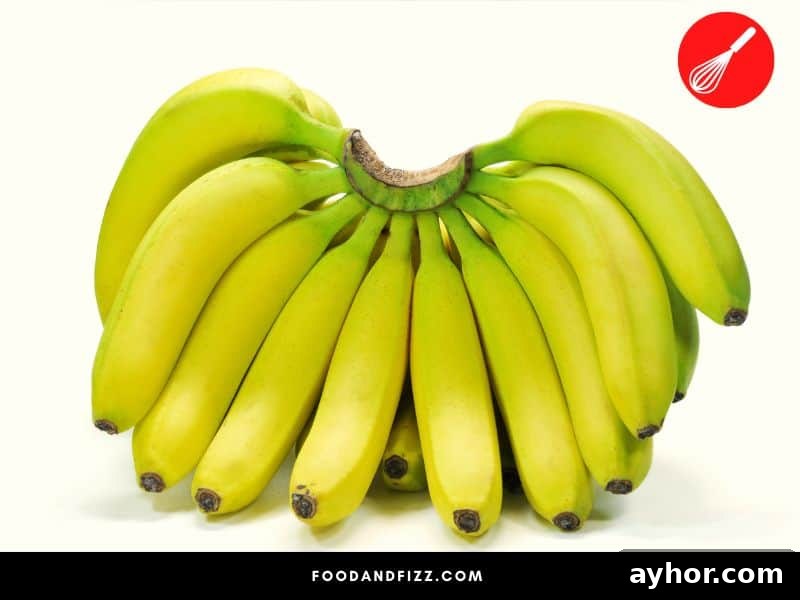
When you pick up a “bunch” at the supermarket, you are almost always buying a single hand. A hand commonly includes up to 20 fingers (individual bananas). Retail hands are sized for convenience and transport, while growers harvest much larger clusters from the plant.
How Much Does A Bunch Of Bananas Weigh? (Calculation)
An average commercial banana weighs about 4½ ounces (roughly 125 grams). If a hand contains about 20 bananas, a hand would weigh about 90 ounces, or approximately 5.75 pounds (about 2.6 kg). Multiplying that by three to twenty hands gives a full bunch weight range of roughly 17 to 110 pounds (about 7 to 50 kg).
How Much Does A Hand of Bananas Weigh?
A typical hand of bananas averages around 20 fruits, each weighing near 4½ ounces, producing an average hand weight of about 5¾ pounds. Actual weight varies with banana size and variety.
How Do Bananas Grow?
Botanically, banana plants are herbs rather than trees. They lack woody stems and grow from an underground rhizome. Banana plants thrive in warm, tropical conditions with ample rain, sunshine, and rich soil, and they are perennial—meaning they can produce fruit year-round rather than only in a single season. From planting a rhizome to harvest typically takes 9–12 months, and commercial banana production is concentrated in tropical regions around the world.
What to Do When You Have Too Many Bananas
If you end up with more bananas than you can eat before they ripen, several simple strategies will help preserve them or turn them into tasty dishes.
1. Wrap the Stems and Keep Them Separate From Other Fruits
Bananas are climacteric fruits, which means they continue producing ethylene gas after harvest and keep ripening. Wrapping stems with foil or plastic can slow ethylene release and delay ripening. Storing bananas away from other ethylene-producing fruits (apples, avocados, etc.) also extends their usable life.
2. Use Them For Baking and Cooking
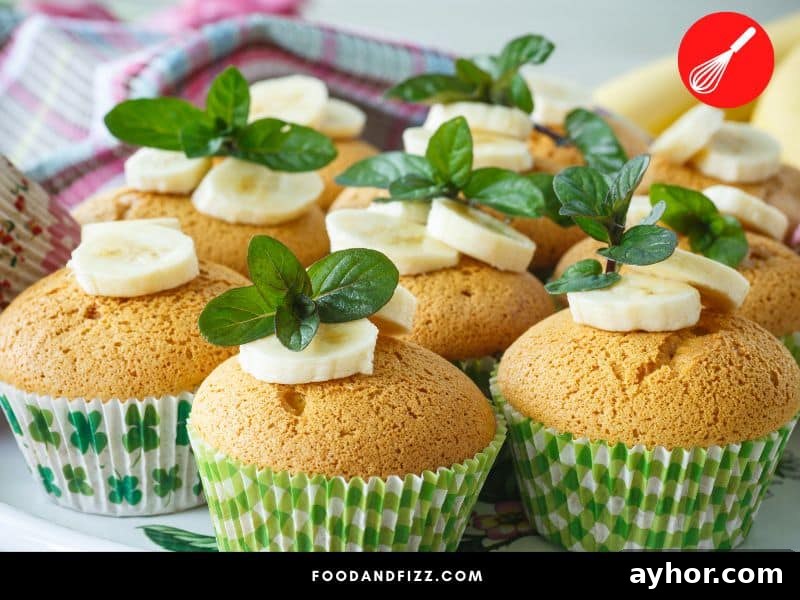
Overripe bananas are ideal for baking: mashed bananas add moisture and sweetness to pancakes, muffins, banana bread, and more. In many recipes, one mashed ripe banana can substitute for an egg, making it a useful ingredient in vegan and reduced-fat baking. Bananas also enrich porridges, oatmeal, and desserts.
3. Freeze Your Extra Bananas
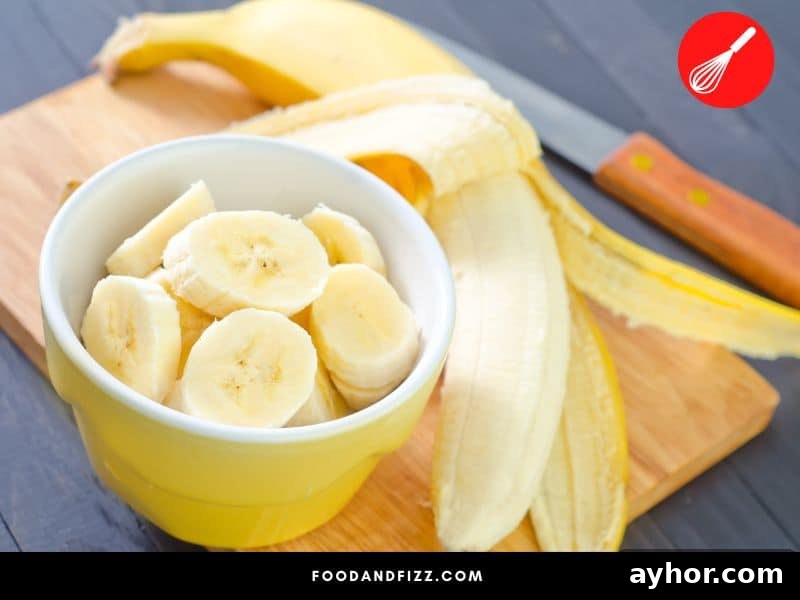
Freezing peeled and sliced bananas preserves them for months and is perfect for smoothies or baking. To minimize browning, lay slices in a single layer on a tray to flash-freeze, then transfer to airtight freezer bags, pressing out as much air as possible. Thaw briefly for baking, or use frozen slices directly in smoothies.
- Set your freezer to a cold setting and prepare space for the bananas.
- Peel and slice bananas, then spread slices in a single layer on a tray.
- Flash-freeze until solid, then transfer to airtight bags and store flat.
4. Make More Smoothies
Frozen bananas make creamy, flavorful smoothies without added sugar. They add texture, natural sweetness, and a nutritional boost while making smoothies thicker and more satisfying.
Kale And Banana Breakfast Smoothie
Ingredients
- 1 cup chopped kale (washed, stems removed)
- 1 cup milk of choice, plain water, or coconut water
- 1 cup frozen banana slices
- 2 tablespoons natural peanut butter
- ½ teaspoon spirulina powder (optional)
Procedure
Blend all ingredients until smooth, adding extra liquid if needed. Optional additions include berries, chia seeds, or a drizzle of honey or maple syrup if you prefer it sweeter.
Why Do People Love Bananas?
Bananas are a sweet, portable tropical fruit widely grown across Asia, Latin America, and Africa. They’re valued for taste, convenience, and versatility: suitable as a quick snack, a workout fuel, or an ingredient in smoothies, baked goods, and desserts. Nutritionally, bananas provide potassium, several B vitamins, vitamin C, magnesium, fiber, and antioxidants, making them a healthy and accessible option for many diets.
- Good source of potassium, which supports heart and muscle function.
- Contain B vitamins, vitamin C, magnesium, fiber, and antioxidants.
- Low-calorie snack that helps replenish electrolytes after exercise.
Interesting Banana Facts
- Banana peels are edible and are consumed in some cultures; they are also used in various recipes and alternative food products.
- Banana peels are sometimes used as a home remedy to soothe minor skin irritations like insect bites.
- Bananas are botanically classified as berries, while some fruits commonly called berries are not.
- There are hundreds of banana varieties, but the commercially dominant variety is the seedless Cavendish.
- Large agricultural bunches can contain hundreds of individual bananas; record harvests have produced exceptionally large bunches.
Frequently Asked Questions
How Much Does An Average Banana Weigh?
An average banana weighs about 4½ ounces (approximately 125 grams).
How Much Does a Bunch of Bananas Weigh in Kg?
A full agricultural bunch typically ranges from about 7 to 50 kilograms, depending on the number of hands and fruit size.
How Many Bananas Are in One Pound?
On average, there are roughly three medium bananas per pound.
Are Bananas the Same as Plantains?
Botanically, plantains and bananas belong to the same genus. In culinary terms, plantains are usually starchier and cooked before eating, while dessert bananas are sweeter and typically eaten raw.
Conclusion
The “bunch” people buy at the store is usually a single hand of bananas. A true agricultural bunch is a much larger cluster composed of multiple hands—often three to twenty—which can amount to dozens or hundreds of fruits. Depending on the number of hands, a full bunch typically weighs between about 17 and 110 pounds (7–50 kg).
Understanding this distinction helps explain how growers harvest and transport bananas and gives better perspective on the scale of commercial banana production.