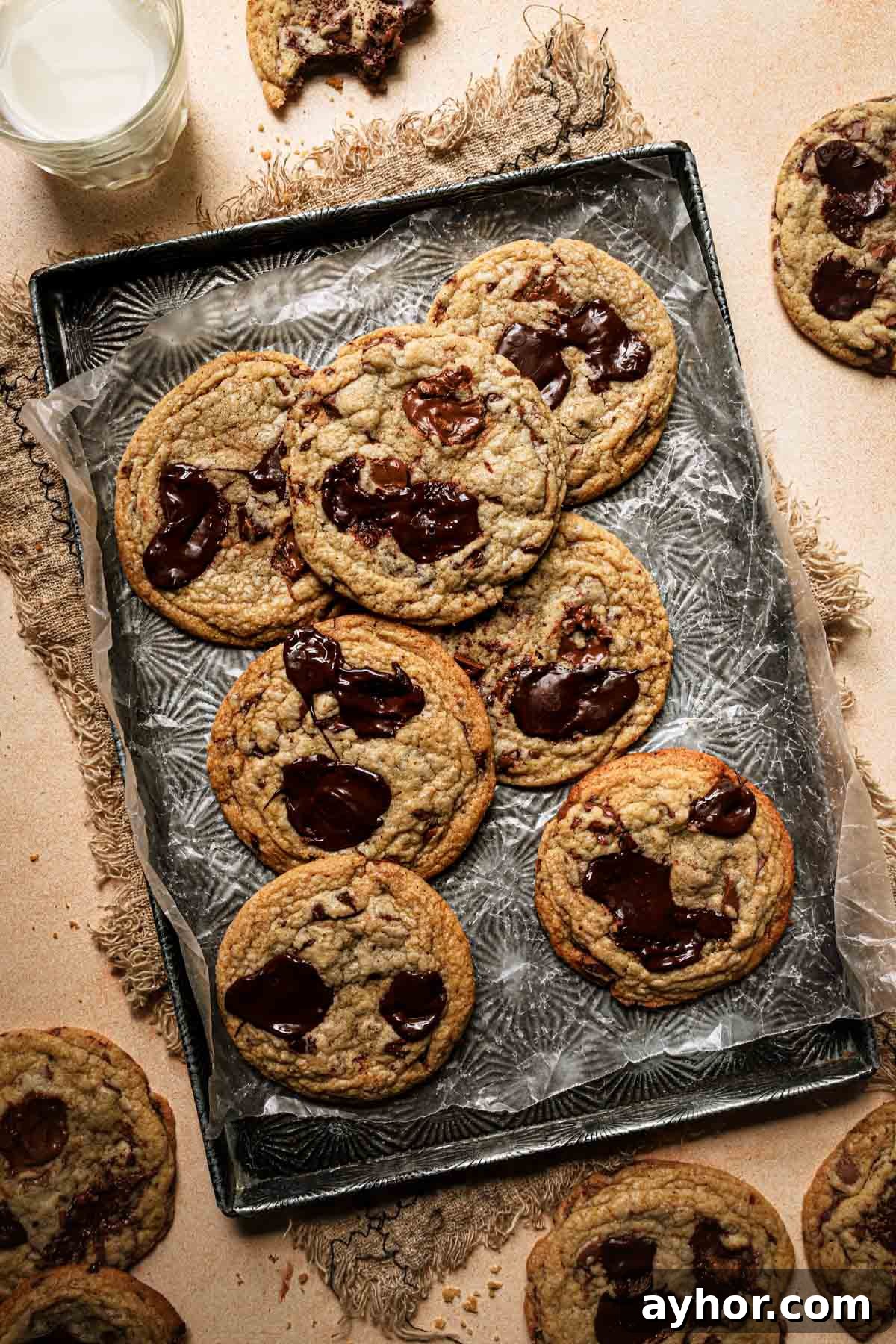
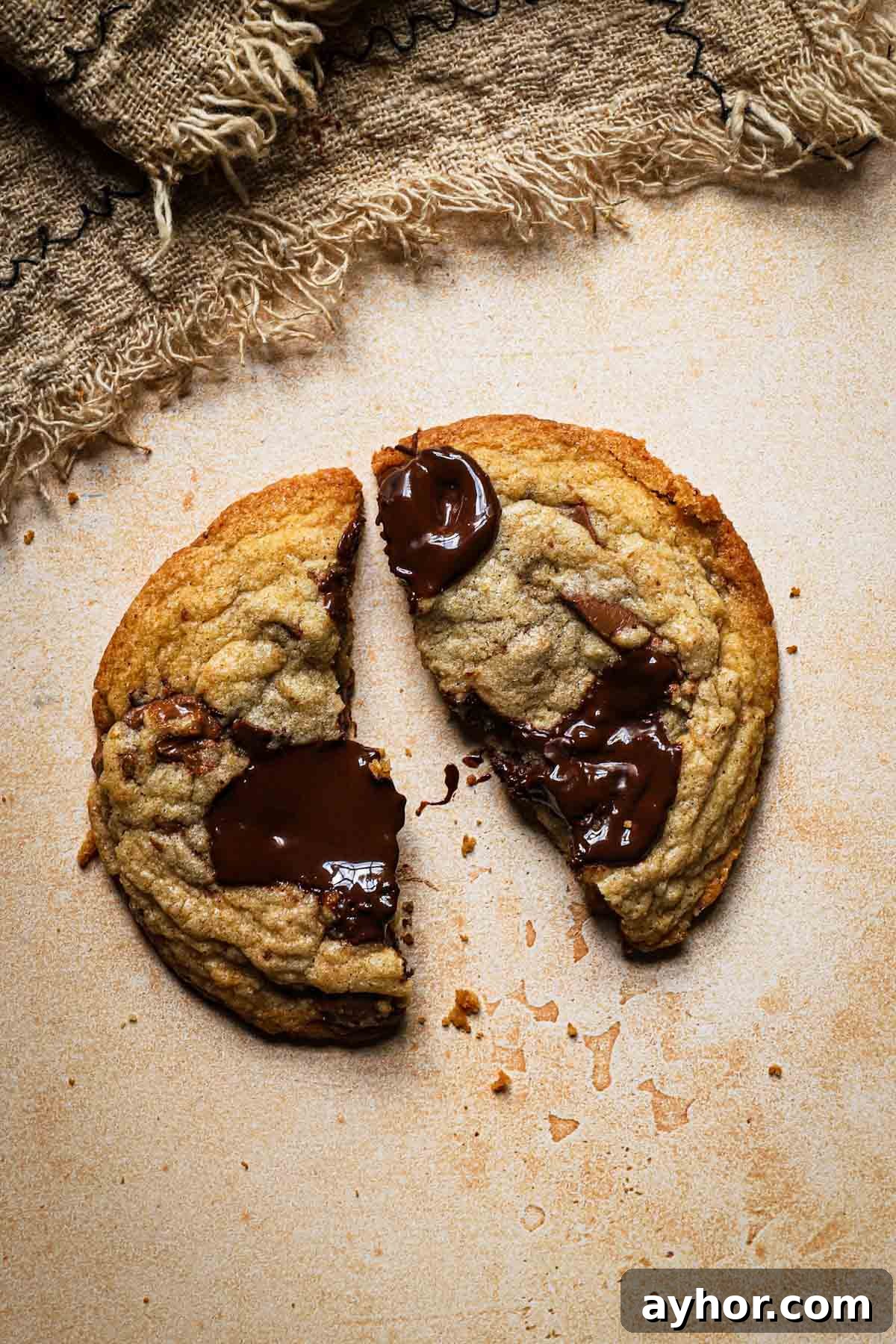
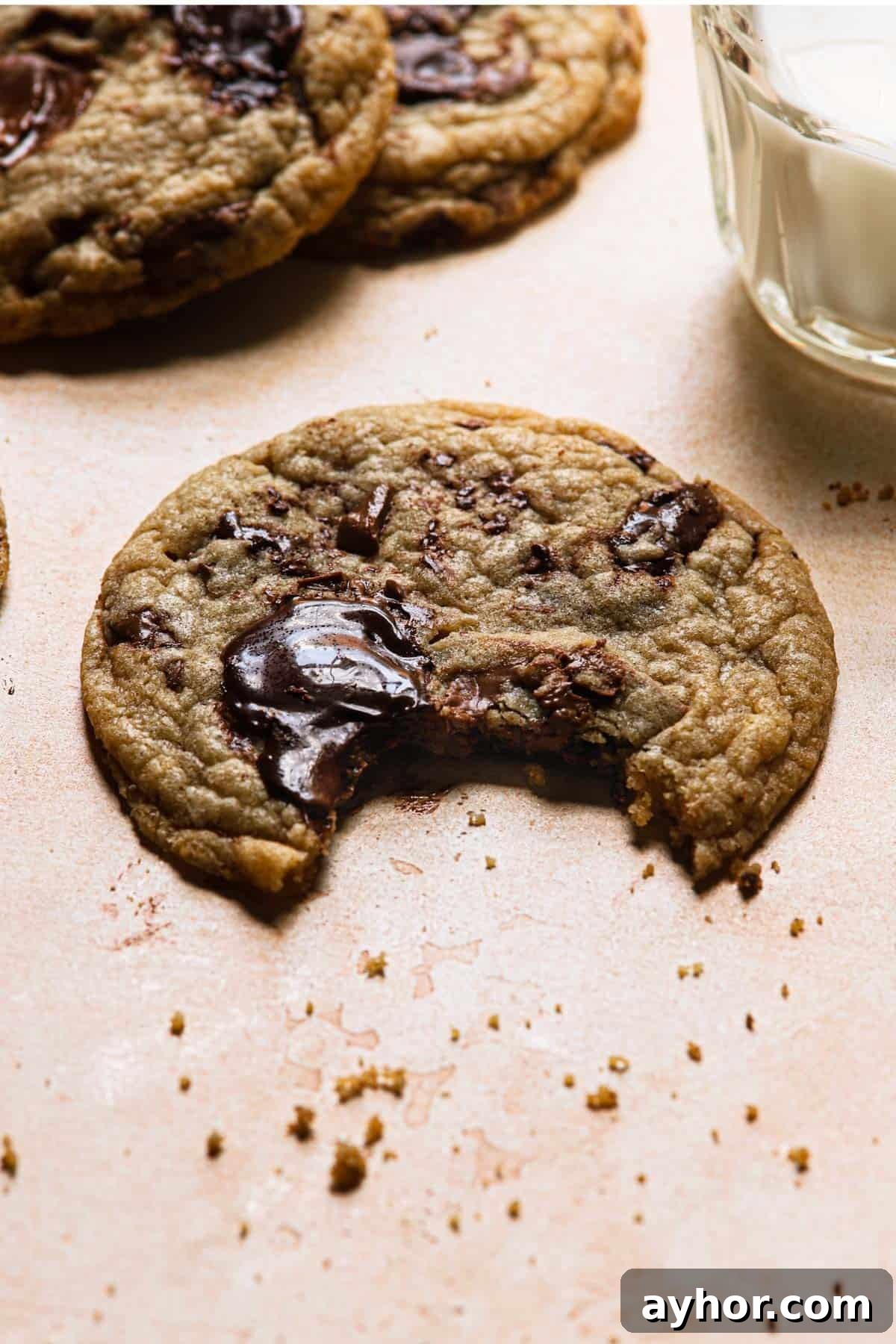
These Chocolate Chunk Cookies are the ultimate homemade chocolate chip cookies. Rather than small chips, this recipe uses large chopped pieces that melt into glossy pools of chocolate. The formula is simple, uses one bowl, and requires no long chill time.
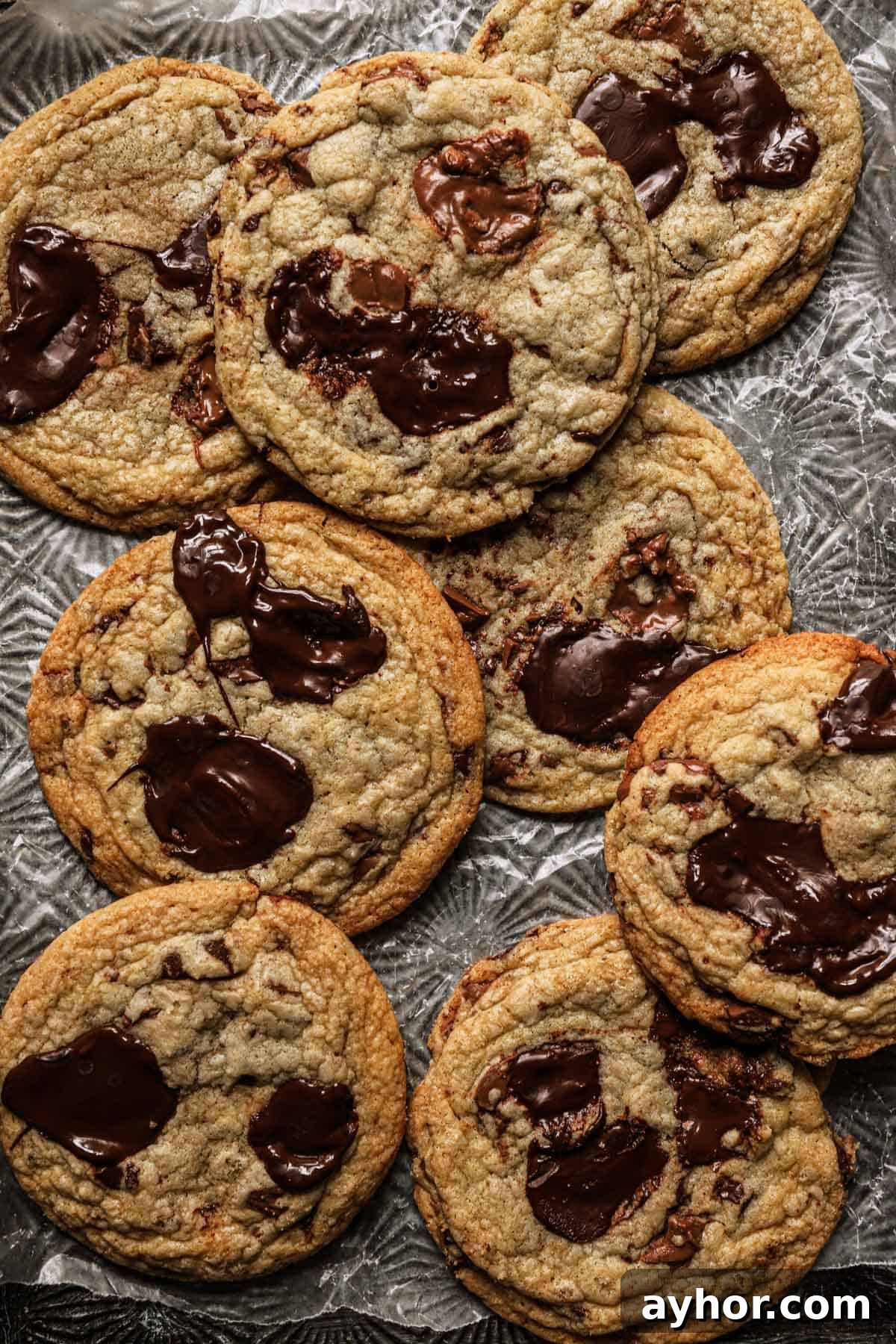
Using chocolate chips, chopped chocolate, or a mix works fine. Chocolate chips are formulated to keep their shape during baking, while chopped chocolate—made with real cocoa butter—melts at a lower temperature, creating those irresistible glossy pools and encouraging the cookie to spread. Choose the chocolate you enjoy eating; a mix of semi-sweet and milk chocolate creates a balanced flavor.
Ingredients
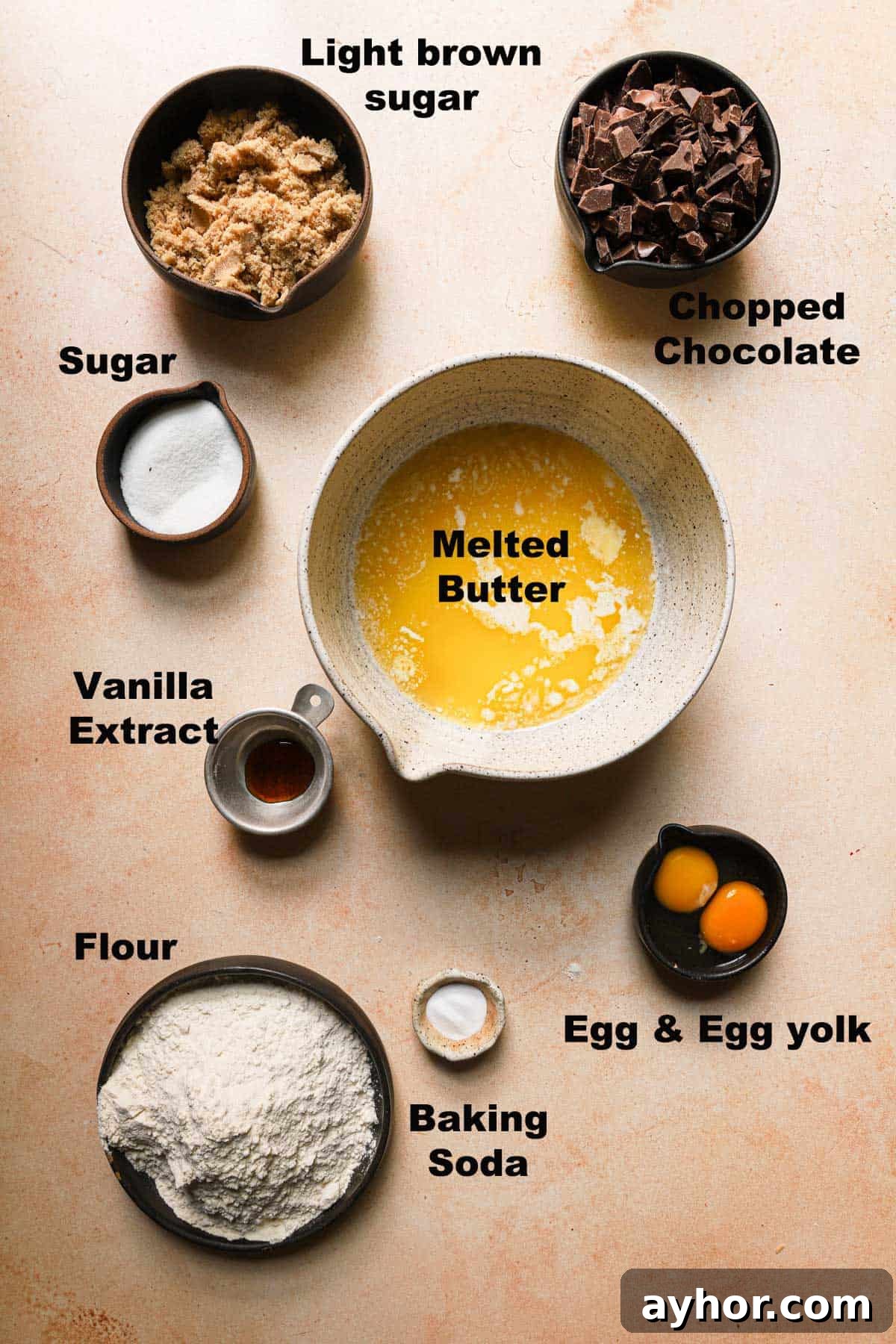
See the recipe card below for precise measurements. These pantry staples make tender, slightly chewy cookies with rich chocolate pockets.
- All-purpose flour. Unbleached is preferred. If using bleached flour, add one tablespoon of milk with the vanilla to improve texture.
- Baking soda. This gives a golden color and helps the cookies spread without puffing up too much.
- Light brown sugar and granulated sugar. Higher brown sugar yields a chewier, toffee-like cookie. Adjust the ratio for chewier or crisper results.
- Melted unsalted butter. Unsalted lets you control the salt level; the baking soda and added salt will contribute some seasoning.
- One egg and one egg yolk. The extra yolk adds richness, fat, and a tender crumb.
- Pure vanilla extract. Enhances both chocolate and brown sugar flavors.
- Chopped chocolate. Use your favorite chocolate bars or a mix of dark and milk chocolate for varied texture and flavor.
- Optional: Stir two tablespoons of milk powder into the melted butter for a deeper browned-butter flavor.
Make Them
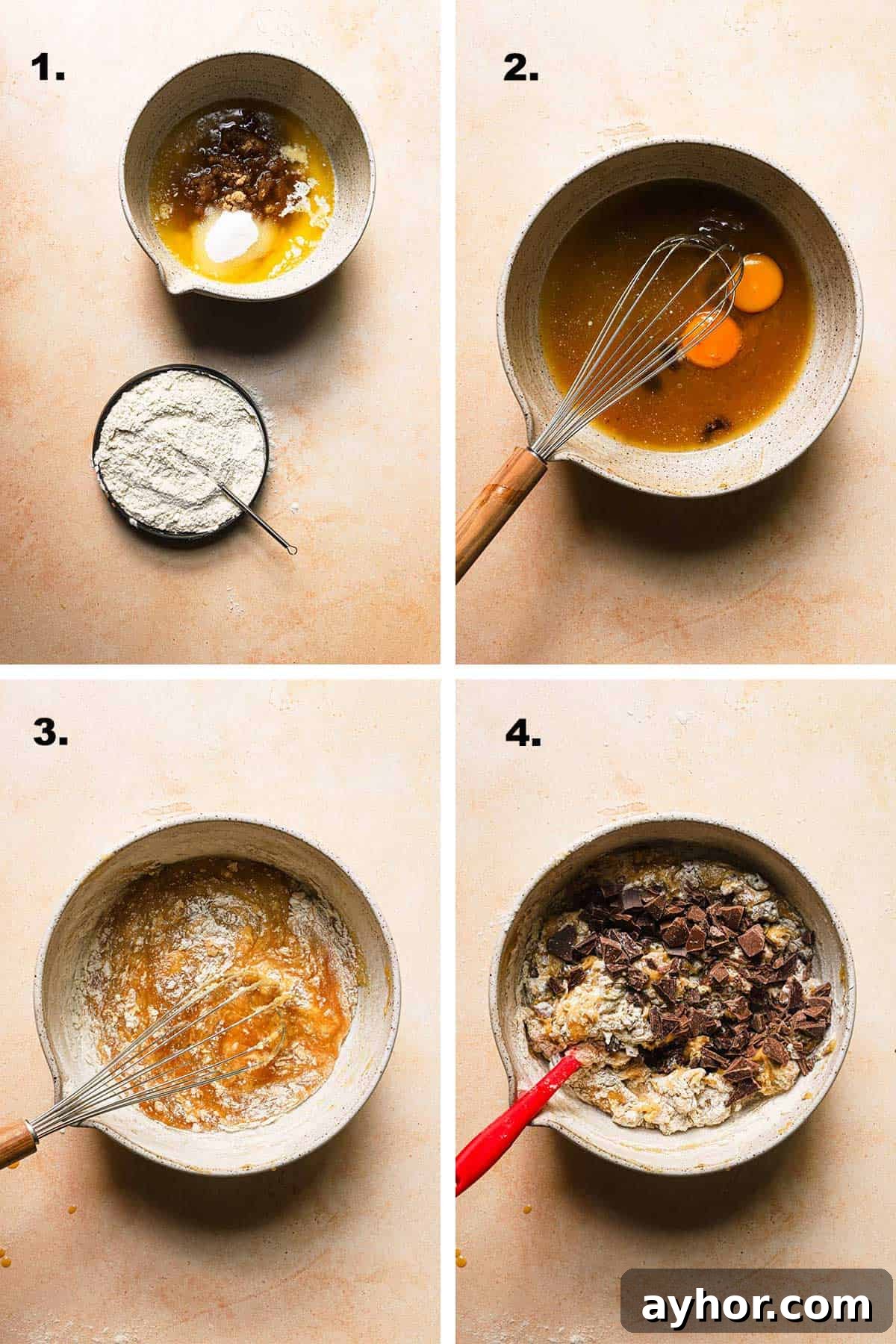
You can use a stand or hand mixer, but a large mixing bowl, whisk, and rubber spatula are all you need. Work with room-temperature ingredients and make sure melted butter is warm, not hot, and eggs are not too cold.
Make the Dough
Follow these steps for an even, well-mixed dough with plenty of chocolate dispersed throughout.
- Sift and combine the dry ingredients: flour, baking soda, and salt. Chop the chocolate and set aside.
- Whisk the melted butter and sugars in a large bowl until smooth. Add the egg, egg yolk, and vanilla and mix until homogeneous.
- Add the flour mixture to the wet ingredients in three additions, folding gently each time.
- Stir in half the chopped chocolate with the second addition of flour. Fold in the remaining chocolate after the final addition so chunks remain distributed.
Scoop, Bake and Shape
Cookie size and shaping affect spread: larger dough balls spread more, while rolling the dough compresses it and reduces spread. For consistent results, use a scoop and follow these tips.
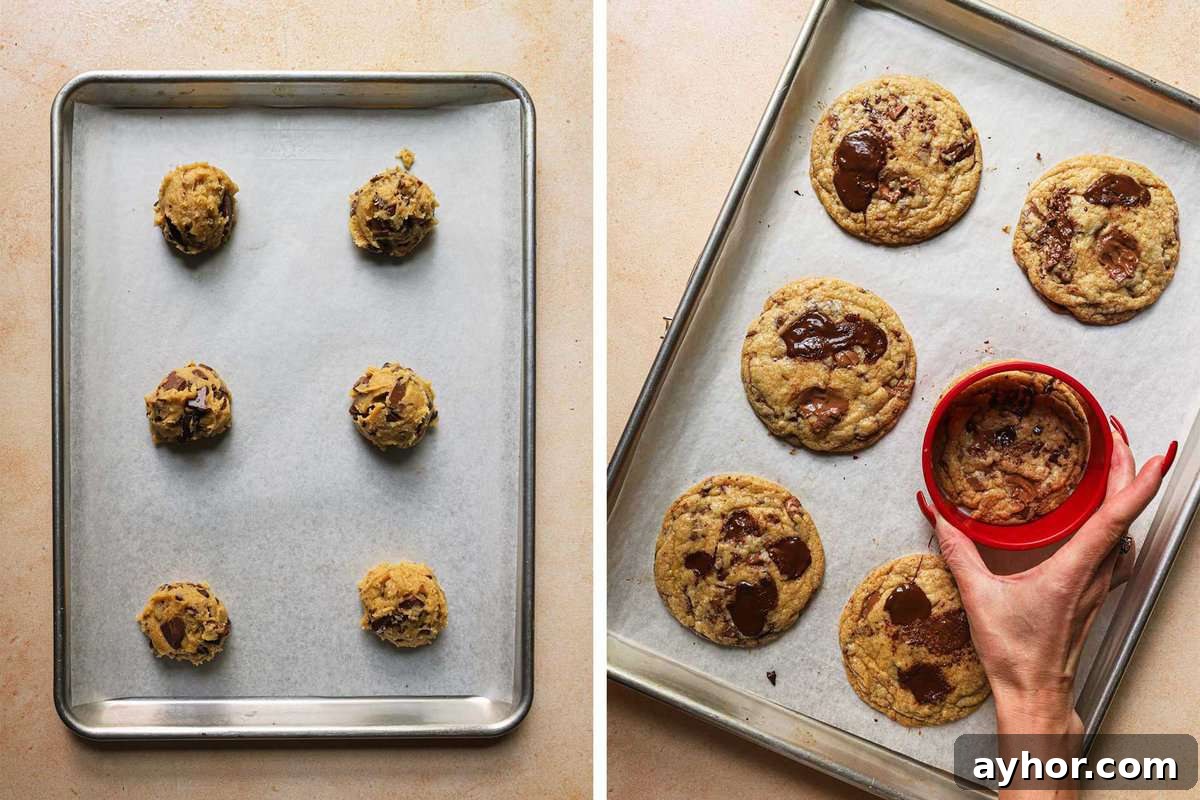
- Scoop dough into balls with a cookie scoop. Place on parchment-lined baking sheets with about 3 inches between each.
- After baking, while cookies are still warm, you can use a large cookie cutter or a round edge to gently shape each warm cookie for a more uniform look.
Storing and Freezing
Cookies are best fresh. Store cooled cookies in an airtight container at room temperature for up to five days. To freeze baked cookies, layer them with parchment in a freezer-safe container for up to four weeks.
Freezing Raw Cookie Dough
Raw cookie dough freezes very well. Scoop and place dough balls in a single layer on a tray, freeze until solid, then transfer to a freezer bag for up to eight weeks.
Baking Frozen Cookie Dough
You have two reliable options:
- Bake from frozen: Place frozen dough on a baking sheet and bake at 350°F (180°C). Because the dough starts cold, cookies may set faster and spread less; you can warm the dough slightly or use a light-colored pan on a higher rack to encourage spreading.
- Thaw then bake: Remove frozen dough onto a baking sheet and let warm at room temperature for 60–90 minutes before baking for more even spreading.
Recipe Tips
- Use a kitchen scale for accurate measurements; too much flour makes dense, dry cookies that won’t spread.
- Pan color matters: dark pans absorb heat and can cause cookies to bake faster with less spread; light pans reflect heat and encourage spreading.
- If cookies spread too much, raise the oven temperature slightly and consider a dark pan; if they don’t spread, lower the temperature and use a light pan.
- Chop chocolate into even pieces for consistent distribution and texture.
- For a glossy chocolate spot on top, press 3–5 chunks onto each dough ball right before baking.
- Bake 15–18 minutes for chewy cookies. For a more tender cookie, reduce light brown sugar to 3/4 cup (150 g) and bake 12–15 minutes.
Chocolate Chunk Cookies Recipe
Tender, slightly chewy cookies studded with large chopped chocolate pieces. Makes about 15 large cookies.
Ingredients (for 15 large cookies)
- 2 1/4 cups all-purpose flour (270 g)
- 1 tsp salt
- 1 tsp baking soda
- 1 cup unsalted butter, melted (226 g)
- 1/4 cup granulated sugar (50 g)
- 1 1/4 cup light brown sugar (250 g)
- 1 large egg
- 1 large egg yolk
- 1 tsp vanilla extract
- 2 cups chopped chocolate (340 g)
Instructions
- Preheat the oven to 350°F (180°C). Line 2–3 baking sheets with parchment paper.
- In a bowl, sift together the flour, salt, and baking soda. Mix and set aside.
- In a mixing bowl, combine the granulated and brown sugar, then pour in the melted butter and mix until even.
- Add the egg, egg yolk, and vanilla, mixing until smooth.
- Slightly fold the flour mixture into the wet ingredients in two or three additions. Stir in the chopped chocolate just until combined.
- Shape dough into 85 g (about 3 oz) balls. Chill shaped dough in the freezer 10–15 minutes if desired for better handling.
- Place 3–4 dough balls per baking sheet and bake until the edges are set and centers are still puffy, about 14–16 minutes total. Some bakers find gently lifting and tapping the pan in the oven during baking helps create ruffled edges.
- Remove from oven and allow cookies to set on the pan for 5 minutes, then transfer to a cooling rack.
Notes
- Use room-temperature ingredients and an accurate scale for best results.
- Adjust sugar and bake time to control chewiness or tenderness.
- If cookies are too dry, check flour measurement. If they spread excessively, check oven temperature, pan color, and sugar/butter ratios.