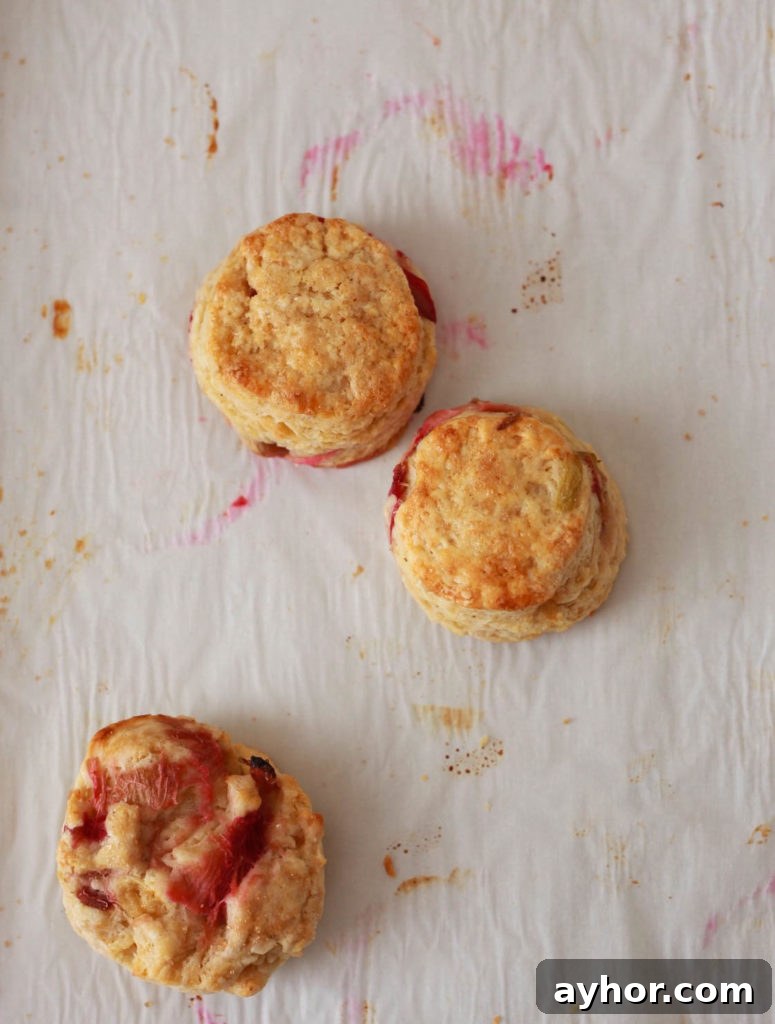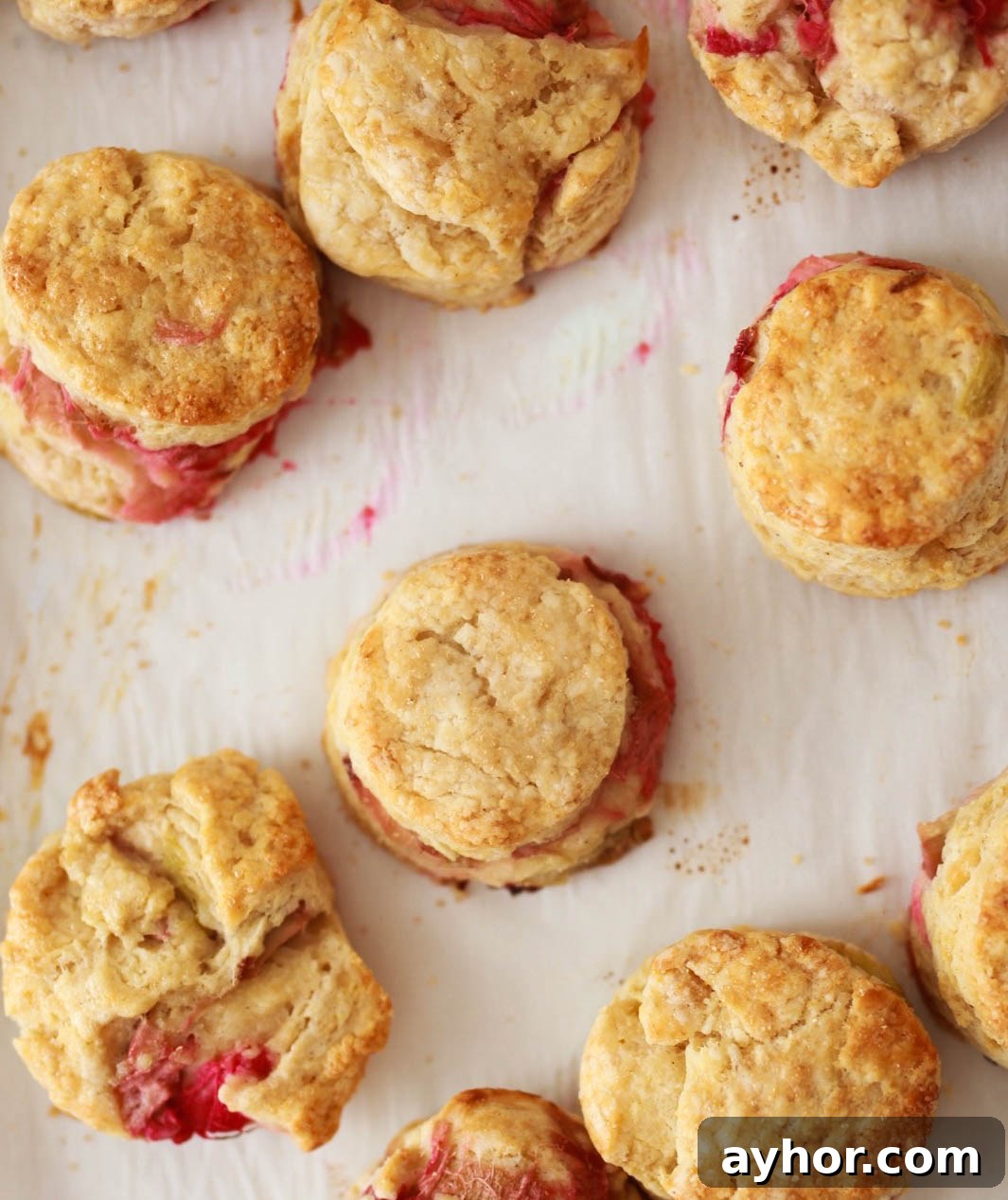
When I decided to make rhubarb-buttermilk-brown sugar scones, I first did what I usually do: I searched for a reliable buttermilk scone recipe to adapt. After trying one popular blog’s version, I found the dough far too wet and sticky—more like drop-biscuit batter—and the finished scones came out muffin-like, not flaky. I wasn’t satisfied.
I remembered my collection of cookbooks and reached for a dependable little volume, The Best Quick Breads by Beth Hensberger. Long before blogs, I’d baked many scones, biscuits, and quick breads from that book and always liked the results. Hensberger’s book includes two buttermilk scone recipes; I chose to adapt the richer one, which originally uses dried figs and walnuts.
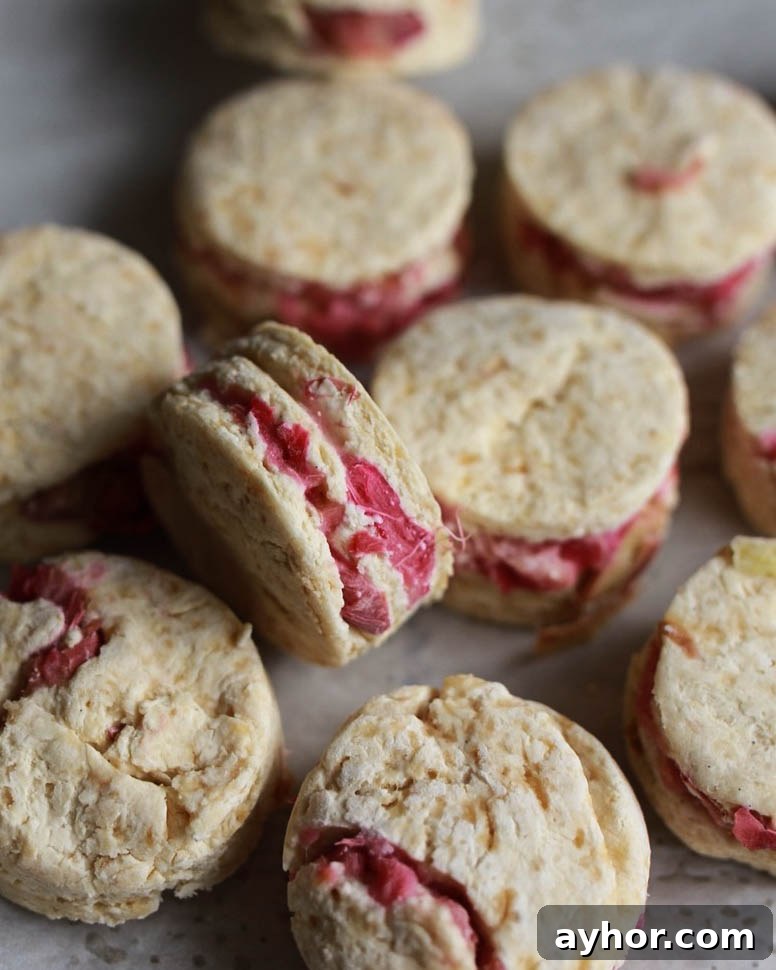
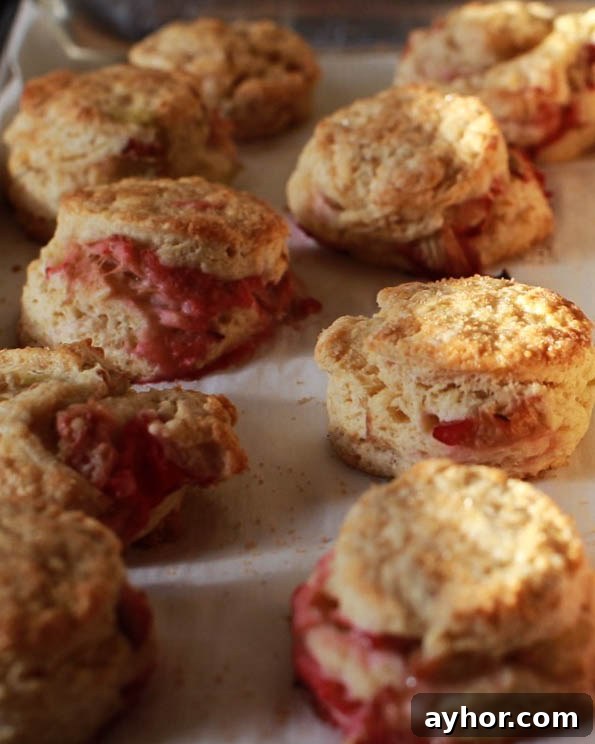
I made several purposeful changes: I swapped some white sugar for brown, replaced figs and walnuts with roasted rhubarb, and used a different method to work the butter into the dough. The basic ingredient ratios, however, are Hensberger’s.
As a hobby baker without formal training, I rely on existing recipes when developing my own. Two important technique changes I used here were (1) grating frozen butter into the dry ingredients rather than cutting or rubbing in cold butter, and (2) spreading the roasted rhubarb over the rolled dough and folding the dough like a business letter to create a layered, almost laminated effect. I learned that folding technique from Claudia Brick and other baking bloggers; this recipe combines traditional cookbook guidance with community-shared methods from the internet.
A note on technique:
Another key change is when to freeze: many recipes instruct you to freeze the cut scones, but I find it better to freeze the rolled dough before cutting. Pressing and lifting a cutter can compress soft scone dough and smear the butter into the flour, reducing flakiness. Semi-frozen dough slices cleanly, and the frozen butter stays in discrete pieces that steam during baking, creating flaky layers. After cutting, you can also freeze the individual scones before baking.
For scone or pie dough, the rule is cold, cold, cold. It’s a little inconvenient to keep returning the dough to the freezer, but the texture is worth it.
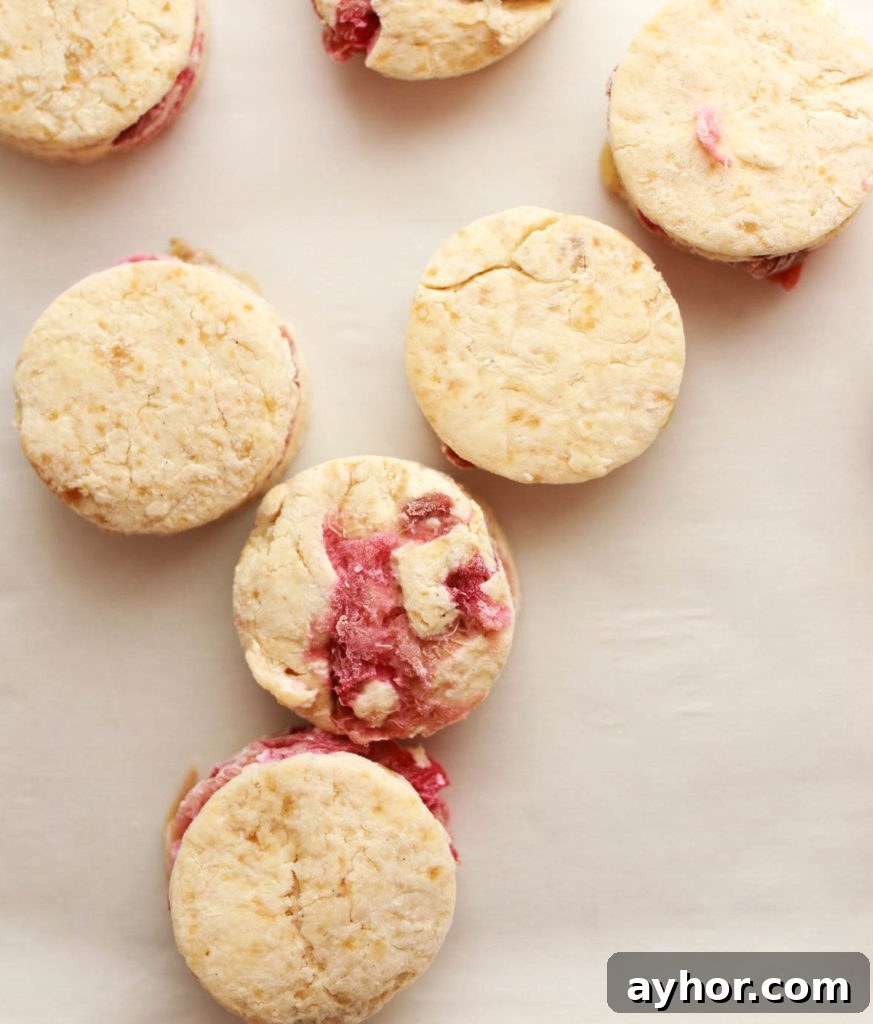
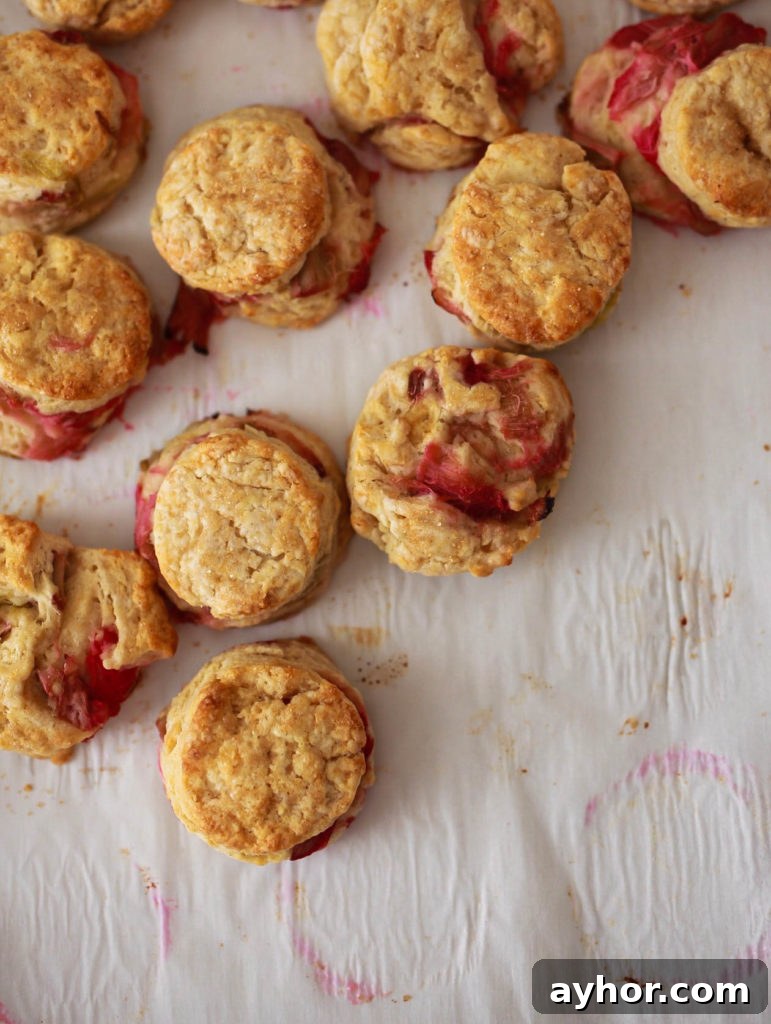

Roasted Rhubarb, Buttermilk, and Brown Sugar Scones
A rich, flaky scone full of roasted rhubarb. Loosely adapted from The Best Quick Breads by Beth Hensberger.
Breakfast
buttermilk scones, rhubarb, scones
Ingredients
- 4 tbsp granulated sugar, divided
- 1/2 lb. / 224 g rhubarb, chopped into ≈1-inch pieces
- 3 c. / 387 g all-purpose flour
- 3 tbsp firmly packed brown sugar
- 1 tbsp baking powder
- 1/2 tsp baking soda
- 1/2 tsp salt
- 3/4 c./ 168 g. unsalted butter, frozen
- 1/2 tsp vanilla bean paste or extract
- 1 c. cold buttermilk
- 2 tbsp heavy cream (optional)
- 2 tbsp turbinado sugar
Instructions
-
Preheat the oven to 425°F. Line a large baking sheet with parchment paper.
-
Toss the chopped rhubarb with 2 tablespoons granulated sugar and spread it on the prepared sheet. Roast 15–20 minutes, until the juices are bubbling and beginning to caramelize.
-
Transfer the rhubarb to a plate to cool, leaving any sticky juices on the pan. You can discard or reserve those juices for another use.
-
When the rhubarb is near room temperature, whisk together the flour, baking powder, baking soda, and salt in a large bowl. Add the remaining 2 tablespoons granulated sugar and the brown sugar; whisk to combine. Chill the bowl in the freezer for five minutes.
-
Using the large holes of a box grater, grate the frozen butter into the flour mixture, tossing occasionally to distribute it. If things warm up, return the bowl to the freezer briefly. After grating all the butter, chill the bowl again.
-
Whisk the cold buttermilk with the vanilla in a small spouted cup.
-
Remove the flour-butter mix from the freezer, make a small well, and pour in the vanilla-flavored buttermilk. Toss and fold with a rubber spatula until mostly incorporated, then use your hands to bring the dough into a rough mass. Turn it onto lightly floured parchment and knead only a few times to make an evenly moistened dough. Pat or roll into a 9×12-inch rectangle.
Evenly spread the roasted rhubarb over the dough. Fold the rectangle into thirds like a business letter to encase the rhubarb, then gently press or roll the folded dough back to about 1¼ inches thick. Transfer the dough on its parchment to a baking sheet and freeze 30–45 minutes.
-
Remove the semi-frozen dough and place it on the counter with the parchment. Line a second baking sheet with parchment. Use a lightly floured 2–2½-inch biscuit cutter to cut 10–12 scones, pressing straight down without twisting. Arrange scones 1–2 inches apart on the lined sheet. Repress scraps and cut remaining scones; if needed, chill the scraps briefly before cutting more.
-
Optionally top with turbinado sugar (and brush with heavy cream first for a shinier finish). To freeze for later, place the cut scones on a baking sheet and freeze at least 2 hours until solid, then transfer to a freezer bag. To bake from frozen, return them to a parchment-lined sheet and follow the baking step below.
-
Bake: Place scones in the 425°F oven, immediately reduce the temperature to 400°F, and bake until risen and light golden brown—about 23–25 minutes if frozen. Remove from the oven, cool a few minutes on the pan, and enjoy.
Recipe Notes
- Grating frozen butter into the flour is faster than cutting it in and helps create small, even pieces that encourage flakiness. If you struggle with the final tablespoons of butter, leave a bit as a “handle” on each stick to grate more easily.
- Keeping ingredients and dough cold at every stage is the key to flaky scones. You can skip some chilling for speed, but texture may suffer.
- If the dough sticks when folding, use a bench scraper to lift it from the parchment and make the folds neatly.
- Brushing with cream before baking is optional; it helps browning and shine. Don’t skip the turbinado sugar—its crunch and sweetness balance rhubarb’s tartness.