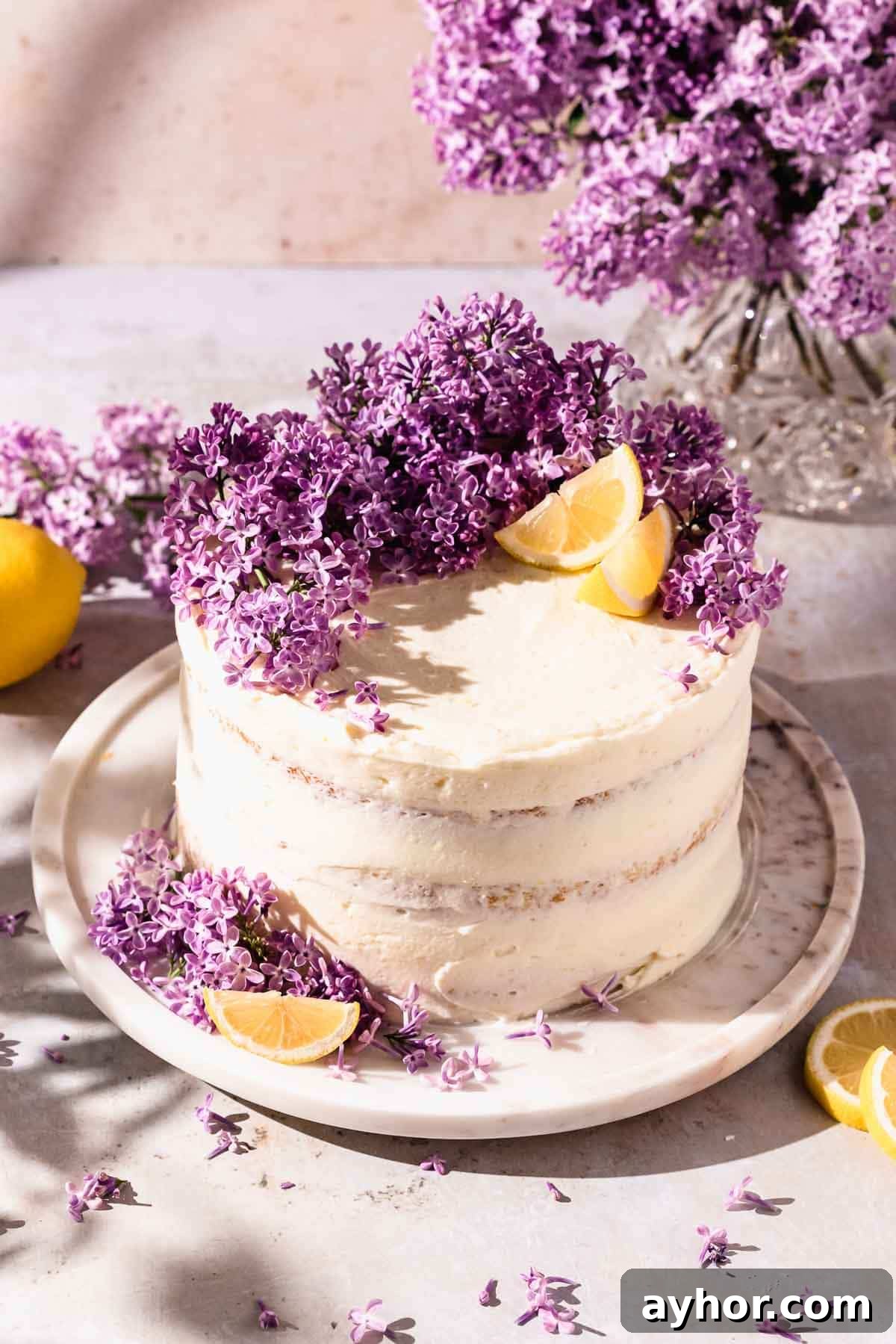
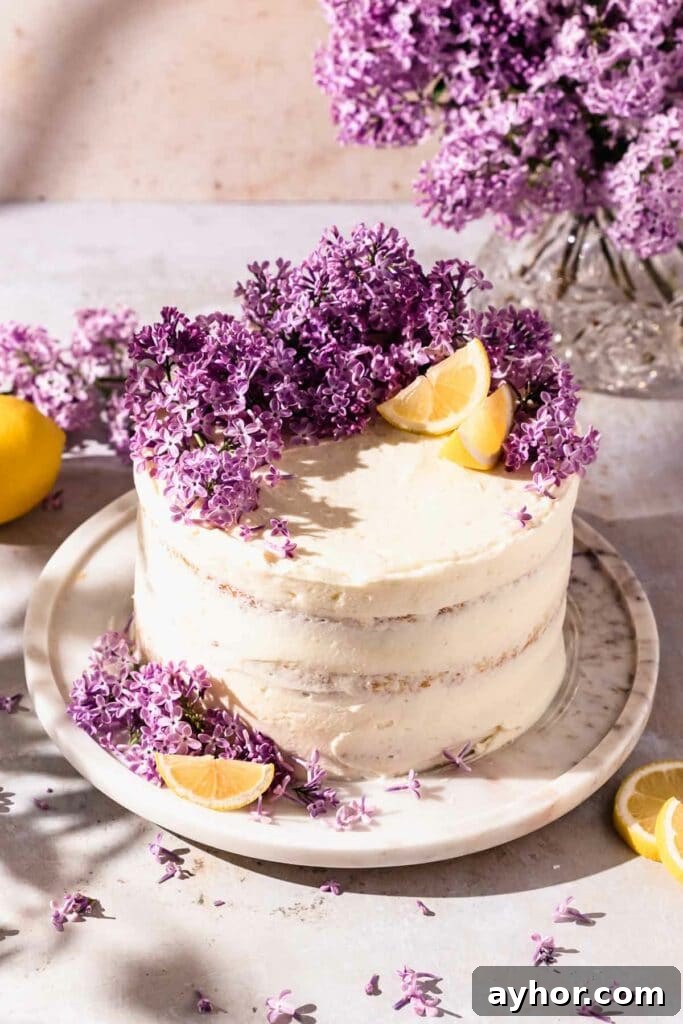
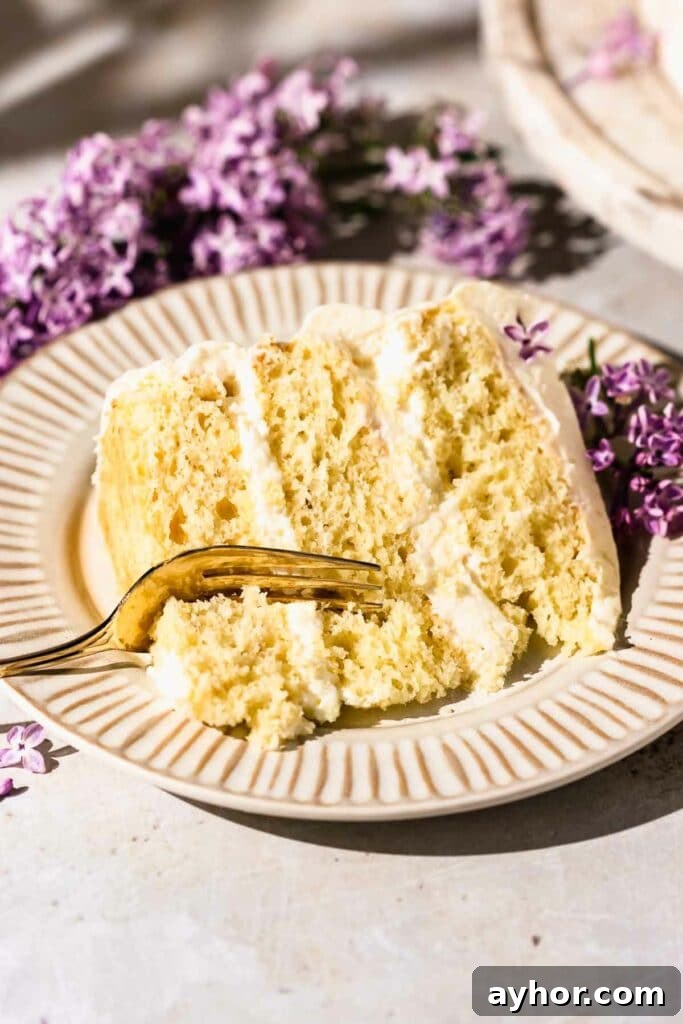
This lilac lemon cake is fragrant, tender, moist, and fluffy. It combines bright lemon notes with a delicate floral hint from fresh lilac flowers. Petals are folded into the batter and the baked layers are brushed with a simple lilac syrup. The cake is finished with a tangy, creamy lemon cream cheese frosting—perfect for spring and early summer when lilacs are in season.
Purchasing items mentioned in this post may support the author at no additional cost. This post contains affiliate mentions.
Why you will LOVE this recipe:
- Lilac flavour: A subtle floral note that pairs beautifully with lemon—light and seasonal.
- Texture: Soft, moist, and perfectly fluffy layers.
- Lemon cream cheese frosting: Smooth, tangy, and creamy with a bright citrus finish.
How to infuse cake with lilac flavour
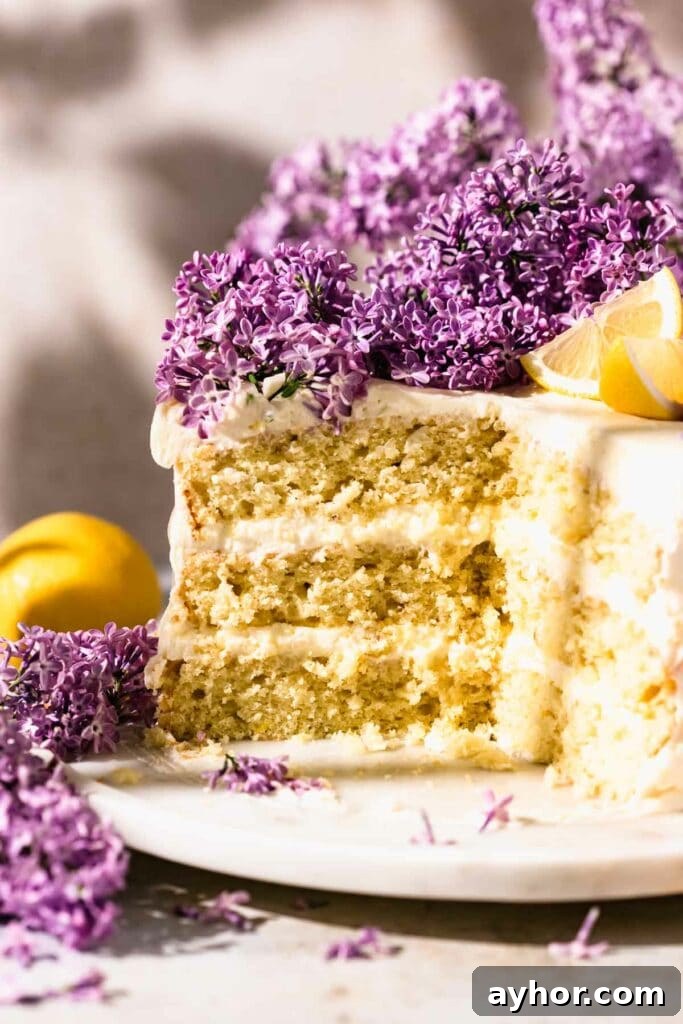
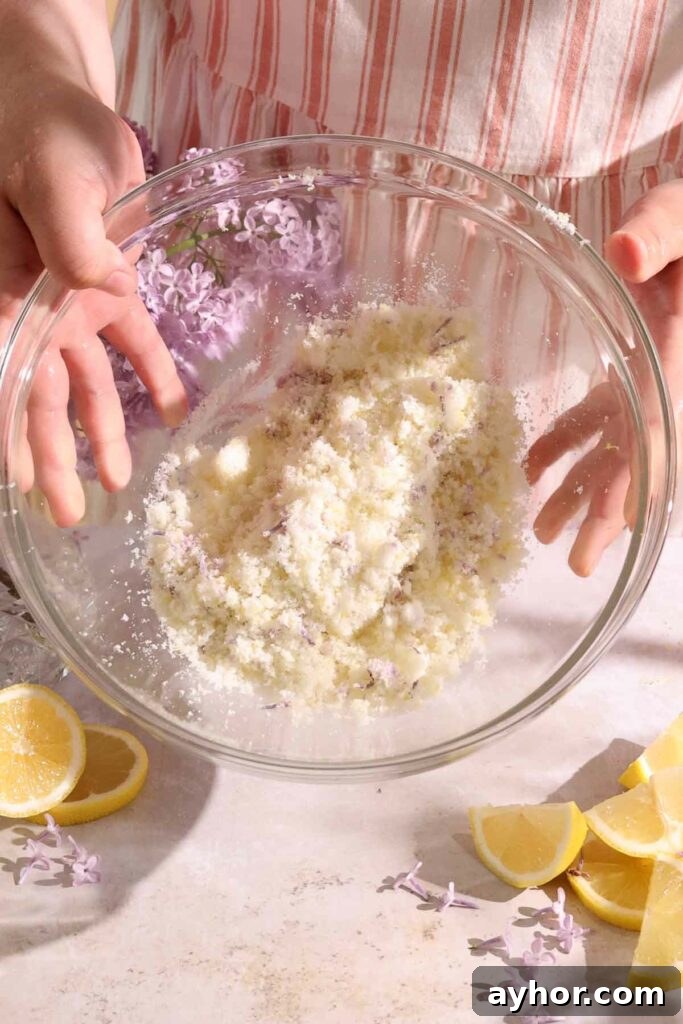
Lilac aroma is delicate, so the recipe uses two methods: finely rubbed petals folded into the batter and a lilac syrup brushed onto the baked layers. Rubbing the petals with sugar and lemon zest helps release the floral oils so the flavour infuses the cake without leaving noticeable petals in the crumb.
Tip: Remove any green stems or leafy bits when harvesting lilacs; these parts taste bitter and will affect the cake.
How to find lilacs for eating
Look for lilac bushes or trees in areas that are unlikely to have been sprayed with pesticides—away from busy roads. Different lilac colours can have slightly different flavour notes, so taste a flower or two before using them. Pale purple lilacs are commonly mild and pleasant for culinary use.
What do lilacs taste like?
Lilacs have a sweet, floral flavour very close to how they smell—gentle and fragrant. They are more similar to elderflower than to lavender or rose, which makes lilac syrup an excellent addition to drinks, lemonades, or cocktails.
If fresh lilacs aren’t available, omit the petals and brush the layers with elderflower syrup to achieve a similar floral profile.
Lilac syrup is easy to make
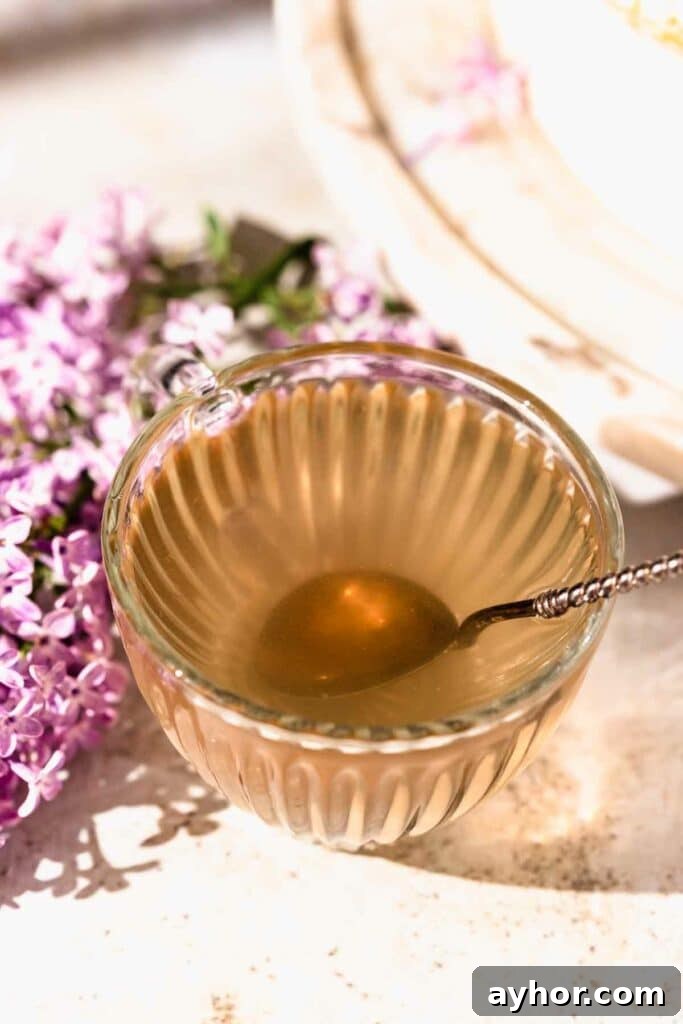
Make a simple 1:1 sugar syrup and steep it with lilac petals. The result is a gently floral syrup—much more subtle than lavender or rose and close in character to elderflower syrup. It keeps refrigerated in an airtight jar for up to two weeks and there’s usually some leftover for drinks or lemonade.
How to get soft and tender cake layers
For both flavour and texture, this recipe combines butter and a neutral oil: the butter adds richness while the oil helps keep the crumb extra tender. Use room temperature ingredients so they incorporate evenly and weigh the flour for the most consistent results. Fold the batter just until the flour streaks disappear—overmixing will make the cake dense.
Bake the layers until a toothpick inserted in the center comes out clean or with a few moist crumbs attached; if you see wet batter, bake a bit longer. Cool the layers in their pans for 10 minutes before removing to a rack to cool completely.
The key to lemon cream cheese frosting
Beat the butter and powdered sugar thoroughly to develop a light, airy base that doesn’t taste overly buttery. Use full-fat brick-style cream cheese, lightly softened for about 10 minutes, and add lemon zest and juice to taste. If the frosting becomes too loose, chill briefly and re-whip; add a little more powdered sugar if needed to reach a spreadable, fluffy consistency.
Key ingredients
Refer to the recipe card below for full ingredient quantities and step-by-step measurements.
- Lilacs: Fresh, pesticide-free lilac flowers with stems removed.
- Lemon: Fresh zest and juice from the same lemons for the cleanest citrus flavour.
- Butter and vegetable oil: Use good-quality butter for flavour and a neutral oil for a tender crumb.
- Buttermilk: Prefer store-bought buttermilk or kefir for the best texture.
- All-purpose flour: Weigh for accuracy, or spoon and level if measuring by cup.
- Cream cheese: Full-fat brick-style cream cheese works best—avoid low-fat varieties.
- Powdered sugar: Sift if it’s lumpy to ensure a smooth frosting.
How to make lilac syrup from scratch
Step 1 — Combine 1 cup sugar, 1 cup water, and 2 cups packed lilac flowers (no stems) in a medium saucepan. Heat over medium-high, stirring so the sugar dissolves and the mixture doesn’t scorch.
Step 2 — Bring to a boil, then simmer for about 10 minutes. Turn off heat and let cool to room temperature in the pan to allow the lilac flavour to steep.
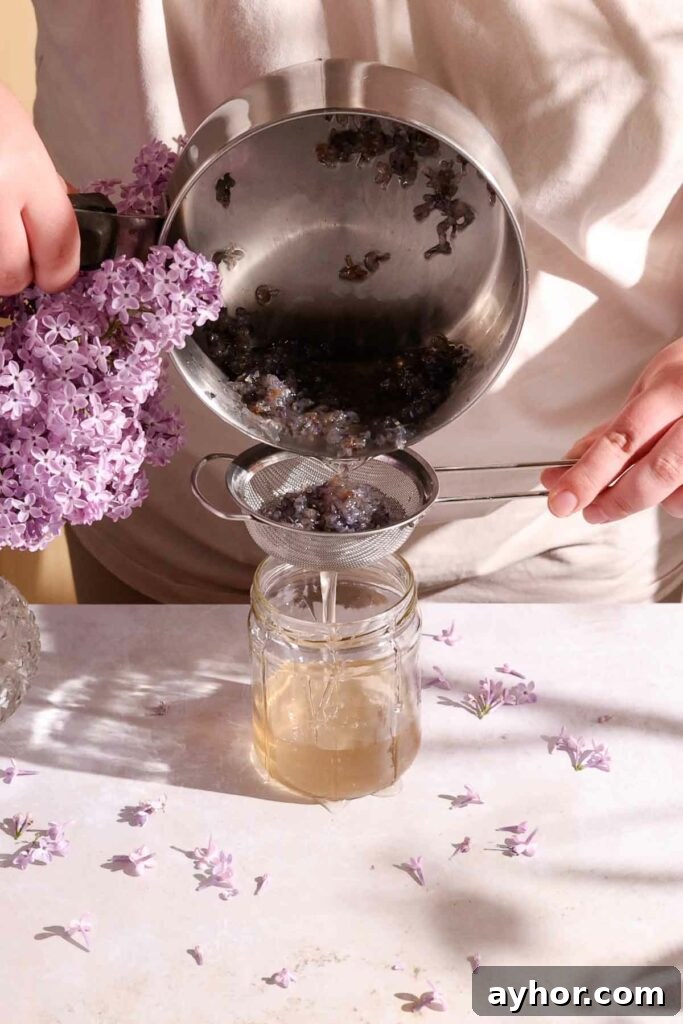
Step 3 — Strain out petals through a fine sieve, transfer the syrup to an airtight jar, and refrigerate for up to two weeks.
Step-by-step: lilac lemon layers
Step 1 — Grease and line three 8” round pans. Preheat the oven to 350°F (180°C).
Step 2 — In a large bowl, rub together sugar, salt, lemon zest, and lilac petals until fragrant.
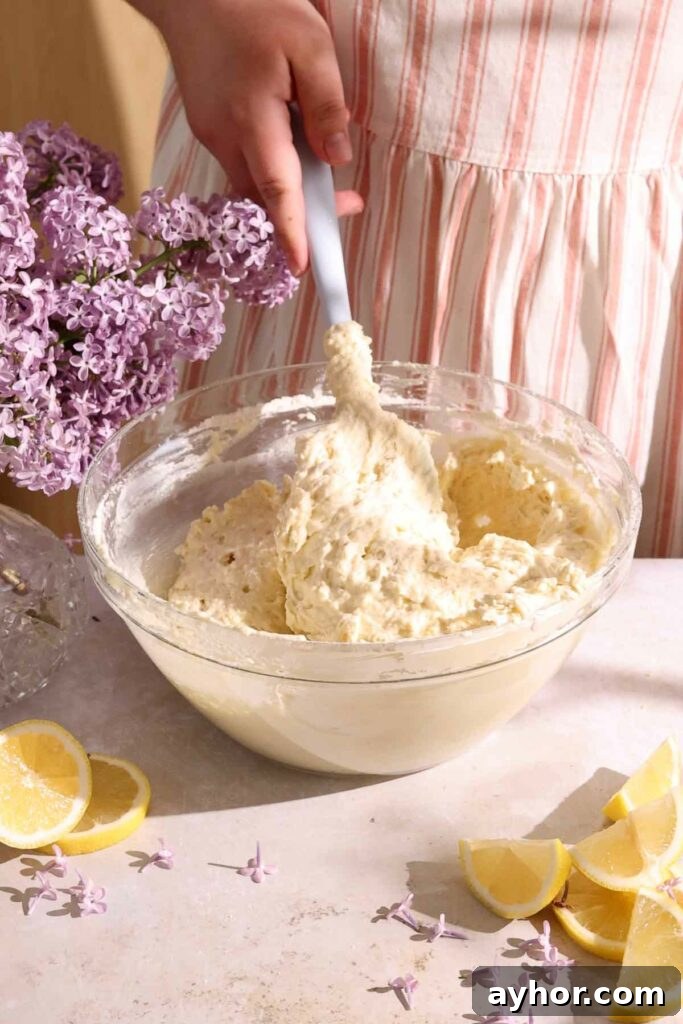
Step 3 — Add butter and oil and beat until light and creamed. Add eggs one at a time, scraping the bowl between additions. Stir in sour cream and lemon juice; the batter may look slightly split—this is fine.
Step 4 — Fold in half the flour with the baking soda and baking powder, then add buttermilk and the remaining flour. Fold gently until no dry streaks remain.
Step 5 — Divide batter evenly among the three pans and smooth the tops. Bake 20–25 minutes, or until a toothpick comes out mostly clean with a few crumbs attached. Cool in pans for 10 minutes, then invert onto a rack to cool completely.
Step-by-step: lemon cream cheese frosting
Step 1 — Beat softened butter until light, then gradually add powdered sugar and beat 7–10 minutes until very light and creamy, scraping down the bowl often.
Step 2 — Add cream cheese in pieces, beating well after each addition. Mix in lemon zest and add lemon juice as needed until the frosting is thick, fluffy, and spreadable.
Assembling the cake
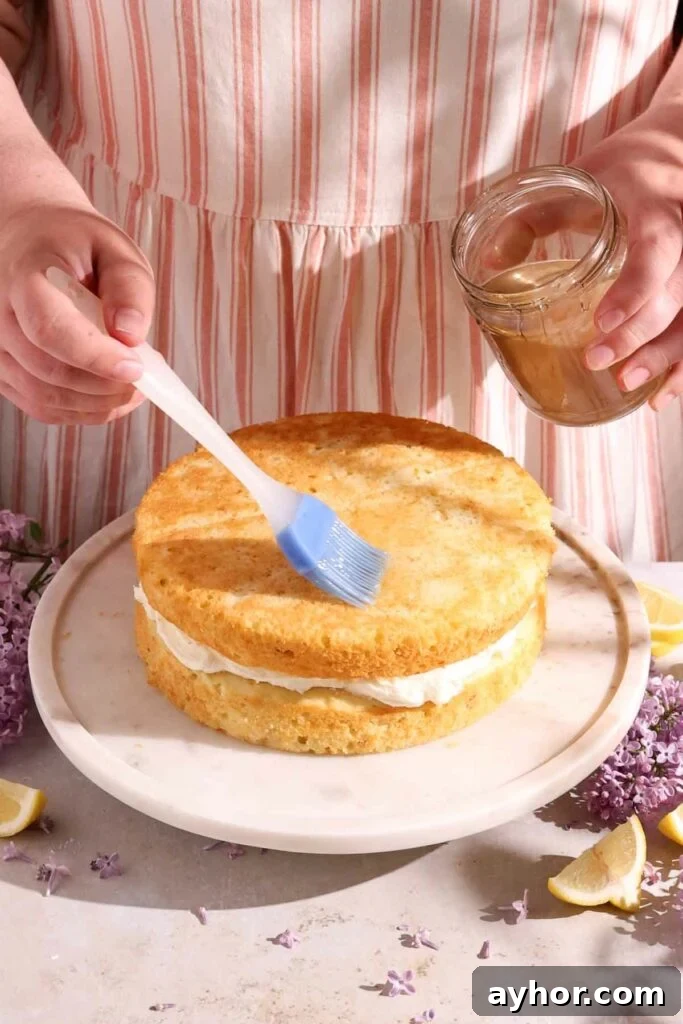
Step 1 — Place a small dollop of frosting on your cake plate to secure the first layer. Place the first layer right side up and brush generously with lilac syrup.
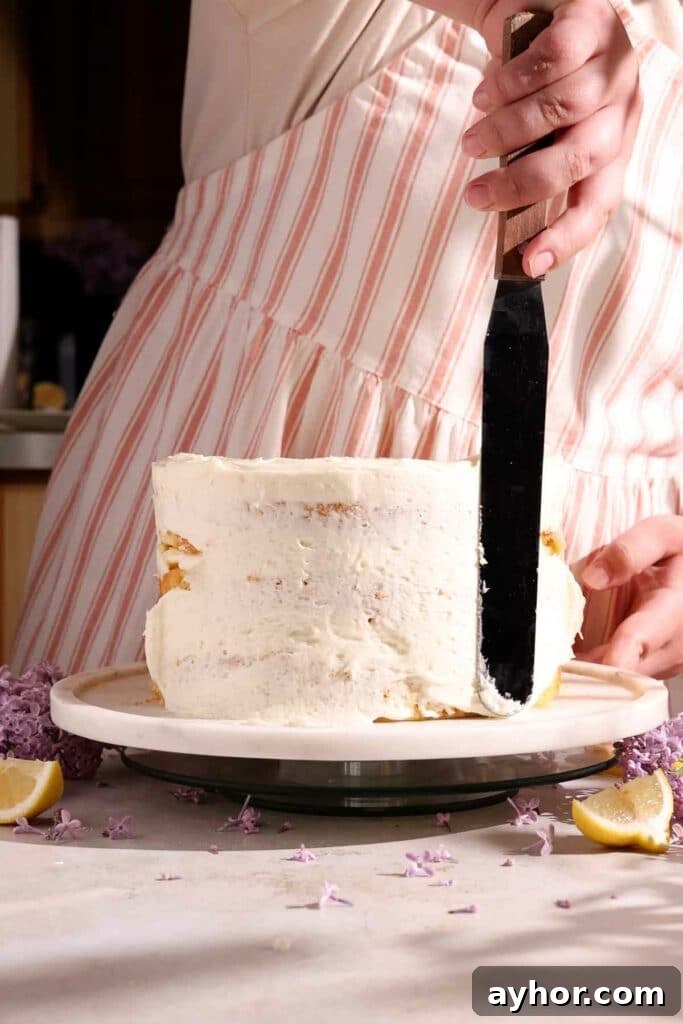
Step 2 — Add a thick layer of frosting, then the second layer (upside down). Brush with syrup and spread more frosting. Add the third layer, brush with syrup, and apply a thin crumb coat to the outside of the cake. Chill briefly so the crumb coat firms.
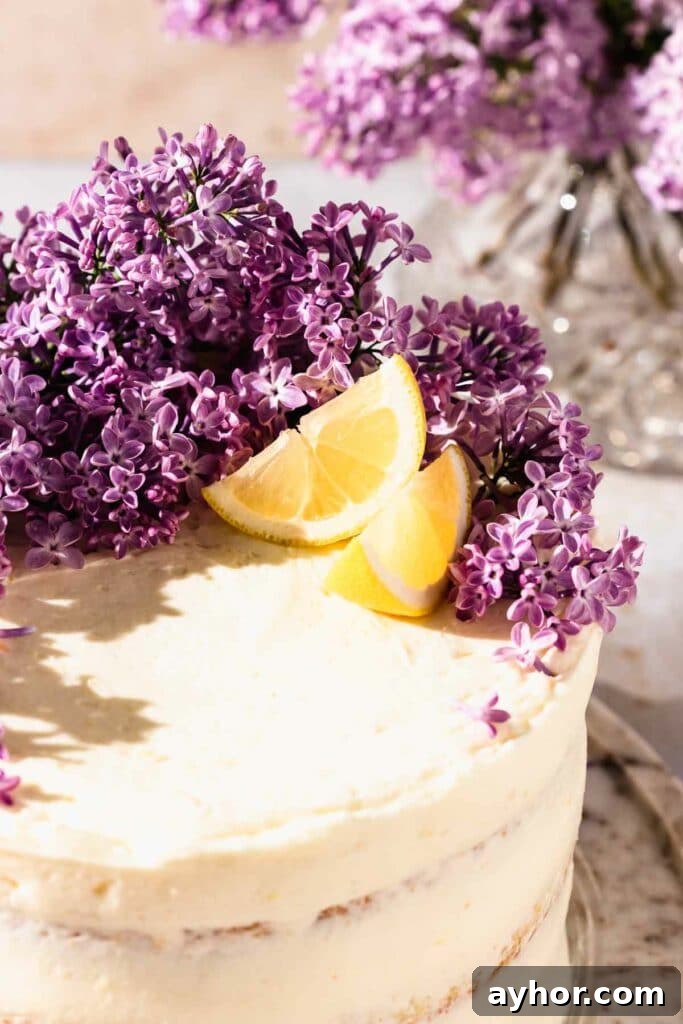
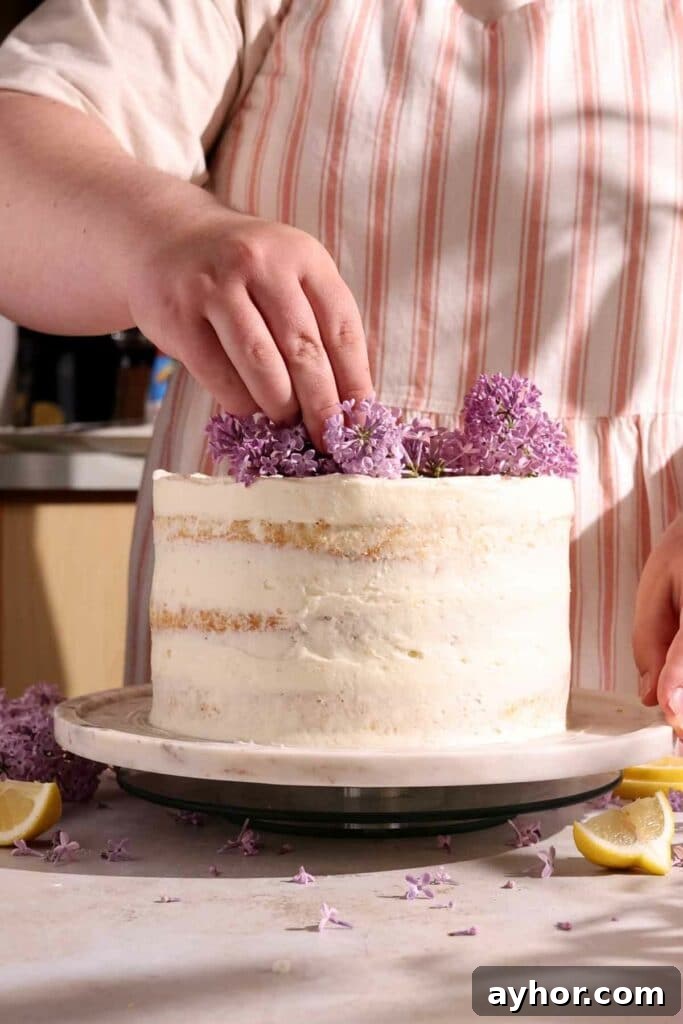
Step 3 — Finish frosting the cake smoothly with a spatula or cake scraper. Decorate the top with small lilac clusters and lemon wedges. Serve at room temperature for the best texture and flavour.
FAQ
Use it to flavour drinks, iced tea, or lemonade. It adds a delicate floral sweetness and a pleasant tint to beverages.
Stored in an airtight jar in the fridge, it keeps for up to two weeks.
If you can’t find lilacs, brush the layers with elderflower syrup for a similar floral character.
If the frosting is too warm it can be gloopy. Chill the cake and frosting briefly, re-whip if necessary, and use a few skewers to stabilize tall layers while assembling.
Check out these other recipes:
-
Lemon Victoria Sponge with Lemon Curd
-
Strawberry Butter Cake
-
Blueberry Cinnamon Rolls
-
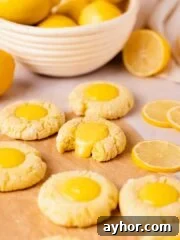
Lemon Curd Cookies



Happy baking!
Did you make this recipe? I’d love to hear how it turned out—leave a rating or comment and share your photos. If you post on Instagram tag the author’s account. Follow the original blog’s social channels to save more recipes and ideas.
📖 Recipe
Lilac Cake with Lemon
A lemon cake gently scented with lilac—petals are folded into the batter, layers are brushed with lilac syrup, and the cake is finished with lemon cream cheese frosting.
Ingredients
Lilac Syrup
- 1 cup granulated sugar
- 1 cup water
- 2 cups lilac flowers, packed (no green stems)
Cake Layers
- 1 1/4 cup sugar
- 1/8 teaspoon sea salt
- Zest of 1 lemon
- 3/4 cup lilac flowers, packed (no green stems)
- 3/4 cup butter, softened
- 1/4 cup vegetable oil
- 4 large eggs, room temperature
- 1/2 cup sour cream, room temperature
- 3 tablespoons lemon juice
- 3 1/3 cups all-purpose flour (400 g)
- 1/2 teaspoon baking soda
- 1 tablespoon baking powder
- 3/4 cup buttermilk, room temperature
Lemon Cream Cheese Frosting
- 2 cups unsalted butter, softened
- 8 cups powdered sugar
- 8 oz cream cheese, softened (about 10 minutes at room temp)
- Zest of 1 lemon
- Fresh lemon juice, as needed to loosen
Assembly
- Fresh lilac clusters for decoration
- Lemon wedges for garnish
Instructions
Lilac Syrup
- Combine sugar, water, and lilac flowers in a medium saucepan over medium-high heat. Stir to dissolve the sugar and prevent scorching.
- Bring to a boil, then simmer 10 minutes. Remove from heat and cool to room temperature in the pan to steep.
- Strain out the petals, transfer syrup to an airtight jar, and refrigerate for up to two weeks.
Cake Layers
- Preheat oven to 350°F (180°C). Grease and line three 8” round pans.
- Rub together sugar, salt, lemon zest, and lilac petals until fragrant.
- Beat in butter and oil until light. Add eggs one at a time, then stir in sour cream and lemon juice.
- Sift half the flour with the baking soda and baking powder into the bowl and fold until mostly combined. Add buttermilk and the remaining flour and fold until no streaks remain.
- Divide batter between the pans and bake 20–25 minutes or until a toothpick comes out mostly clean. Cool 10 minutes in pans, then invert onto a rack and cool completely.
Lemon Cream Cheese Frosting
- Beat butter until light. Gradually add powdered sugar and beat 7–10 minutes until very creamy.
- Add cream cheese in pieces, beating well after each addition. Mix in lemon zest and add lemon juice as needed to reach a thick, fluffy, spreadable consistency.
Assembly
- Place a small dollop of frosting on the cake stand, add the first layer, and brush generously with lilac syrup.
- Spread frosting, add the second layer (upside down), brush with syrup, and repeat. Add the final layer and brush with syrup.
- Apply a thin crumb coat and chill briefly. Finish frosting the cake smoothly. Decorate with fresh lilac clusters and lemon wedges. Serve at room temperature.
Notes
The cake keeps in the fridge for up to 3 days in a covered carrier. To freeze, firm the frosted cake in the freezer, wrap tightly, and freeze up to 2 months. Thaw in the refrigerator and bring to room temperature for 15–20 minutes before serving to restore a tender texture.
Flavour tip: Lilac flavour is subtle—serve with extra lilac syrup and flowers if you want a more pronounced floral note. If you can’t source lilacs, substitute elderflower syrup to replicate a similar floral profile.