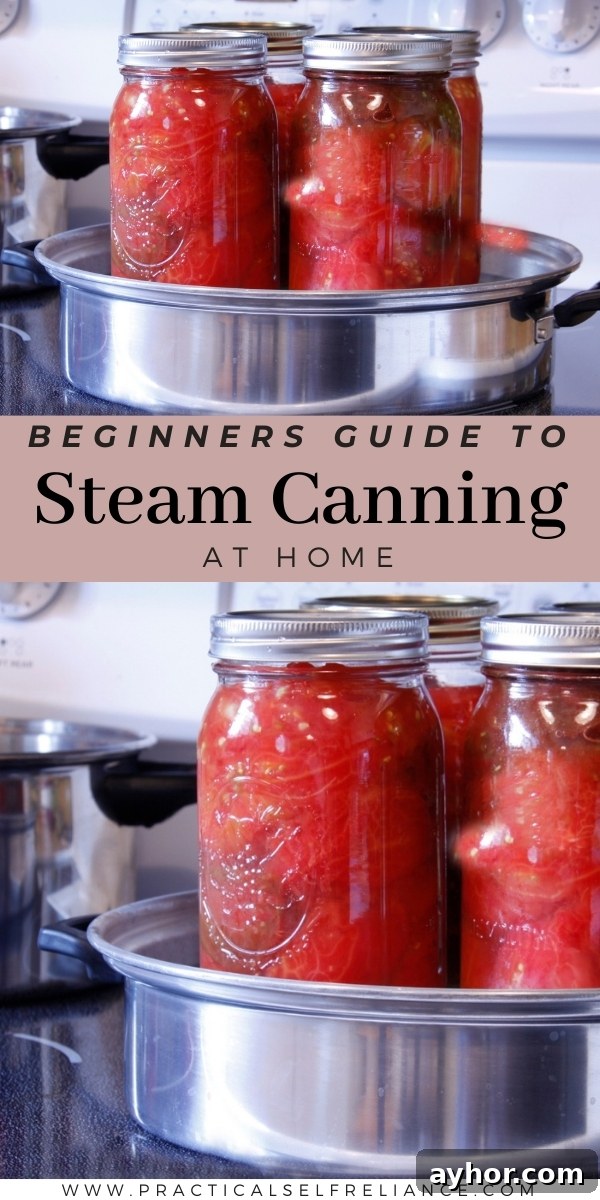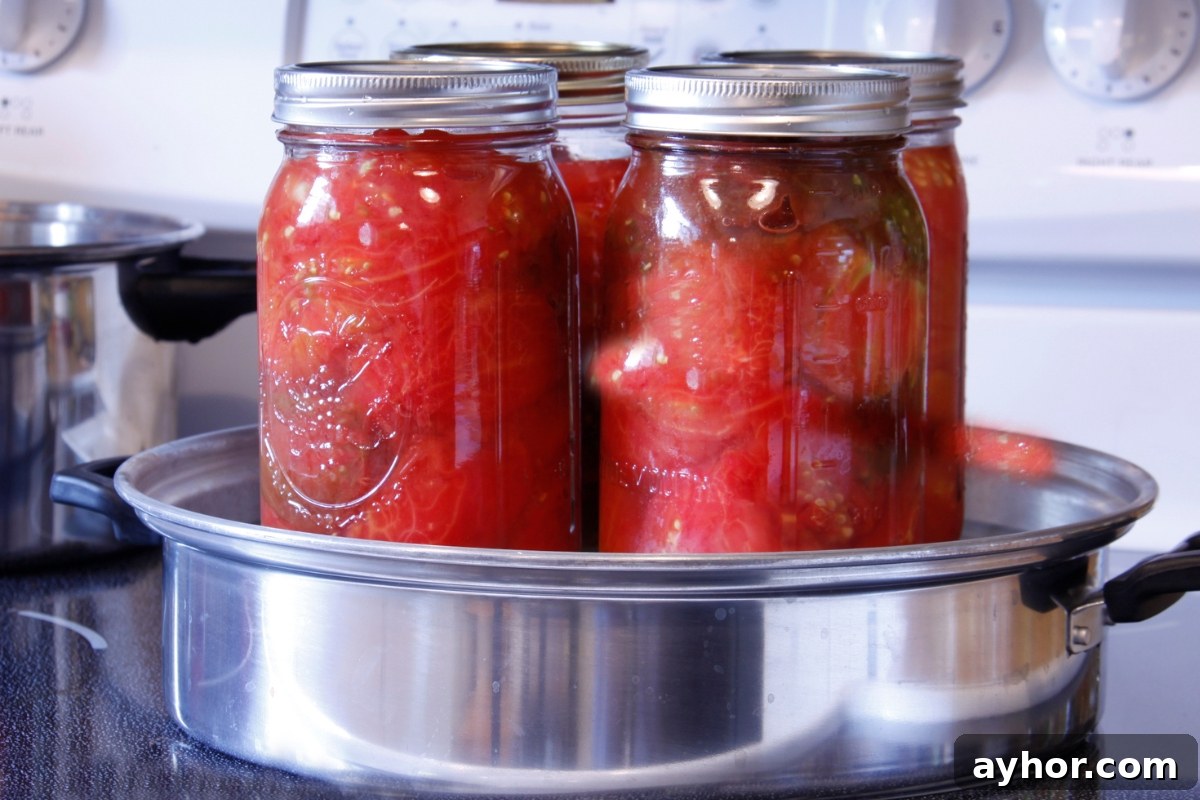
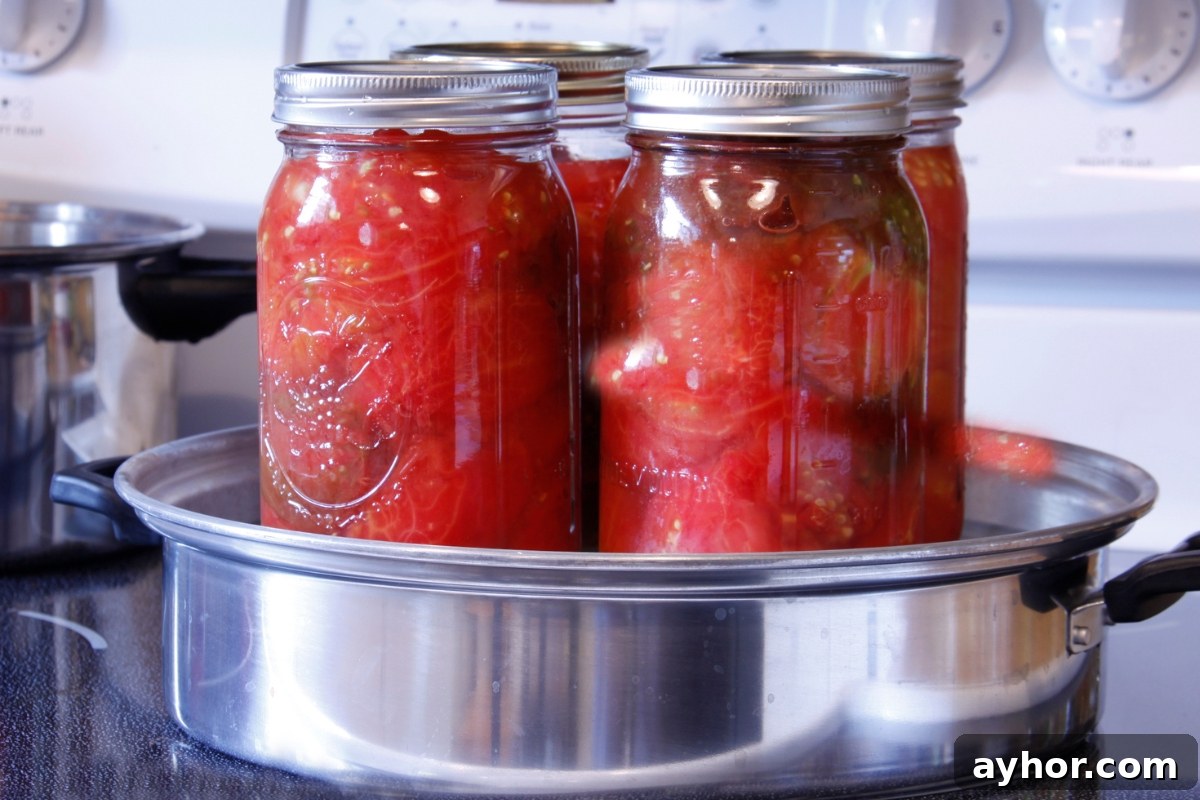
Steam canning is a faster way to preserve food at home compared with traditional water bath canning. A steam canner reaches and maintains processing temperatures more quickly than heating and sustaining a large pot of boiling water, uses less energy, and releases less heat into the house.
This article is written by Morgan Hyde, a former reference librarian from Arizona. Her library career deepened a lifelong curiosity and a commitment to careful research. If it’s something she can do on her own, she wants to learn about it.
Steam canning offers an efficient way to preserve fresh fruit-based and pickled foods for long-term storage. While the method isn’t appropriate for every product, it works well for jams, jellies, pickles, salsas, sauces, and other high-acid foods.
History of Steam Canning
Home canning has been practiced for well over a century, but steam canning has a shorter and more complicated history. The first steam canners appeared in the 1920s, but use declined in the 1970s amid safety concerns and a higher visibility of botulism cases linked to improper canning practice.
Research resumed in the 2010s and, after further study, steam canning received renewed endorsement for safe home use in the following years. Despite improved guidelines, some older warnings persist online—concerns about cold spots, confusing steam with vapor, and burn risks are commonly repeated.
Those concerns are valid reasons for careful practice, but steam canning is safe when you use tested recipes, follow instructions precisely, and prepare properly.
What is Steam Canning?
Steam canning is a method for producing shelf-stable jars that can be stored at room temperature. Although food can last indefinitely when sealed correctly, most people aim to consume home-canned items within a year for optimal flavor and nutrition.
The process involves filling heat-safe glass jars, securing them with the standard two-part lids, and placing them inside a covered steam canner. Steam at the correct temperature pasteurizes the contents, and as jars cool the lids form a vacuum seal.
Steam canning follows the same basic principles as water bath canning and is appropriate for high-acid foods. The primary advantage is speed: steam reaches processing temperature more quickly and uses less water and energy than a full water bath. However, recipes requiring longer processing—typically over 45 minutes—are usually better suited to water bath canning because steam canners can run out of water during extended processing.
Which Foods are Safe for Steam Canning?
Steam canning is approved for high-acidity foods with a pH below 4.6. Don’t assume a food is acidic enough just because it tastes tart; for example, many modern tomato varieties are not sufficiently acidic for steam canning unless acid is added or the product is pressure canned.
Recipes combining high- and low-acidity ingredients can be complex—always use thoroughly tested recipes from reliable sources and follow them exactly.
Common foods suitable for steam canning include:
- Fruit
- Berries
- Pickles
- Pie fillings
- Preserves
- Jellies
- Fruit jams
- Fruit butters
- Sauces
- Vinaigrette dressings
- Juices
- Clear Jel for thickening
Foods Not Approved for Steam Canning
Certain foods are not safe for steam canning on their own because they raise pH or otherwise interfere with proper heat transfer. It’s risky to rely on untested “workarounds”; instead, use recipes from the National Center for Home Food Preservation or university extension services.
Some items are suitable for pressure canning or must be combined with added acid; others are not recommended for home preservation at all. Starches and some thickeners can prevent heat from reaching the center of the jar, leaving food under-processed.
Foods to avoid with steam canning include:
- Melons
- Bananas
- Avocados
- Asian pears
- White peaches
- Meats
- Seafood
- Poultry
- Dry beans
- Vegetables that aren’t pickled
- Dairy
- Eggs
- Oil
- Starches (noodles, potatoes, rice, etc.)
Equipment for Steam Canning
A purpose-built steam canner is essential, and a few other tools will make the process safer and easier:
- Canning jars: Use jars designed for canning that accept standard two-part lids and withstand high heat. Reusing glass from commercial pickles or other products is not recommended.
- Canning lids: Two-part lids include a flat sealing disk with a gasket and a screw band. The flat lids are single-use and should be replaced after each canning session; save the bands for reuse.
- Steam canner: Models vary—some are dedicated steam canners, others double as water bath canners. A lid-mounted temperature gauge is useful and often recommended.
- Jar lifter: Even though jars aren’t fully submerged, you’ll still handle hot jars. A jar lifter reduces the chance of spills and burns.
- Canning funnel: A wide-mouthed funnel speeds filling and helps maintain correct headspace without spilling food on jar rims.
Optional equipment for steam canning
Some additional tools are convenient but not essential:
- Canning rack: Many steam canners include a rack to keep jars off the bottom; if yours doesn’t, you can improvise a trivet or use a pot with a sturdy, thick base.
- Headspace measure: Useful but often built into quality canning funnels.
- Bubble remover: A nonmetal spatula, spoon, or knife works fine to remove air bubbles.
- Magnetic lid lifter: Helpful if you choose to warm lids before use, but not required.
- Jar wrench, bottle brushes: These tools can help with difficult rings or cleaning, but ordinary household items usually suffice.
Steam Canning Basics
Inspect jars for chips or cracks and clean them before use. Fill the steam canner with the manufacturer-specified amount of water—often about 3 quarts—and add a splash of vinegar if you have hard water to reduce scaling.
Place the canning rack or trivet in the base, set jars in place, and begin heating. For hot-packed jars (where contents are heated before filling), bring the water to about 180°F; for cold-packed jars target roughly 140°F. These moderate temperatures warm the jars gradually and reduce the risk of thermal shock.
Fill jars using a canning funnel and leave the headspace called for in your recipe—typically between 1/4 inch and 1 inch. Wipe jar rims clean to remove any spilled food, then apply lids and screw bands finger-tight.
Lower jars into the steamer, cover, and increase heat until the gauge shows a steady head of steam (212°F at sea level). Many steam canners include elevation adjustments—consult the manual and your recipe if you’re uncertain.
Avoid excessively high heat; it wastes water and may shorten processing time if water boils away too quickly. Once processing is complete, turn off the heat and, if safe, move the canner off the burner. Wait five minutes before removing the lid to reduce steam bursts and sudden cooling.
Remove the lid carefully, lift jars with a jar lifter, and place them on a draft-free surface with about an inch of space between jars. Let jars cool undisturbed for 12–24 hours. Do not test seals while jars are still warm; wait until they reach room temperature.
A sealed lid will be concave and will not move when pressed. Jars that fail to seal should be refrigerated and used promptly or reprocessed with new lids. Label sealed jars with contents and processing date, remove bands, and store jars in a cool, dark, dry place.
Adapting Water Bath Canning Recipes
There are fewer recipes explicitly written for steam canners, but water bath recipes are compatible. Use tested water bath recipes without changing ingredients, headspace, or processing time. The only adjustment is processing in steam at the specified steam temperature rather than immersion in boiling water.
Common Beginner Mistakes
Careful preparation and attention to detail avoid most problems. Common pitfalls include:
Not calibrating your steam gauge
If your canner’s manual requires gauge calibration, follow the instructions precisely. Knowing the actual steam temperature is crucial to ensure correct pasteurization.
Breaking your steam gauge
Gauges can be damaged if dropped or mishandled. If you suspect a faulty gauge, consult the manufacturer for support rather than guessing about processing temperatures.
Not using the right method
Never use steam or water bath methods for low-acid foods—those require pressure canning to prevent the risk of botulism. Likewise, pressure canning is not suitable for many high-acid preserves where texture and quality would suffer.
Overfilling and underfilling jars
Follow headspace guidance carefully. Too little headspace can trap air; too much can allow food to interfere with sealing.
Not accounting for elevation
Boiling and steaming temperatures change with elevation. If you live at higher altitudes, consult your canner manual and recipe notes to ensure adequate processing temperature and time.
Amending recipes
Do not alter tested recipes. Changing acidity, adding nonapproved thickeners, or removing acidic ingredients can make a recipe unsafe. If you modify a recipe, you may need additional precautions such as boiling the contents before consumption.
Oven canning
Oven canning is no longer recommended. Jars are not designed for dry heat, temperature control varies widely across ovens, and established safe guidelines are not available.
Using too much steam
Running a steam canner hotter than necessary wastes water and can force you to stop processing to add more water. If you must add water, you need to rebuild a full head of steam and restart the processing time.