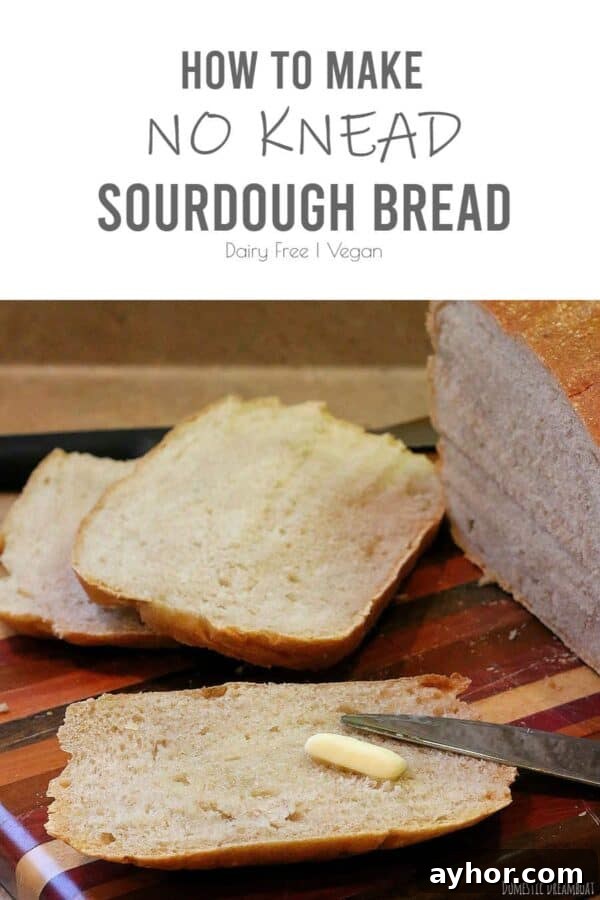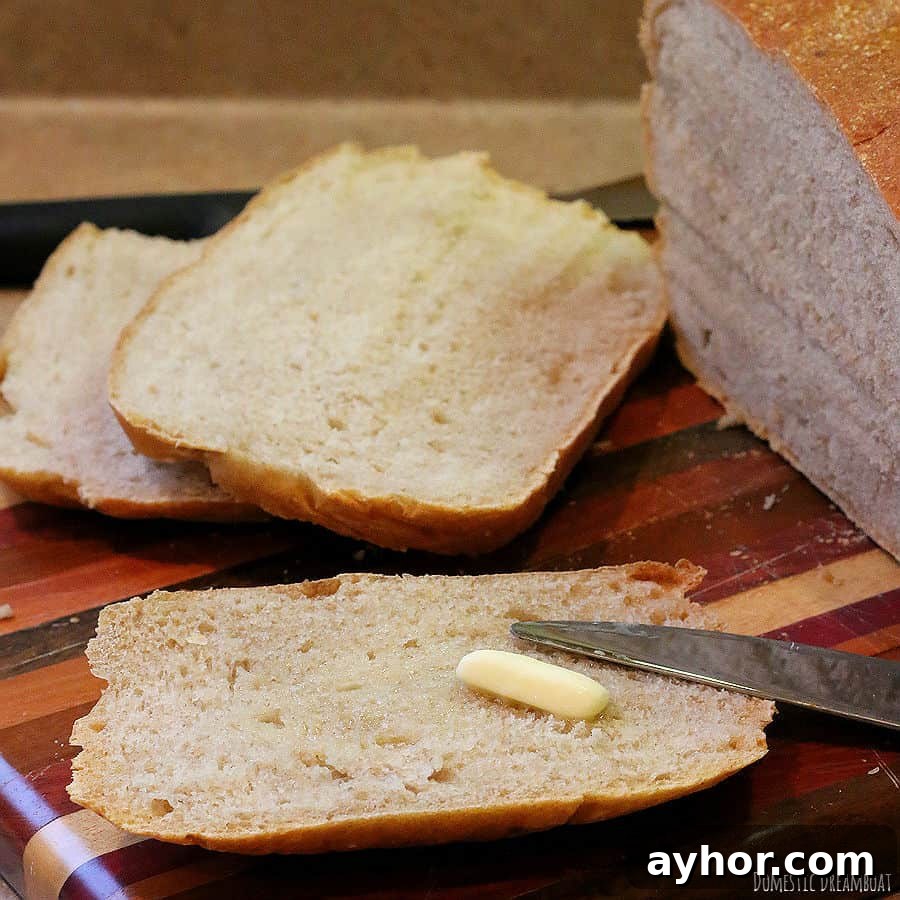
Making your own No-Knead Sourdough is simple. With a handful of ingredients and some patience, this beginner-friendly recipe delivers a rustic, flavorful loaf.
What do you need to make sourdough bread?
This no-knead sourdough uses very basic pantry staples and a sourdough starter. The ingredients are:
- Flour (mainly bread flour with some whole wheat)
- Sourdough starter
- Water
- Salt
- A pinch of yeast (optional, to speed the rise)
Where can I get a sourdough starter?
If you already have starter, bring it out of the fridge and use it. If you don’t, the easiest way is to get some from a friend who bakes. You can also make your own starter at home, which takes time, or order a cultured starter. When starting from a purchased or gifted starter you’ll typically need a few feedings to get it fully active, but it can be ready much sooner than building one from scratch.
How do I maintain a sourdough starter?
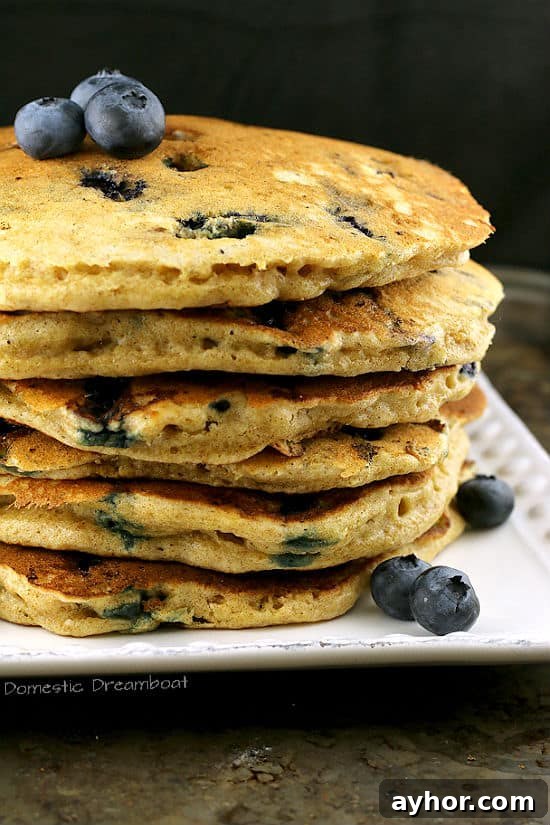
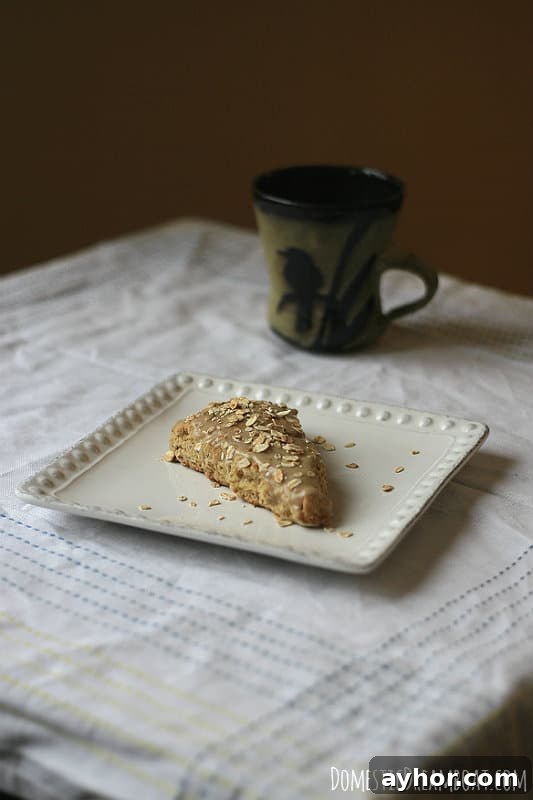
Maintaining starter is low maintenance. If you bake often, simply feed it when you use it. If you keep starter at room temperature, feed it every few days. If stored in the fridge and used less frequently, feed it every couple of weeks. Beyond bread, starter is versatile for pancakes, waffles, scones, and more.
This recipe is appreciated for how hands-off it is. There’s no mixer or kneading required — a dough whisk or even a wooden spoon will work. The dough is intentionally very wet; resist the urge to add extra flour during the initial mix. After the long first rise, you’ll fold in more flour to make the dough easier to handle.
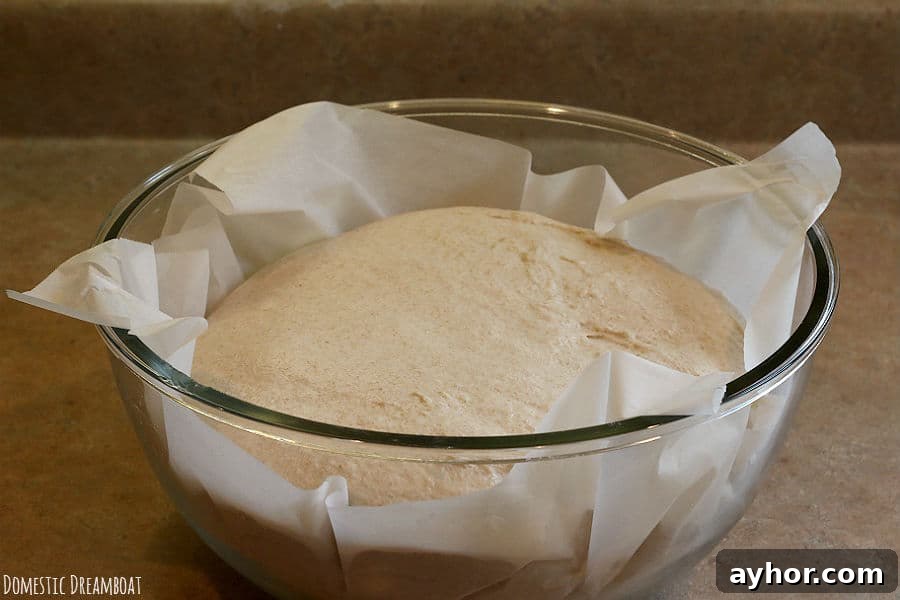
Because the dough stays quite soft, you won’t shape it into a traditional loaf. Instead, you let it rise again in a bowl lined with parchment and then transfer the parchment-and-dough into a preheated Dutch oven to bake. The covered pot traps steam and gives the bread a chewy, well-colored crust.
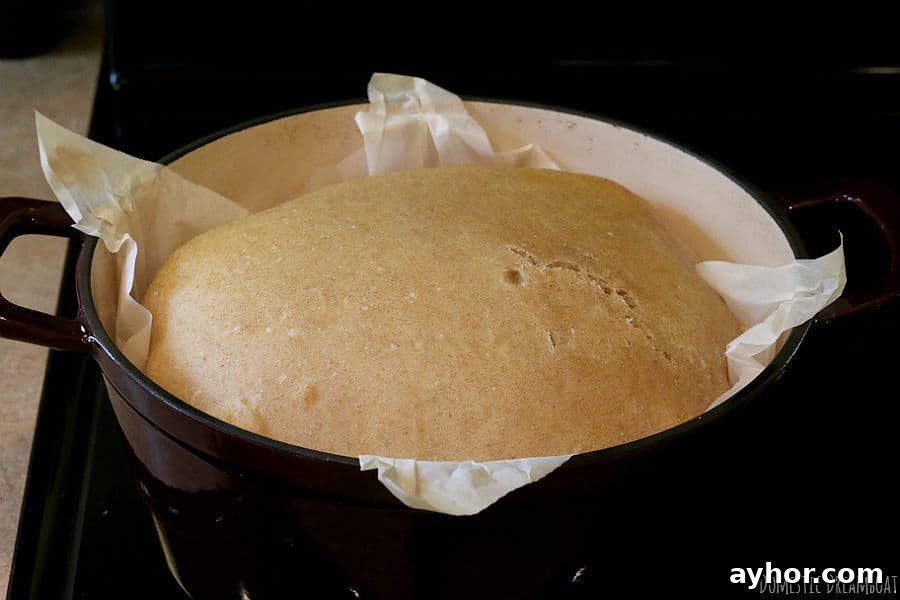
Use a large covered Dutch oven (about 8–10 quarts) for one big loaf, or two smaller pots to bake two loaves. If you don’t have a lid, create steam by spraying water into the oven before closing the door or by keeping a shallow tray of water in the oven while the bread bakes. Remove the lid partway through baking to brown the crust.
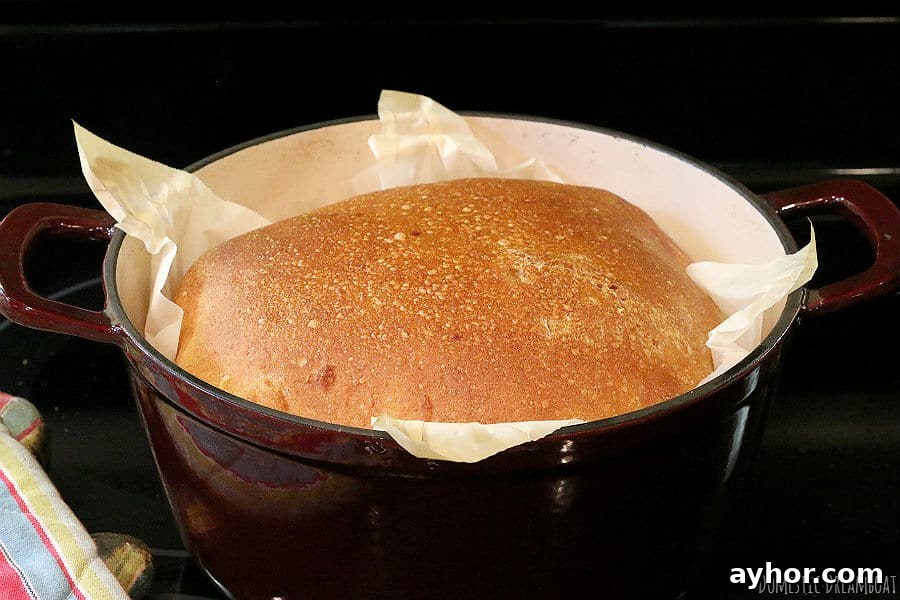
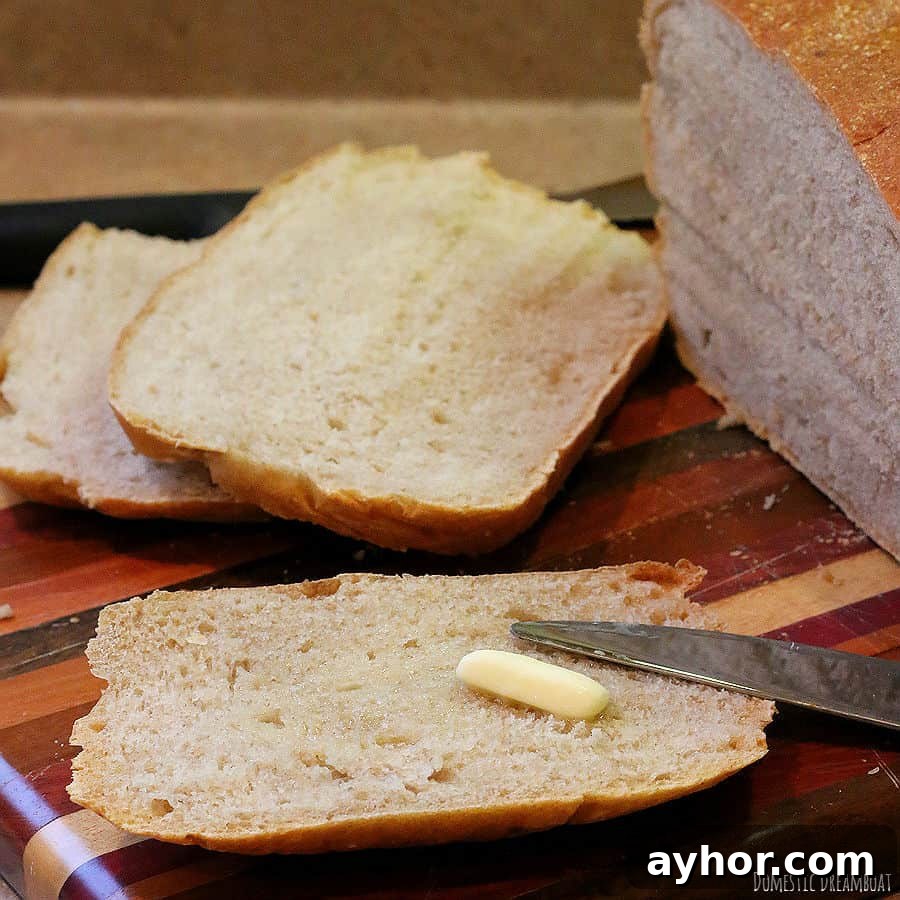
When the loaf is finished, lift the parchment by the corners (it can be fragile after baking) and transfer the bread to a cooling rack. Peel off the parchment and let the bread cool completely before slicing—this is important. Cutting too soon can cause the crumb to collapse; patience yields a much better texture.
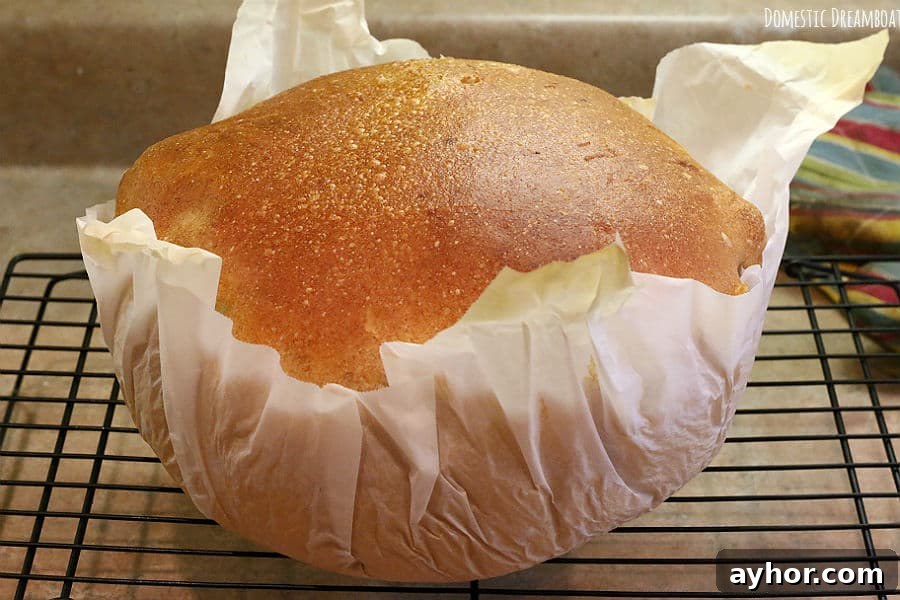
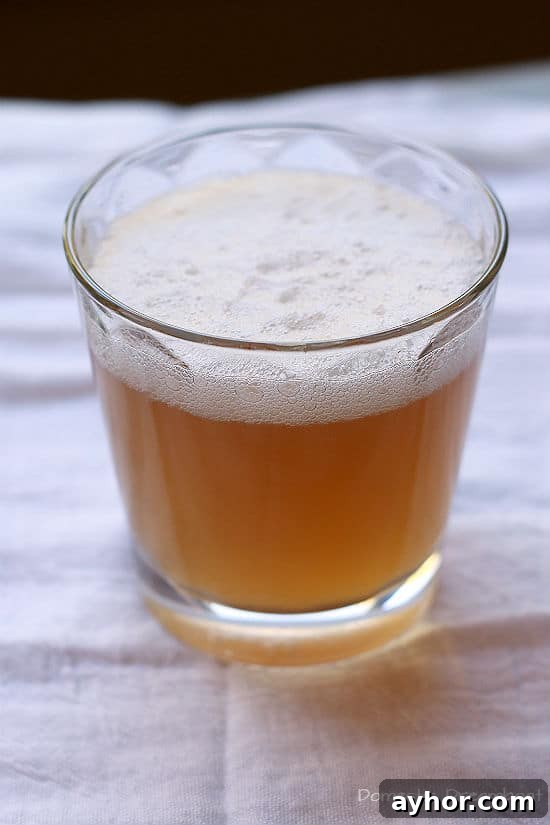
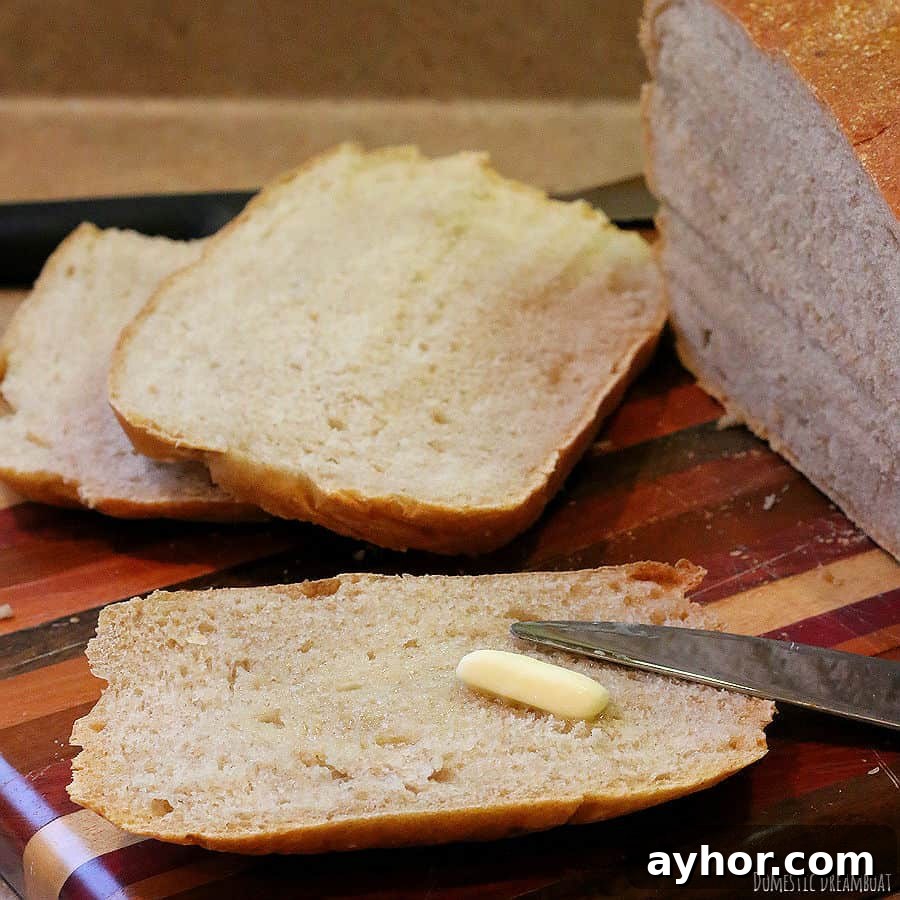
This loaf is large with a thick, crunchy crust, so a good bread knife helps. Serve slightly warm with salted butter, alongside hearty soups or stews, or slice and freeze for later use. Leftover bread also makes excellent breadcrumbs and can be used for preparations like bread kvass or stuffing.
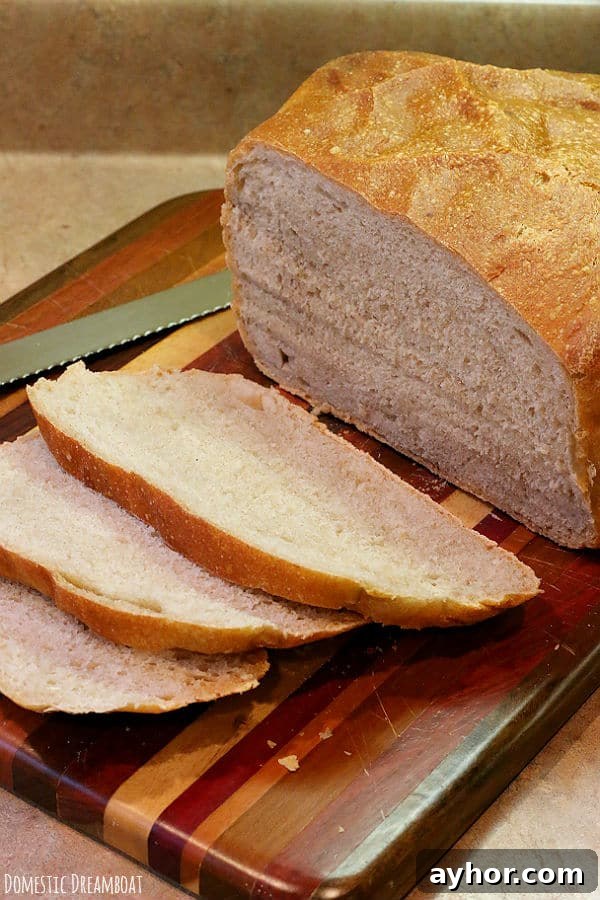
The best way to enjoy this bread is slightly warm with plenty of butter. If you can’t finish a whole loaf, slice and freeze pieces in a sealed bag for later.
What else can I make with my sourdough starter?
No Knead Sourdough Bread
Method
Nutrition
Notes
Ingredients
- 3 cups lukewarm water
- 1 ½ cups sourdough starter
- ¼ teaspoon yeast (optional)
- 1 ½ cups whole wheat flour
- 5 cups bread flour
- 2 teaspoons salt
Instructions
- Pour 2 cups lukewarm water into a large bowl. Add sourdough starter and whisk vigorously to combine.
- Add the yeast (if using), the whole wheat flour and 1 ½ cups of the bread flour. Stir until smooth.
- Add the remaining cup of water and the salt. Mix thoroughly.
- Add the remaining bread flour and stir until combined. The dough will be wet and sticky.
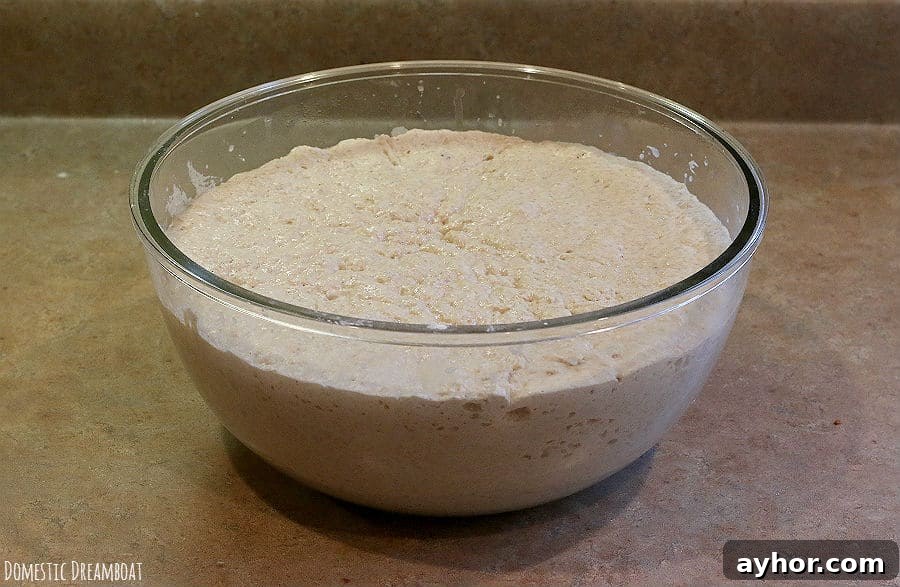
- Cover the bowl and let the dough rise for 12–15 hours.
- After the rise, punch the dough down and generously sprinkle with about 1 cup flour. Perform 10–12 folds by lifting one side and folding into the center, repeating around the bowl until the extra flour is worked in. Keep your hands floured to manage stickiness.
- Transfer the dough onto a large sheet of parchment. Clean the bowl or use a new large bowl and place the parchment and dough inside. Let rise for about 2 hours, until it reaches the desired height.
- When 30 minutes remain on the final rise, place a Dutch oven with its lid in the oven and preheat to 450°F for 30 minutes.
- Carefully lift the parchment with the dough and transfer it into the hot Dutch oven. Cover and bake for 30 minutes.
- Remove the lid and bake an additional 15 minutes to brown the crust. Remove from the pot, peel off the parchment, and cool on a wire rack until completely cool before slicing.
Nutrition
Notes
A small amount of yeast helps the loaf rise more quickly. If you skip the yeast, rely solely on the starter and allow extra rising time as needed.
This recipe yields one very large loaf (in an 8–10 quart Dutch oven) or two smaller loaves. If your Dutch oven doesn’t have a lid, add steam by spraying water into the oven before closing the door or by placing a shallow tray of water in the oven during baking.
Tried this recipe?
Please consider leaving a review!