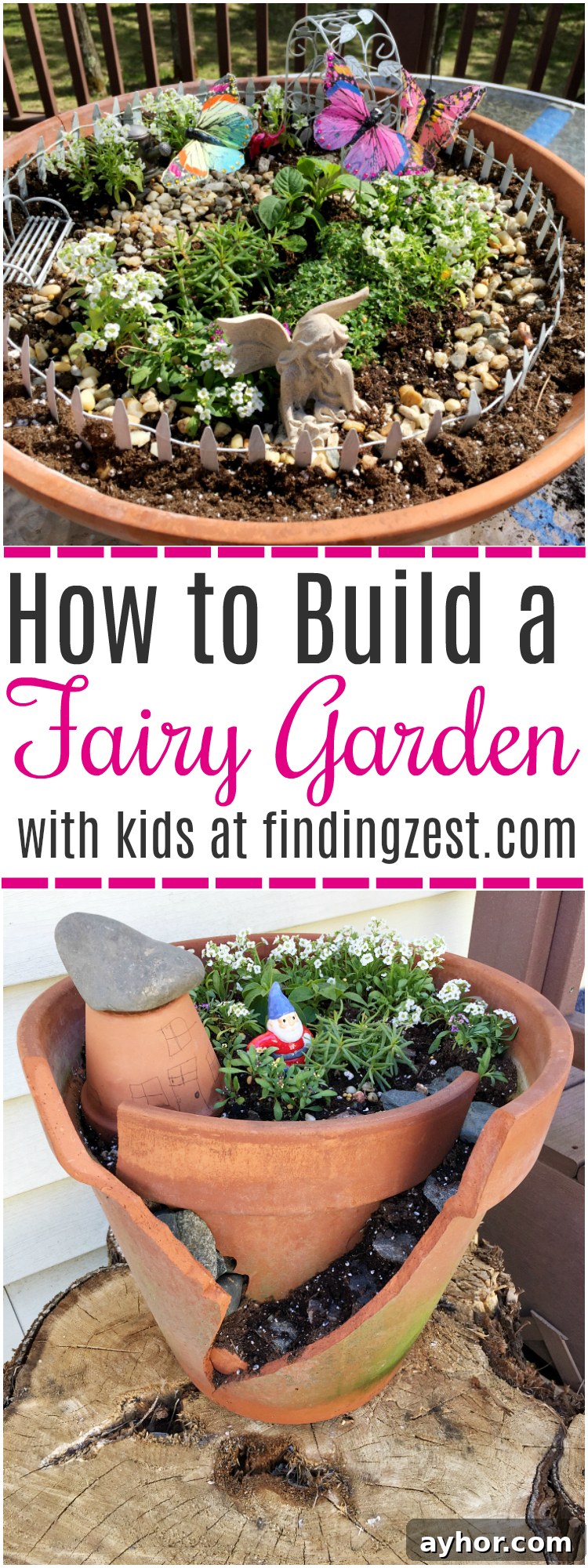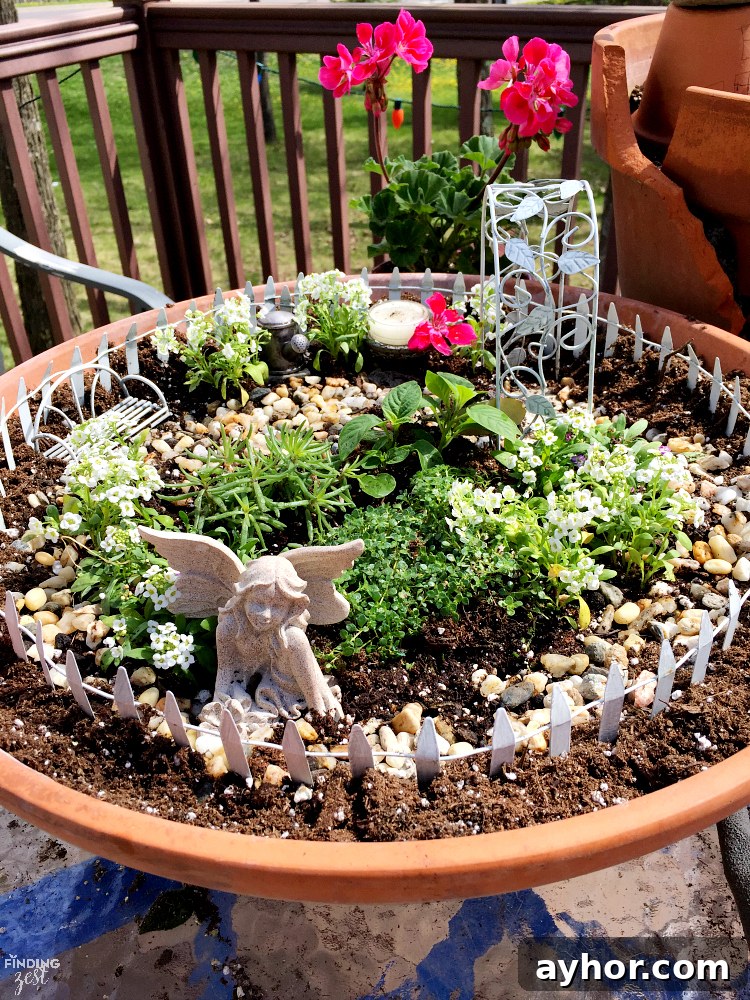
Several years ago I bought an adorable fairy garden kit for my daughter and me to assemble, and it quickly became a Mother’s Day tradition. We use the project to learn about plants, practice planting skills, and spend creative, hands-on time together. If you’re wondering how to build a fairy garden with kids, this post shows how we created two small scenes: a butterfly-filled fairy garden and a gnome house made from a broken clay pot with rock steps.
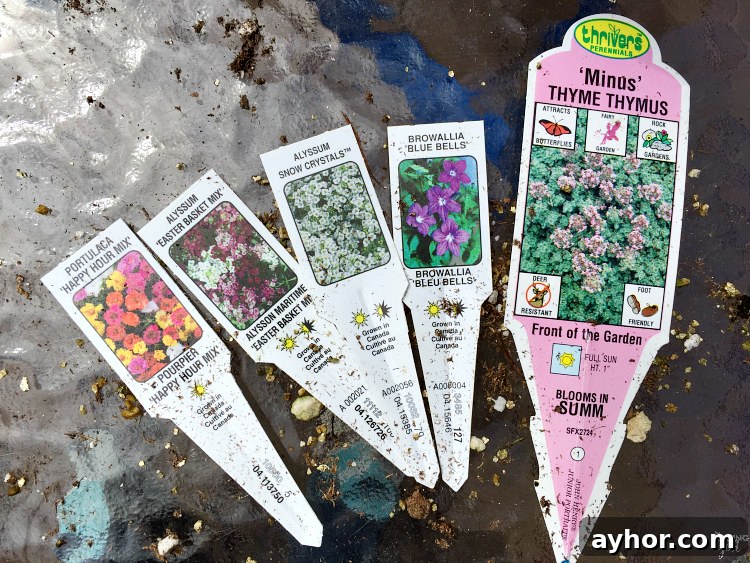
Our local garden center stocks a selection of plants meant for miniature and fairy gardens, which makes choosing plants easier for beginners. Look for small, slow-growing varieties that stay compact in a pot—those are best for tiny garden scenes.
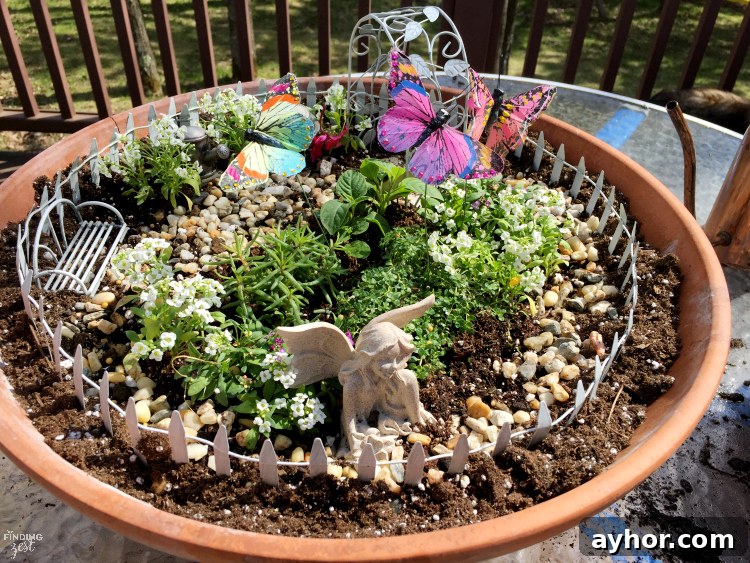
Many people finish their miniature gardens with moss, pebbles, or miniature gravel around the plants to give a polished look. Small accents — like tiny benches or miniature watering cans — make the scene feel alive and give children fun choices when decorating.
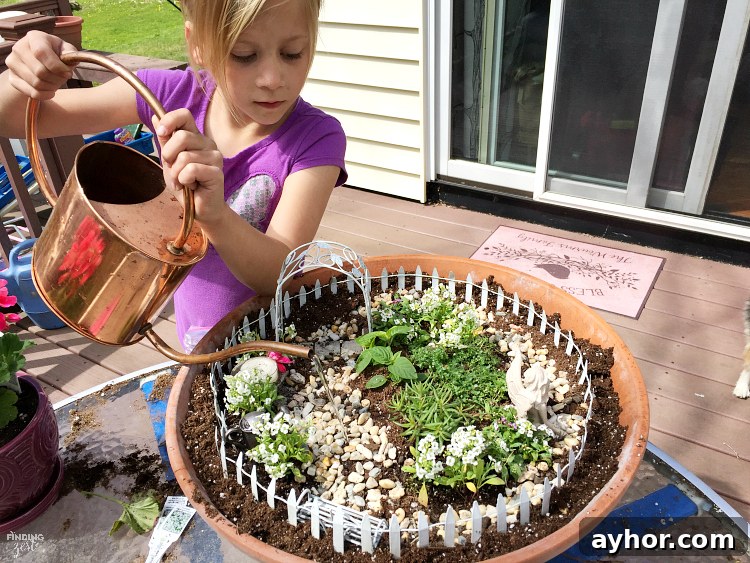
Pre-made fairy garden kits, sold at garden centers and online, include tiny accessories that add charm and personality. Our kit came with a bench, small trellis, and a bird feeder (we even placed a tea light inside the feeder). Since our spring blooms weren’t fully open yet, we added colorful butterfly accents to bring instant cheer to the pots.
Fairy Garden Supplies
Basic supplies to create a small fairy garden with kids:
- Small clay or ceramic pots (or a larger broken pot for a gnome home)
- Potting mix suitable for container plants
- Miniature plants: sedums, dwarf succulents, tiny ivy, or small flowering annuals
- Decorative moss, pebbles, or gravel
- Miniature accessories: benches, tiny tools, bird feeders, fairy or gnome figurines
- Decorative accents like butterflies on sticks or small painted rocks
- Optional: craft paints and brushes if you want to personalize pots or figurines

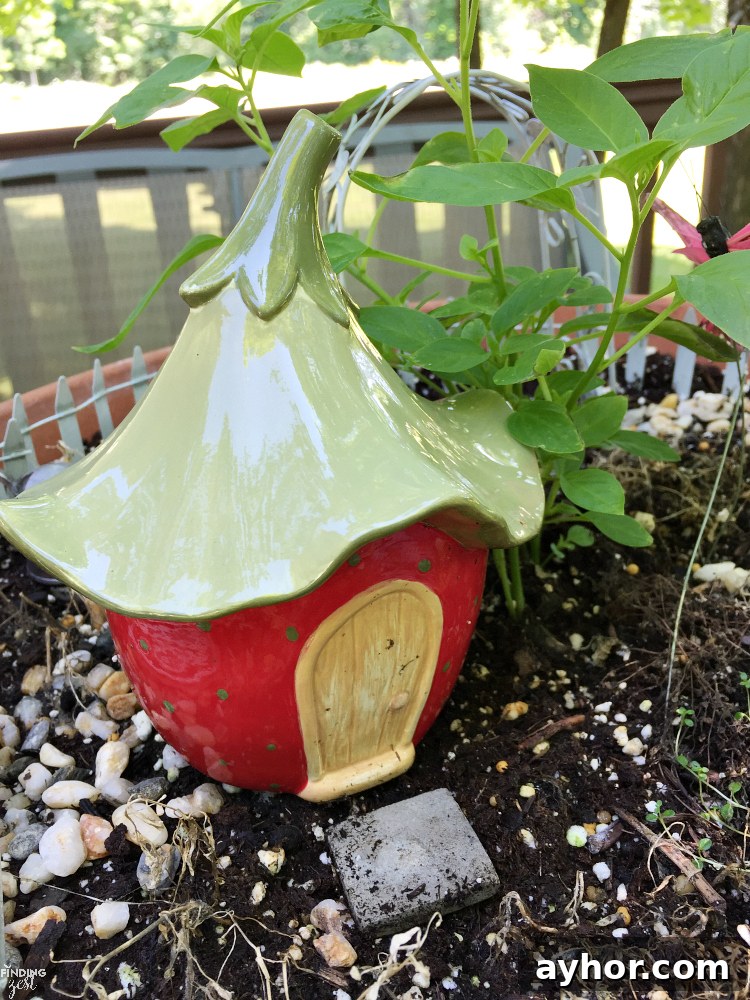
After a fun morning at a local ceramic studio, we added a bright, painted house to our garden — I painted mine like a strawberry. Decorating a small house or pot is a simple way to personalize your scene and involve kids in painting and design.
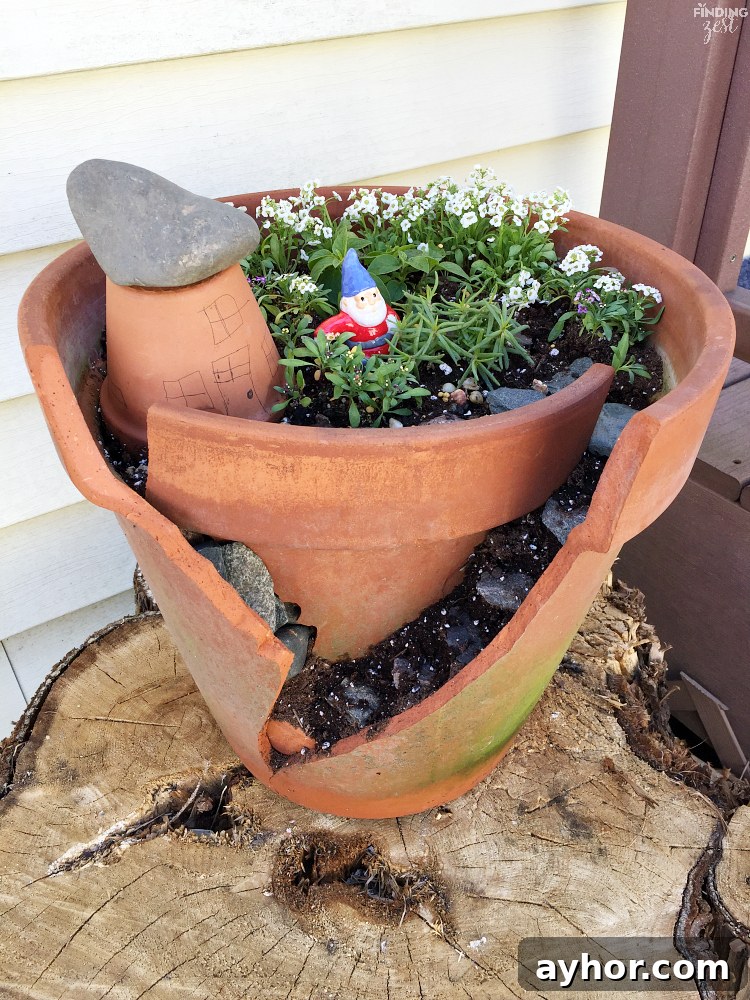
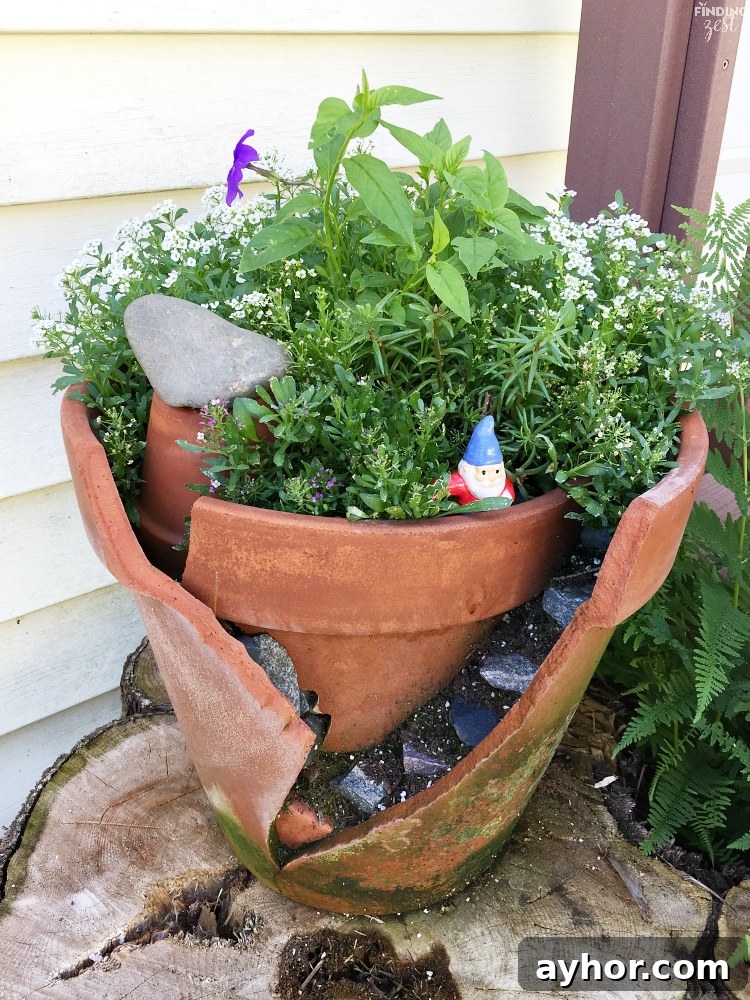
While browsing ideas, we found inspiring examples of broken-pot fairy gardens. We’d saved a cracked pot after a move, and it turned out to be perfect for a gnome house. With one careful tap of a hammer we turned the damaged pot into a whimsical home.
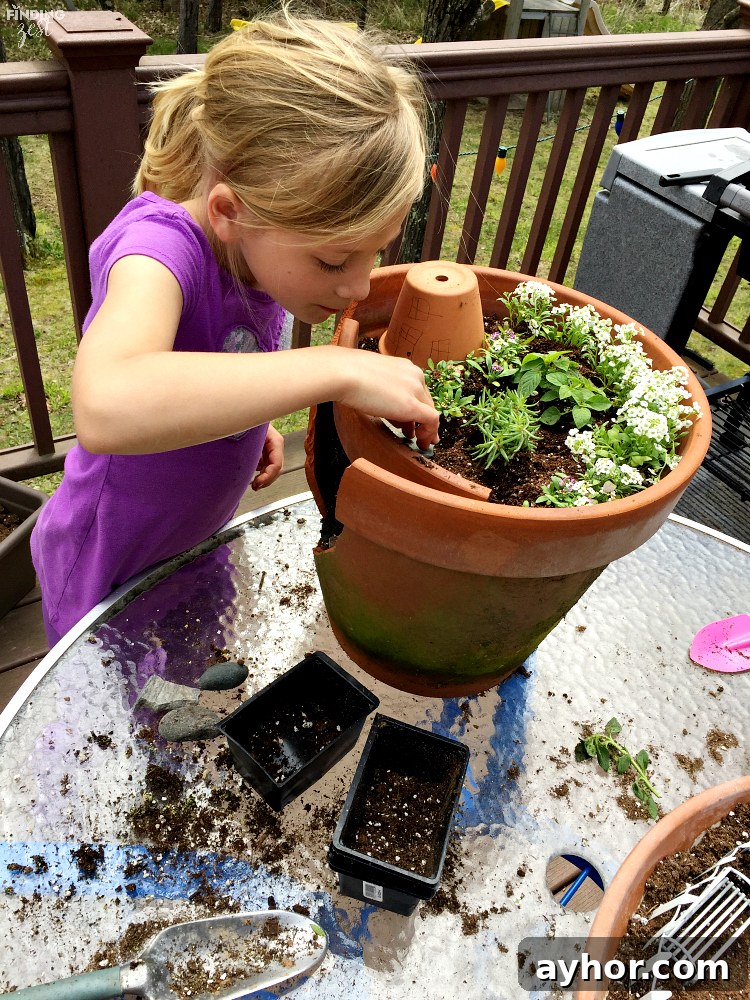
My daughter planted tiny flowers and chose where our little gnome would live. We used an overturned small pot to create a cozy doorway for him. Even simple scribbles from a child add charm, but a hand-painted pot or doorway gives the garden a colorful, finished look.
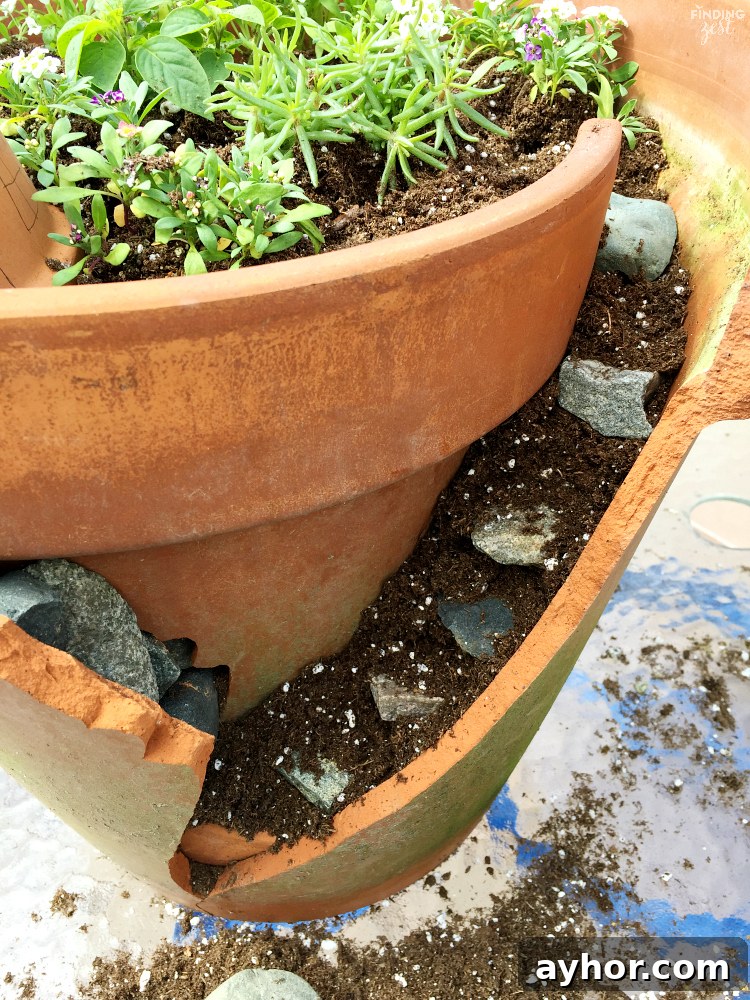
To make a tiny stairway, we packed soil into a gap along the pot’s side and pressed small stones into the packed dirt to form steps. That little detail instantly made the pot feel like a real home for the gnome.
There are many affordable miniature accessories available online if you prefer browsing from home rather than searching local stores. When ordering pieces, check dimensions so each item fits your pot or scene.
Miniature Garden Supplies

Tips for lasting miniature gardens:
- Choose container-friendly plants and use fresh potting mix for good drainage.
- Consider positioning: most small plants prefer bright, indirect light rather than intense afternoon sun.
- Water sparingly—smaller pots dry out faster, but overwatering can harm tiny roots.
- Bring miniature gardens indoors during harsh winter weather or place them in a sheltered spot so delicate accessories and plants last longer.
When the season ends you can bring miniature gardens inside to enjoy year-round, or refresh plants and accents each spring to keep the scenes looking their best.